• HOME
  • NEWS
  • EXPLORE
    • CAREER
      • Companies
      • Jobs
    • EVENTS
    • iGEM
      • News
      • Team
    • PHOTOS
    • VIDEO
    • WIKI
  • BLOG
  • COMMUNITY
    • FACEBOOK
    • INSTAGRAM
    • TWITTER
Friday, September 25, 2026
BIOENGINEER.ORG
No Result
View All Result
  • Login
  • HOME
  • NEWS
  • EXPLORE
    • CAREER
      • Companies
      • Jobs
        • Lecturer
        • PhD Studentship
        • Postdoc
        • Research Assistant
    • EVENTS
    • iGEM
      • News
      • Team
    • PHOTOS
    • VIDEO
    • WIKI
  • BLOG
  • COMMUNITY
    • FACEBOOK
    • INSTAGRAM
    • TWITTER
  • HOME
  • NEWS
  • EXPLORE
    • CAREER
      • Companies
      • Jobs
        • Lecturer
        • PhD Studentship
        • Postdoc
        • Research Assistant
    • EVENTS
    • iGEM
      • News
      • Team
    • PHOTOS
    • VIDEO
    • WIKI
  • BLOG
  • COMMUNITY
    • FACEBOOK
    • INSTAGRAM
    • TWITTER
No Result
View All Result
Bioengineer.org
No Result
View All Result
Home NEWS Science News Chemistry

Scientists pinpoint two new potential therapeutic targets for rheumatoid arthritis

Bioengineer by Bioengineer
November 12, 2020
in Chemistry
Reading Time: 3 mins read
0
IMAGE
Share on FacebookShare on TwitterShare on LinkedinShare on RedditShare on Telegram

IMAGE

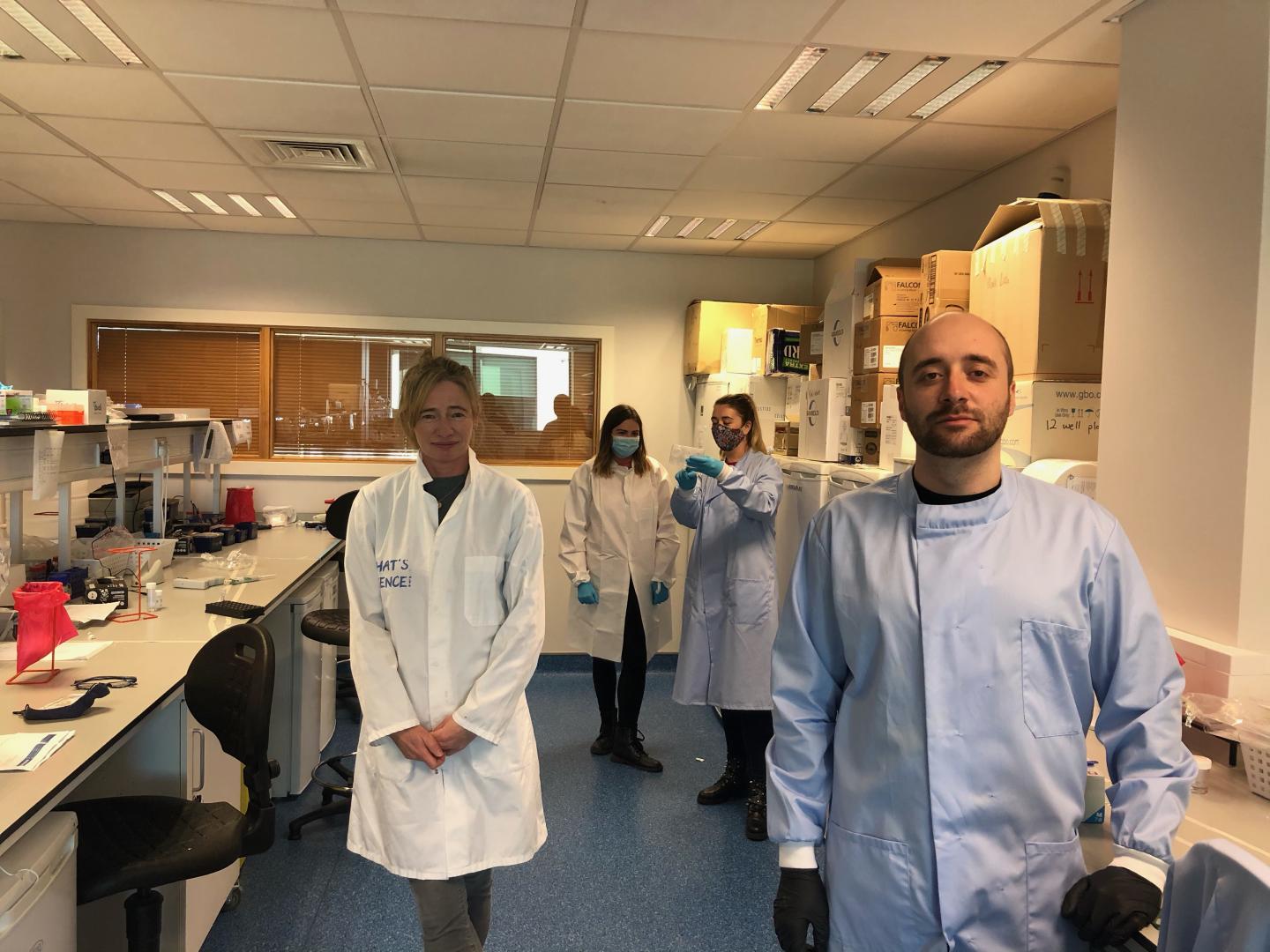
Credit: Trinity College Dublin

A collaborative team of scientists has pinpointed two new potential therapeutic targets for rheumatoid arthritis – a painful inflammatory disease that affects an estimated 350 million people worldwide.

Rheumatoid arthritis (RA) is the most common form of Inflammatory arthritis, affecting 1-2% of the world’s population. It is characterised by progressive joint inflammation, damage and disability, which severely impacts a patient’s quality of life. There is currently no cure.

Contrary to popular belief, RA is not a “disease of the elderly”. Disease onset occurs in adults between 35-45 years of age, and it also afflicts children.

“B cells” are key cells of the immune system, which are responsible for the production of antibodies that fight infections. However, in RA, these B cells–for reasons not yet fully understood–fail to recognise friend from foe and thus attack the joints. This leads to the tell-tale joint inflammation that causes such pain in patients.

In the new study, just published in international journal, JCI Insight, the collaborative team made two key discoveries.

Led by Dr Achilleas Floudas and Professor Ursula Fearon from Trinity College Dublin’s Molecular Rheumatology group in the School of Medicine, the team discovered a new cell population that is especially troublesome in people living with RA, and also learned how these cells accumulate in the joints.

Collectively, their work puts two potential new therapeutic targets for RA on the radar. Dr Floudas said:

“We discovered a novel population of B cells in the joints of patients with RA, and these cells are more inflammatory and invasive than those we knew before. Their damaging effects rely on the production of specific coded messages, in the form of proteins called cytokines and energy pathways within the cells, which essentially maintain their activation. Basically, they ‘switch on’, cause inflammation, and are maintained within the environment of the inflamed joint.

“We also discovered a new mechanism by which these B cells accumulate in the joint, by pinpointing the protein that seems to be responsible for attracting them to the joints. As a result, we now have two new potential targets for people living with RA. We are some way away from a therapeutic solution but if we can find a way of targeting these B cells and/or the protein that attracts them to the joints, we can one day hope to develop a therapy that could impact positively on millions of people living with RA.”

###

This work was led by Dr Floudas and Professor Fearon, from the Molecular Rheumatology Group in Trinity, and Professor Veale, from St Vincent’s University Hospital, along with support from experts in Trinity’s School of Engineering, Centre for Biomedical Engineering, and School of Biochemistry and Immunology. Additionally, collaborators included researchers and clinicians from St Vincent’s University Hospital, UCD; Tallaght University Hospital; and Janssen Research & Development, Pennsylvania.

This research was funded by the HRB and Arthritis Ireland. The researchers thank the patients who were involved in the study, without whom this patient-focused research would be impossible to perform.

Media Contact
Thomas Deane
[email protected]

Original Source

https://www.tcd.ie/news_events/articles/scientists-pinpoint-two-new-potential-therapeutic-targets-for-rheumatoid-arthritis/

Related Journal Article

http://dx.doi.org/10.1172/jci.insight.139032

Tags: BiochemistryCell BiologyGeneticsGerontologyMedicine/Health
Share13Tweet8Share2ShareShareShare2

Related Posts

Hidden Oxygen Vacancies at Chromium–Zinc Oxide Interfaces Drive Syngas-to-Olefins Catalysis

Hidden Oxygen Vacancies at Chromium–Zinc Oxide Interfaces Drive Syngas-to-Olefins Catalysis

September 25, 2026
Tea Compounds Show Surprising Power Against Cancer and Aging Proteins

Tea Compounds Show Surprising Power Against Cancer and Aging Proteins

September 25, 2026

Volcanic Rock Buoys Could End Microplastic Pollution in Oyster Farms

September 25, 2026

Metal-Organic Framework Nanoparticles Turn Biopolymer Hydrogel into Antibacterial Wound Dressing

September 25, 2026
Please login to join discussion

POPULAR NEWS

  • Hidden Oxygen Vacancies at Chromium–Zinc Oxide Interfaces Drive Syngas-to-Olefins Catalysis

    29 shares
    Share 12 Tweet 7
  • Open Chromatin Is Not So Open: Active Genes Ride on Condensed Domains

    29 shares
    Share 12 Tweet 7
  • Trapped-Ion Quantum Computer Simulates Particle Physics With Qubits and Phonons Together

    29 shares
    Share 12 Tweet 7
  • Traditional Chinese Herb Extends Lifespan by Switching On a Cellular Longevity Pathway

    29 shares
    Share 12 Tweet 7

About

We bring you the latest biotechnology news from best research centers and universities around the world. Check our website.

Follow us

Recent News

Hidden Oxygen Vacancies at Chromium–Zinc Oxide Interfaces Drive Syngas-to-Olefins Catalysis

Open Chromatin Is Not So Open: Active Genes Ride on Condensed Domains

Trapped-Ion Quantum Computer Simulates Particle Physics With Qubits and Phonons Together

Subscribe to Blog via Email

Enter your email address to subscribe to this blog and receive notifications of new posts by email.

Join 85 other subscribers
  • Contact Us

Bioengineer.org © Copyright 2023 All Rights Reserved.

Welcome Back!

Login to your account below

Forgotten Password?

Retrieve your password

Please enter your username or email address to reset your password.

Log In
No Result
View All Result
  • Homepages
    • Home Page 1
    • Home Page 2
  • News
  • National
  • Business
  • Health
  • Lifestyle
  • Science

Bioengineer.org © Copyright 2023 All Rights Reserved.