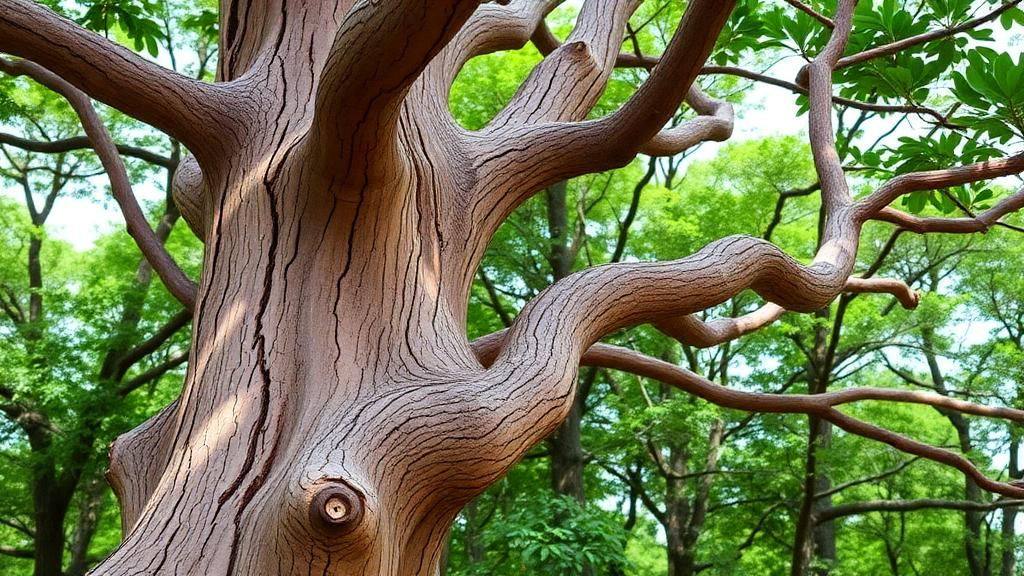
In the forests, homesteads and village plantations of Eastern India, one of the tropics most valuable timber trees has been quietly hiding its genetic secrets. Gmelina arborea, better known as White Teak, is a fast-growing deciduous species prized for its pale, teak-like wood, its tolerance of degraded soils and its versatility in everything from plywood and furniture to pulp, fodder and traditional medicine. Yet despite decades of plantation forestry across Asia and Africa, the populations of this species in the eastern states of Jharkhand, West Bengal and Bihar had never been systematically characterized at the genetic level. A new study published in Discover Plants has now changed that, delivering the first comprehensive picture of the species genetic diversity, population structure and breeding potential in the region, and laying the groundwork for a long-term tree improvement program that could reshape sustainable forestry in one of India most forest-poor corridors.
The research, led by scientists at the ICFRE-Institute of Forest Productivity in Ranchi, began with an ambitious field campaign spanning four consecutive fruiting seasons between 2021 and 2024. Survey teams crisscrossed four agro-climatic zones, from the Eastern Plateau and Hills through the Lower and Middle Gangetic Plains to the Eastern Himalaya, searching natural forests, forest fringes and farm boundaries for exceptional individuals. Using standard phenotypic selection criteria employed in tree breeding worldwide, they identified 434 Candidate Plus Trees, or CPTs, selecting trees that towered over their neighbors in height, girth and clear bole length while remaining free of pests, diseases and mechanical damage. The resulting collection revealed striking phenotypic variation: tree heights ranged from just 4.6 meters to an impressive 32.67 meters, while girth at breast height spanned from 24.4 centimeters to a remarkable 347.5 centimeters, reflecting a mixture of juvenile and mature individuals across the landscape.
Geography shaped the harvest of selections in revealing ways. The Eastern Plateau and Hills zone, which holds the bulk of the region forest cover, yielded 331 of the 434 candidate trees, while the Eastern Himalayan region contributed 57 and the Lower Gangetic Plain 37. The Middle Gangetic Plain in Bihar, where forest cover stands at only 7.84 percent according to the India State of Forest Report 2021, produced just nine selections, a sobering reminder of how habitat loss narrows the genetic options available to breeders and conservationists. Interestingly, the few trees found in the Middle Gangetic Plain showed comparatively high mean values for both height and girth, which the researchers attribute to the nutrient-rich alluvial soils of the Gangetic floodplain, a hint that environment and genetics interact closely in shaping the species growth performance.
To peer beneath the bark and into the DNA, the team genotyped a representative subsample of 279 candidate trees using twelve polymorphic simple sequence repeat markers, or SSRs, developed through genome skimming at the ICFRE-Institute of Forest Genetics and Tree Breeding in Coimbatore. These codominant microsatellite markers, valued for their high polymorphism and reproducibility, detected 58 alleles across the sampled trees, with three to seven alleles per locus and an average of 4.83. The markers proved highly informative: mean expected gene diversity reached 0.695 and the polymorphism information content averaged 0.643, with eight of the twelve loci exceeding the 0.60 PIC threshold that breeders consider strongly discriminating. These figures confirm that Eastern India harbors substantial hidden genetic variability in White Teak, comparable to the allelic richness reported for other tropical hardwoods such as Dipterocarpus condorensis, Toona ciliata, Grevillea robusta and various Eucalyptus species.
One of the study most intriguing findings, however, was a paradox. Observed heterozygosity averaged just 0.10, far below the expected heterozygosity, signaling a pronounced deficit of heterozygotes and pointing to intense localized inbreeding. The researchers offer several converging explanations. Fragmented landscapes disrupt random mating and force biparental inbreeding, elevating local homozygosity even in naturally outcrossing species. The Wahlund effect, in which genetically structured subpopulations are pooled into a single regional sample, artificially inflates expected diversity relative to observed diversity. The deliberate selection of elite candidate trees may also capture co-ancestral family lines with lower heterozygosity, and null alleles arising from primer-site mutations, a known artifact of SSR genotyping in non-model trees, likely inflated homozygous scorings. The sparse distribution of Gmelina in natural stands, which hinders random mating, may compound all of these effects.
Bayesian clustering analysis using the STRUCTURE software delivered the study headline discovery: the species in Eastern India is organized into two major genetic lineages. Of the 279 genotyped trees, 135 were assigned to lineage one, 108 to lineage two, and 36 were classified as admixed. The lineages map neatly onto geography. Trees from the Eastern Himalayan region overwhelmingly belong to lineage one, while trees from the southern Eastern Plateau and Hills and the Lower Gangetic Plain cluster predominantly in lineage two. Pairwise genetic distances reinforce this picture, with the Eastern Himalaya and Middle Gangetic Plain emerging as the most genetically distinct pair, while the Eastern Plateau and Hills and the Lower Gangetic Plain show the highest genetic similarity. Similar bimodal geographic clustering has been documented in Toona ciliata and Eucalyptus pellita, suggesting that discrete subpopulations tied to distinct geographic origins may be a recurring theme among widely distributed tropical trees.
Analysis of Molecular Variance added crucial nuance to this structure. A striking 92 percent of the total genetic variation resides within populations rather than among them, a pattern typical of outcrossing, long-lived perennial species that maintain high intra-population diversity. Genetic differentiation between populations, measured by the fixation index FST, was a moderate 0.077, and the estimated gene flow of nearly three migrants per generation indicates ongoing genetic exchange across the studied zones. In other words, Eastern India White Teak is weakly but detectably structured: pollen-mediated gene flow has historically homogenized much of the variation, yet two deep lineages persist, each carrying regional genetic identity, including private alleles found only in the Eastern Plateau and Hills and the Eastern Himalayan populations. For breeders, this is precisely the kind of architecture worth exploiting, since crossing genotypes from both lineages could maximize diversity and potentially unlock heterosis, the hybrid vigor that boosts growth and productivity.
The molecular work was only half the mission. To convert discovery into a durable breeding resource, the team established three progeny trial-cum-germplasm banks in Jharkhand, at Chandwa in Latehar, Ukrimari in Khunti and Harhad in Hazaribagh, using seed collected from 83 of the selected candidate trees. Seeds were soaked, de-pulped, scarified and germinated in sand beds before the seedlings were transplanted into randomized block designs with three to five replications. Early measurements after one year already show site-driven differences: mean tree height reached 226.64 centimeters at Harhad but only 89.37 centimeters at Chandwa, with collar diameters ranging accordingly. The researchers caution that the trials are still juvenile and that definitive statistical conclusions must wait for multi-year data, but the distribution of genotypes across the trials mirrors the diversity captured in the broader sampling, confirming their role as a living core collection.
These progeny trials are more than repositories. They constitute the structured pedigrees and phenotypic datasets on which advanced-generation breeding depends, and as they mature they could support genome-wide association studies linking molecular markers to economically critical traits such as growth rate and wood quality. Over the long term, the trials can be converted into seedling seed orchards, supplying genetically improved seed for plantation forestry, agroforestry and farm forestry across the region, while simultaneously serving as the base population for a second cycle of improvement. In a warming and deforested landscape, such ex situ gene banks that conserve common, rare and private alleles alike are increasingly viewed as essential insurance for the adaptive potential of commercially and ecologically important trees.
The broader significance of the study extends beyond a single species. White Teak sequesters carbon on degraded lands, enriches livestock fodder with protein-rich leaves, yields bioactive compounds used in traditional medicine and supports livelihoods from carving workshops to pulp mills, with rotation cycles as short as four to five years for pulpwood and around ten for timber. By documenting where the species genetic wealth lies, and by warning that the heterozygote deficit signals real inbreeding pressure in fragmented stands, the research gives forest managers in Eastern India a scientific compass for conservation decisions. Preserving trees from both genetic lineages, especially the genetically unique Himalayan and plateau populations, will be critical to maintaining the evolutionary flexibility of a species that millions of farmers and foresters depend upon. What began as a survey of 434 exceptional trees may ultimately grow into one of the region most consequential investments in sustainable forestry.
Subject of Research: Genetic diversity and population structure of Gmelina arborea in Eastern India for tree breeding and conservation
Article Title: Genetic diversity, population structure and germplasm assemblage of Gmelina arborea in Eastern India for sustainable breeding and conservation
Article References: Kumar, A., Gowda, M. G. M., Kumar, R. R., Kumari, A., & Pandey, R. K. (2026). Genetic diversity, population structure and germplasm assemblage of Gmelina arborea in Eastern India for sustainable breeding and conservation. Discover Plants, 3(1), Article 438. https://doi.org/10.1007/s44372-026-00920-6
Image Credits: AI Generated
DOI: 10.1007/s44372-026-00920-6
Keywords: Gmelina arborea, White Teak, genetic diversity, SSR markers, population structure, candidate plus trees, progeny trials, tree breeding, Eastern India, conservation, agroforestry, germplasm
News Source: Juliet Wilcox. (October 5, 2026). Scientists Map the Hidden Genetic Blueprint of White Teak Across Eastern India. Scienmag.