• HOME
  • NEWS
  • EXPLORE
    • CAREER
      • Companies
      • Jobs
    • EVENTS
    • iGEM
      • News
      • Team
    • PHOTOS
    • VIDEO
    • WIKI
  • BLOG
  • COMMUNITY
    • FACEBOOK
    • INSTAGRAM
    • TWITTER
Wednesday, May 13, 2026
BIOENGINEER.ORG
No Result
View All Result
  • Login
  • HOME
  • NEWS
  • EXPLORE
    • CAREER
      • Companies
      • Jobs
        • Lecturer
        • PhD Studentship
        • Postdoc
        • Research Assistant
    • EVENTS
    • iGEM
      • News
      • Team
    • PHOTOS
    • VIDEO
    • WIKI
  • BLOG
  • COMMUNITY
    • FACEBOOK
    • INSTAGRAM
    • TWITTER
  • HOME
  • NEWS
  • EXPLORE
    • CAREER
      • Companies
      • Jobs
        • Lecturer
        • PhD Studentship
        • Postdoc
        • Research Assistant
    • EVENTS
    • iGEM
      • News
      • Team
    • PHOTOS
    • VIDEO
    • WIKI
  • BLOG
  • COMMUNITY
    • FACEBOOK
    • INSTAGRAM
    • TWITTER
No Result
View All Result
Bioengineer.org
No Result
View All Result
Home NEWS Science News Chemistry

Scientists identify new gut-liver drug recycling process

Bioengineer by Bioengineer
July 14, 2021
in Chemistry
Reading Time: 2 mins read
0
IMAGE
Share on FacebookShare on TwitterShare on LinkedinShare on RedditShare on Telegram

Implications for developing treatments for intestinal diseases
IMAGE

Credit: University of Houston

A team of University of Houston pharmaceutical researchers is reporting a newly recognized process of drug metabolism in the intestines – followed by recycling through the liver – that could have important implications for developing treatments for intestinal diseases and for taking multiple medications at the same time.

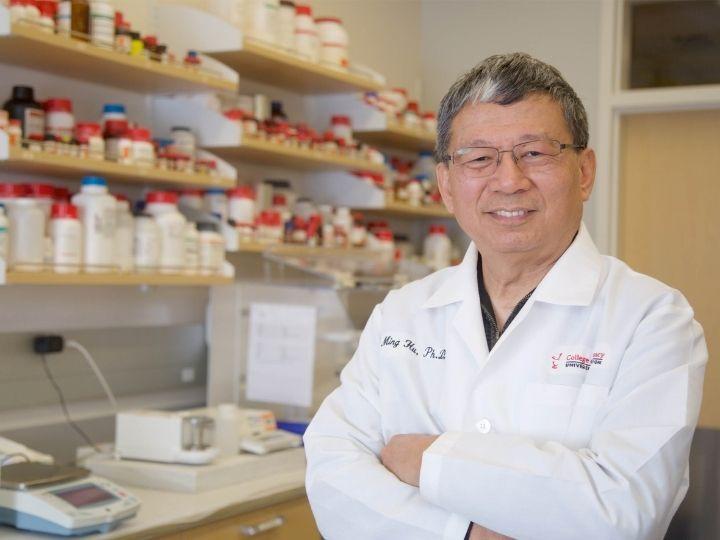
“The intestines play a crucial role in metabolizing and recycling certain plant compounds and drugs,” reports Ming Hu, Diana S-L. Chow Endowed Professor of Drug Discovery and Development and the senior author of the paper in eLife. “The discovery has important implications for scientists trying to understand how both phytochemicals (a type of plant compound, such as flavonoids) and medicines are metabolized in the body.”

The new information could help chemists develop better drugs and clinicians to fine-tune medication dosing, especially when dealing with polypharmacy, where a patient takes multiple drugs at the same time.

Scientists have long recognized that bile acid is produced in the liver and released into the intestines and is then recycled back through the liver for reuse as the bile. Some medications that are metabolized in the liver also go through this process, known as enterohepatic recycling (EHR). This can extend the life of drugs in the body, which may affect how well they work and whether they cause side effects.

“The liver has long been considered the most important organ for drug metabolism,” said lead author Yifan Tu, who conducted the study while he was doing his doctoral work at the UH College of Pharmacy. “But we’ve shown that the intestines also play a major role in drug metabolism.”

In their experiments, the team administered 16 different types of flavonoids or drugs directly to the liver or intestines and then tracked what happened to the treatments. They found that some drugs and compounds were metabolized in the intestines and the metabolites were then transported to the liver before being cycled back into the intestines.

“In this process, the liver acts only as a recycling organ, which is rare, since the liver is known to be the metabolic ‘superstar’ organ in humans,” said Tu, who is now a postdoctoral fellow at the pharmaceutical company Boehringer Ingelheim in Connecticut.

The team has called this new mechanism ‘hepatic enteric recycling’ (HER). They found that, in this process, the roles of the liver and intestines are reversed. “This may explain why some drugs or plant compounds have larger effects on the intestine than anticipated and could help scientists understand how intestinal diseases may alter drug metabolism in the body,” said Tu.

“We hope our findings will be useful for medicinal chemists to design new drugs tailored to treat intestinal, especially colonic diseases,” said Hu.

###

Media Contact
Laurie Fickman
[email protected]

Original Source

https://uh.edu/news-events/stories/july-2021/07142021-min-hu-new-gut-liver-recycling.php

Related Journal Article

http://dx.doi.org/10.7554/eLife.58820

Tags: GastroenterologyInternal MedicineLiverMedicine/HealthMetabolism/Metabolic DiseasesPharmaceutical ChemistryPharmaceutical SciencePharmaceutical SciencesPharmaceutical/Combinatorial ChemistryPulmonary/Respiratory Medicine
Share13Tweet8Share2ShareShareShare2

Related Posts

Harnessing Neural Networks for Advances in Nonlinear Optics — Chemistry

Harnessing Neural Networks for Advances in Nonlinear Optics

May 12, 2026
Innovative Method Unveiled to Detect Signs of Dark Matter — Chemistry

Innovative Method Unveiled to Detect Signs of Dark Matter

May 12, 2026

Illuminating the Science Behind Historical Featherwork Art

May 12, 2026

Humans and Zebra Finches Share Similar Speech Learning Techniques #ASA190

May 11, 2026
Please login to join discussion

POPULAR NEWS

  • Research Indicates Potential Connection Between Prenatal Medication Exposure and Elevated Autism Risk

    842 shares
    Share 337 Tweet 211
  • New Study Reveals Plants Can Detect the Sound of Rain

    728 shares
    Share 290 Tweet 182
  • Salmonella Haem Blocks Macrophages, Boosts Infection

    62 shares
    Share 25 Tweet 16
  • Breastmilk Balances E. coli and Beneficial Bacteria in Infant Gut Microbiomes

    57 shares
    Share 23 Tweet 14

About

We bring you the latest biotechnology news from best research centers and universities around the world. Check our website.

Follow us

Recent News

Mayo Clinic to Undergo Leadership Transition, Honoring Dr. Gianrico Farrugia’s Transformational Impact

Study Finds Sustained Weight Loss Possible by Transitioning from Injectable Obesity Drugs to Daily Oral Orforglipron (ATTAIN-MAINTAIN)

Weight Loss Maintained Seven Times More Effectively with Continued Maximum Dose of Tirzepatide, Study Finds

Subscribe to Blog via Email

Enter your email address to subscribe to this blog and receive notifications of new posts by email.

Join 82 other subscribers
  • Contact Us

Bioengineer.org © Copyright 2023 All Rights Reserved.

Welcome Back!

Login to your account below

Forgotten Password?

Retrieve your password

Please enter your username or email address to reset your password.

Log In
No Result
View All Result
  • Homepages
    • Home Page 1
    • Home Page 2
  • News
  • National
  • Business
  • Health
  • Lifestyle
  • Science

Bioengineer.org © Copyright 2023 All Rights Reserved.