• HOME
  • NEWS
  • EXPLORE
    • CAREER
      • Companies
      • Jobs
    • EVENTS
    • iGEM
      • News
      • Team
    • PHOTOS
    • VIDEO
    • WIKI
  • BLOG
  • COMMUNITY
    • FACEBOOK
    • INSTAGRAM
    • TWITTER
Sunday, August 16, 2026
BIOENGINEER.ORG
No Result
View All Result
  • Login
  • HOME
  • NEWS
  • EXPLORE
    • CAREER
      • Companies
      • Jobs
        • Lecturer
        • PhD Studentship
        • Postdoc
        • Research Assistant
    • EVENTS
    • iGEM
      • News
      • Team
    • PHOTOS
    • VIDEO
    • WIKI
  • BLOG
  • COMMUNITY
    • FACEBOOK
    • INSTAGRAM
    • TWITTER
  • HOME
  • NEWS
  • EXPLORE
    • CAREER
      • Companies
      • Jobs
        • Lecturer
        • PhD Studentship
        • Postdoc
        • Research Assistant
    • EVENTS
    • iGEM
      • News
      • Team
    • PHOTOS
    • VIDEO
    • WIKI
  • BLOG
  • COMMUNITY
    • FACEBOOK
    • INSTAGRAM
    • TWITTER
No Result
View All Result
Bioengineer.org
No Result
View All Result
Home NEWS Science News Health

Scientists identify genetic pathway that suppresses Lou Gehrig’s Disease

Bioengineer by Bioengineer
March 19, 2021
in Health
Reading Time: 2 mins read
0
IMAGE
Share on FacebookShare on TwitterShare on LinkedinShare on RedditShare on Telegram

IMAGE

Credit: UNIST

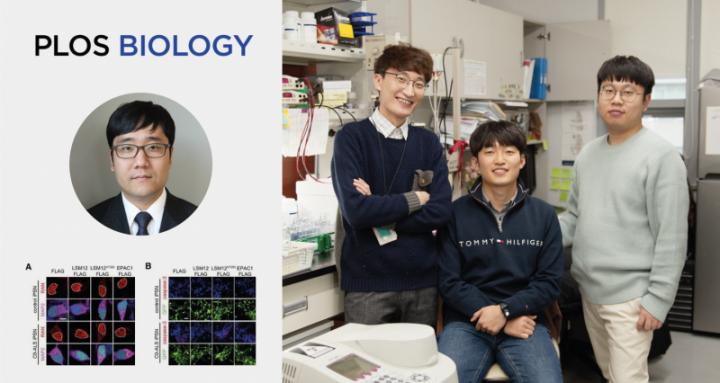
Professor Chunghun Lim and his research team in the Department of Biological Sciences unveiled a neuroprotective pathway that suppresses Lou Gehrig’s Disease (ALS).

Nucleocytoplasmic transport (NCT) defects have been implicated in neurodegenerative diseases, such as C9ORF72-associated amyotrophic lateral sclerosis and frontotemporal dementia (C9-ALS/FTD). In this study, the research team has identified a neuroprotective pathway of like-Sm protein 12 (LSM12) and exchange protein directly activated by cyclic AMP 1 (EPAC1) that sustains the nucleocytoplasmic RAN gradient and thereby suppresses NCT dysfunction by the C9ORF72-derived poly (glycine-arginine) protein.

The research team found that the LSM12-EPAC1 pathway is an important suppressor of the NCT-related pathologies in C9-ALS/FTD. The EPAC1 protein, which was expressed in this genetic pathway, normalizes the abnormal RAN gradient that determines the transport direction between the cell nucleus and the cytoplasm, thereby restoring its cellular function.

In general, the RAN proteins are more abundant in the cell nucleus, but in patients with Lou Gehrig’s disease, they begin to leak out into the cytoplasm, thereby resulting in abnormal concentration differences. Their findings revealed that the EPAC1 protein, which was expressed through the LSM12-EPAC1 pathway, indeed helped EPAC1 return to the cell nucleus, thereby restoring the RAN gradient.

The research team also identified that the EPAC1 protein, which was expressed through the LSM12-EPAC1 pathway, regulates the distribution of RAN proteins. The EPAC1 protein increases the binding force between the nuclear pore complex (NPC) and the RAN proteins. Because of this, RAN proteins lost within the cytoplasm are, then, captured by the NPC and returned to the nucleus.

“Although the distribution of RAN proteins is critical for the nucleocytoplasmic transport (NTC), its molecular biological mechanism has relatively been unknown,” says Professor Lim. “In this study, we have identified that LSM12-EPAC1 defines a neuroprotective pathway that sustains the nucleocytoplasmic RAN gradient.”

He adds, “Our findings are expected to contribute greatly to the prediction and treatment of neurodegenerative diseases, such as frontotemporal dementia and Lou Gehrig’s disease, as well as for the understanding of the molecular mechanisms underlying aging.”

###

The findings of this research have been published in the PLOS Biology. This study has been supported by the mid-career researcher program and the advanced research center project through the National Research Foundation of Korea (NRF). It has also been supported by the Suh Kyungbae Foundation and the Korea Health Technology R&D Project through the KHIDI, funded by the Korean Ministry of Health and Welfare.

Journal Reference

Jongbo Lee, Jumin Park, Ji-hyung Kim, et al., “LSM12-EPAC1 defines a neuroprotective pathway that sustains the nucleocytoplasmic RAN gradient,” PLOS Biology, (2021).

Media Contact
JooHyeon Heo
[email protected]

Original Source

https://news.unist.ac.kr/scientists-identify-genetic-pathway-that-suppresses-lou-gehrigs-disease/

Tags: AlzheimerBiologyGeneticsneurobiology
Share12Tweet8Share2ShareShareShare2

Related Posts

PARP1 Drives Neuropathic Pain Through GPX4-Dependent Ferroptosis in Injured Mice’s Sensory Neurons

August 15, 2026

Genome-wide skin pQTL map reveals genetic regulators and mechanisms underlying skin disorders

August 15, 2026

Levistilide A Drives Ferroptosis via RNF40-HSP90α Axis, Suppressing Colorectal Cancer Lung Metastasis

August 15, 2026

Sintilimab, IBI305, and Chemotherapy Show Promise in First-Line Advanced Gastric and GEJ Adenocarcinoma

August 15, 2026
Please login to join discussion

POPULAR NEWS

  • KAIST develops semiconductor neuron that harnesses noise to selectively process signals

    29 shares
    Share 12 Tweet 7
  • Imagining natural and extra robotic thumbs together strengthens kinesthetic sensorimotor networks

    29 shares
    Share 12 Tweet 7
  • PARP1 Drives Neuropathic Pain Through GPX4-Dependent Ferroptosis in Injured Mice’s Sensory Neurons

    29 shares
    Share 12 Tweet 7
  • Strubbelig–NHL3 Receptor Complex Helps Arabidopsis Respond to Cellulose Deficiency

    29 shares
    Share 12 Tweet 7

About

We bring you the latest biotechnology news from best research centers and universities around the world. Check our website.

Follow us

Recent News

KAIST develops semiconductor neuron that harnesses noise to selectively process signals

Imagining natural and extra robotic thumbs together strengthens kinesthetic sensorimotor networks

PARP1 Drives Neuropathic Pain Through GPX4-Dependent Ferroptosis in Injured Mice’s Sensory Neurons

Subscribe to Blog via Email

Success! An email was just sent to confirm your subscription. Please find the email now and click 'Confirm' to start subscribing.

Join 85 other subscribers
  • Contact Us

Bioengineer.org © Copyright 2023 All Rights Reserved.

Welcome Back!

Login to your account below

Forgotten Password?

Retrieve your password

Please enter your username or email address to reset your password.

Log In
No Result
View All Result
  • Homepages
    • Home Page 1
    • Home Page 2
  • News
  • National
  • Business
  • Health
  • Lifestyle
  • Science

Bioengineer.org © Copyright 2023 All Rights Reserved.