Pigtailed macaques are a candidate model organism for two hemorrhagic diseases of public health concern: Kyasanur Forest disease and Alkhurma hemorrhagic disease, report Rebecca Broeckel at the National Institutes of Health in Montana, and colleagues, in a study publishing December 2nd in the open-access journal PLOS Pathogens.
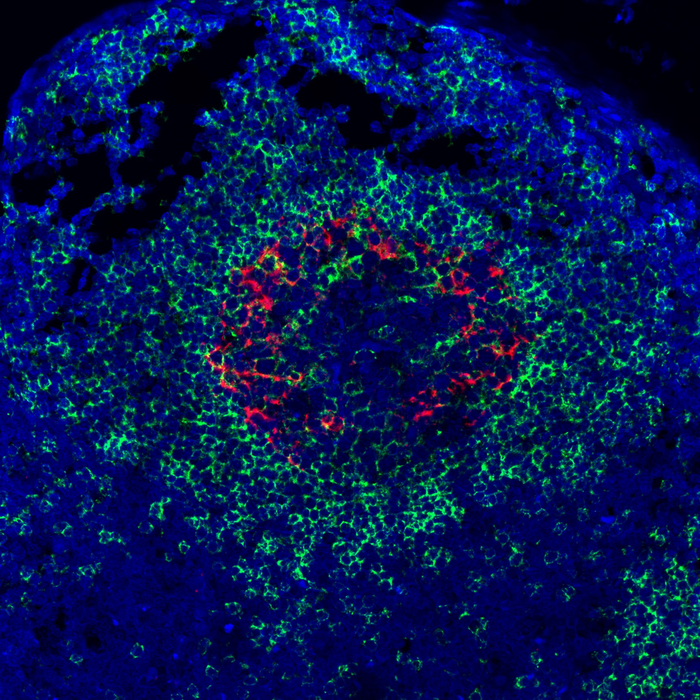
Credit: Rocky Mountain Laboratories, NIAID/NIH, CC-BY 4.0 (https://creativecommons.org/licenses/by/4.0/)
Pigtailed macaques are a candidate model organism for two hemorrhagic diseases of public health concern: Kyasanur Forest disease and Alkhurma hemorrhagic disease, report Rebecca Broeckel at the National Institutes of Health in Montana, and colleagues, in a study publishing December 2nd in the open-access journal PLOS Pathogens.
Tick-borne flaviviruses such as Kyasanur Forest disease virus (KFDV) in India, and its close relative Alkhurma hemorrhagic disease virus (AHFV) in the Arabian Peninsula, cause severe hemorrhagic fever in humans, and infection can be fatal. Their increasing prevalence and geographic spread pose a public health threat, but an absence of close animal models has hampered research and currently, vaccines against these tick-borne viruses have limited efficacy. In search of an accurate primate model for clinical research, researchers inoculated eight female pigtailed macaques (Macaca nemestrina) with KFDV and four with AHFV, and found that, like humans, they developed loss of appetite, dehydration, and hemorrhagic symptoms within two to four days. Infected macaques also exhibited reduced levels of blood lymphocytes and platelets, and elevated liver enzymes – hallmark symptoms of human KFDV infections. Infectious virus was found in the gastrointestinal tract, consistent with symptoms such as vomiting, diarrhea and hemorrhaging often seen in human patients. RNA sequencing of the whole blood transcriptome at zero, two, and six days after inoculation revealed that KFDV infection caused downregulation of gene expression for blood clotting factors, which may explain the greater severity of this disease compared to AHFV.
This study is the first to characterize infection of pigtailed macaques with KFDV or AHFV. The authors say that the similarity of pigtailed macaques’ symptoms to humans and their availability in clinical research make the species a strong candidate for future vaccine and antiviral research on these diseases of public health concern.
“Kyasanur forest disease virus (KFDV) is an emerging public health threat in India that causes hemorrhagic fevers in humans after the bite of infected tick, but it is not clear how this virus causes disease,” the authors add. “Our work describes a new animal model of KFDV hemorrhagic fever that closely resembles human disease. This work reveals specific mechanisms of disease that can be targeted by drugs to treat severe infections.”
############
In your coverage, please use this URL to provide access to the freely available article in PLOS Pathogens: http://journals.plos.org/plospathogens/article?id=10.1371/journal.ppat.1009678
Citation: Broeckel RM, Feldmann F, McNally KL, Chiramel AI, Sturdevant GL, Leung JM, et al. (2021) A pigtailed macaque model of Kyasanur Forest disease virus and Alkhurma hemorrhagic disease virus pathogenesis. PLoS Pathog 17(12): e1009678. https://doi.org/10.1371/journal.ppat.1009678
Author Countries: United States
Funding: This study was funded by the Division of Intramural Research, National Institutes of Health, National Institute of Allergy and Infectious Diseases (F.B. and S.M.B). The Vaccine and Infectious Diseases Organization (VIDO) receives operational funding from the Canada Foundation for Innovation – Major Science Initiatives Fund and from the Government of Saskatchewan through Innovation Saskatchewan and the Ministry of Agriculture (A.L.R.). The funders had no role in study design, data collection and analysis, decision to publish, or preparation of the manuscript.
Journal
PLoS Pathogens
DOI
10.1371/journal.ppat.1009678
Method of Research
Experimental study
Subject of Research
Animals
COI Statement
The authors have declared that no competing interests exist.