• HOME
  • NEWS
  • EXPLORE
    • CAREER
      • Companies
      • Jobs
    • EVENTS
    • iGEM
      • News
      • Team
    • PHOTOS
    • VIDEO
    • WIKI
  • BLOG
  • COMMUNITY
    • FACEBOOK
    • INSTAGRAM
    • TWITTER
Tuesday, July 7, 2026
BIOENGINEER.ORG
No Result
View All Result
  • Login
  • HOME
  • NEWS
  • EXPLORE
    • CAREER
      • Companies
      • Jobs
        • Lecturer
        • PhD Studentship
        • Postdoc
        • Research Assistant
    • EVENTS
    • iGEM
      • News
      • Team
    • PHOTOS
    • VIDEO
    • WIKI
  • BLOG
  • COMMUNITY
    • FACEBOOK
    • INSTAGRAM
    • TWITTER
  • HOME
  • NEWS
  • EXPLORE
    • CAREER
      • Companies
      • Jobs
        • Lecturer
        • PhD Studentship
        • Postdoc
        • Research Assistant
    • EVENTS
    • iGEM
      • News
      • Team
    • PHOTOS
    • VIDEO
    • WIKI
  • BLOG
  • COMMUNITY
    • FACEBOOK
    • INSTAGRAM
    • TWITTER
No Result
View All Result
Bioengineer.org
No Result
View All Result
Home NEWS Science News Biology

Scientists find new variations among sperm cells

Bioengineer by Bioengineer
November 15, 2022
in Biology
Reading Time: 3 mins read
0
Astyanax mexicanus (blind cave fish)
Share on FacebookShare on TwitterShare on LinkedinShare on RedditShare on Telegram

The behavior of sperm cells is due, in part, to the individual DNA make-up of these cells, rather than only to the genetics of males, finds a team of scientists. Its results, which provide a new understanding of the competition among sperm cells to fertilize the egg, have larger implications for the reproductive process.
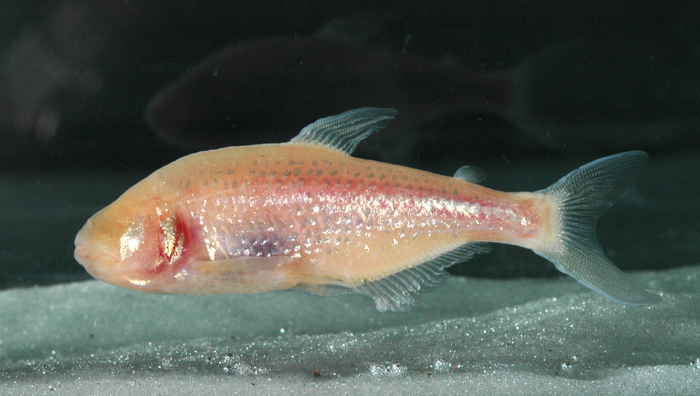
Astyanax mexicanus (blind cave fish)

Credit: Richard Borowsky, New York University

The behavior of sperm cells is due, in part, to the individual DNA make-up of these cells, rather than only to the genetics of males, finds a team of scientists. Its results, which provide a new understanding of the competition among sperm cells to fertilize the egg, have larger implications for the reproductive process.

The study, which centers on the swimming behavior of sperm cells, is the first to establish a direct effect of mutation on sperm behavior and suggests that the development and application of screens based on sperm behavior can improve the quality of the genetics they carry.

“Until now, the predominant view was that this variation in swimming behavior reflected the overall genetics of the male rather than the variable genetics of the individual sperm cells,” explains Richard Borowsky, a professor emeritus in NYU’s Department of Biology and the senior author of the paper, which appears in the journal Scientific Reports. “This study is the first to demonstrate that genetic differences can directly affect the swimming behavior of sperm cells.”

This fuller grasp, he adds, may offer additional knowledge on the impact of abnormal sperm cells on offspring, notably birth defects.

The work , which included Haining Chen, an NYU graduate student at the time of the study and now at Westlake University in Hangzhou, China, focused on sperm cells in male fish—specifically Astyanax mexicanus cave fish. It compared the sperm cells in normal fish with those of fish whose sperm production had been artificially mutated. This allowed the scientists to identify behavioral and morphological characteristics potentially altering the sperm’s chances in the race to fertilize the egg. 

Their results showed no difference in flagellar length— the hair-like appendage that propels them as they swim towards the egg—between the normal and mutated samples. However, there was greater variability in the velocity, or swimming speed, of the mutated samples compared to the normal ones—meaning that in many instances, the mutated samples swam at lower and faster speeds than did normal ones. Overall, while both types of sperm cells appeared similar, their behaviors are quite different and at crucial stages. 

The findings offer additional insights into the nature of reproduction. 

It’s been long established that sperm from different males vary in their characteristics because of the genetic differences between the males. This study established that different sperm from the same male vary in their characteristics because they differ in their genetic cargo.

# # #


Journal

Scientific Reports

DOI

10.1038/s41598-022-22486-5

Method of Research

Experimental study

Subject of Research

Animals

Article Title

Mutagenesis alters sperm swimming velocity in Astyanax cave fish

Article Publication Date

15-Nov-2022

Share12Tweet8Share2ShareShareShare2

Related Posts

Here are a few rewritten headlines for a science magazine post, each with a slightly different tone: Intriguing & poetic: How do organs sculpt themselves? Sea stars hold the secret Direct & research-focused: Sea stars reveal the hidden rules of organ formation Metaphorical & inviting: Tiny architects beneath the waves: What sea stars teach us about building organs Short & punchy: Star-shaped clues to how our organs take shape Question-led: Could a sea star show us how organs form? Elegant & feature-style: The body’s blueprint, glimpsed in a sea star’s arm

July 6, 2026
Bacteria evolve faster with unconventional gene copies — Biology

Bacteria evolve faster with unconventional gene copies

July 6, 2026

Neighbours rewire soil feedback via root microbiome shifts

July 6, 2026

Evolution-Inspired Biosensors Revolutionize Lipid Tracking in Real Time

July 2, 2026

POPULAR NEWS

  • Detection of EDCs in Breast Milk and Infant Urine Up to Six Months Highlights Early Exposure Risks

    77 shares
    Share 31 Tweet 19
  • New Drug Candidate Developed at McMaster Shows Potential for Treating Brain Cancer

    58 shares
    Share 23 Tweet 15
  • Saying Goodbye to PGY-6: Pediatric Fellowship Realities

    103 shares
    Share 41 Tweet 26
  • KTU Researchers Explore Ultrasound’s Role in Enhancing Blood Flow Beyond Diagnostics

    53 shares
    Share 21 Tweet 13

About

We bring you the latest biotechnology news from best research centers and universities around the world. Check our website.

Follow us

Recent News

Flame retardant BDE-209 targets molecularly linked to ulcerative colitis

Ultra-high frequency particle impacts mimic rockbursts to shatter hard rock

Kidney transplant outcomes in older adults studied by German researchers

Subscribe to Blog via Email

Enter your email address to subscribe to this blog and receive notifications of new posts by email.

Join 83 other subscribers
  • Contact Us

Bioengineer.org © Copyright 2023 All Rights Reserved.

Welcome Back!

Login to your account below

Forgotten Password?

Retrieve your password

Please enter your username or email address to reset your password.

Log In
No Result
View All Result
  • Homepages
    • Home Page 1
    • Home Page 2
  • News
  • National
  • Business
  • Health
  • Lifestyle
  • Science

Bioengineer.org © Copyright 2023 All Rights Reserved.