

• HOME
  • NEWS
  • EXPLORE
    • CAREER
      • Companies
      • Jobs
    • EVENTS
    • iGEM
      • News
      • Team
    • PHOTOS
    • VIDEO
    • WIKI
  • BLOG
  • COMMUNITY
    • FACEBOOK
    • INSTAGRAM
    • TWITTER
Sunday, May 17, 2026
BIOENGINEER.ORG
No Result
View All Result
  • Login
  • HOME
  • NEWS
  • EXPLORE
    • CAREER
      • Companies
      • Jobs
        • Lecturer
        • PhD Studentship
        • Postdoc
        • Research Assistant
    • EVENTS
    • iGEM
      • News
      • Team
    • PHOTOS
    • VIDEO
    • WIKI
  • BLOG
  • COMMUNITY
    • FACEBOOK
    • INSTAGRAM
    • TWITTER
  • HOME
  • NEWS
  • EXPLORE
    • CAREER
      • Companies
      • Jobs
        • Lecturer
        • PhD Studentship
        • Postdoc
        • Research Assistant
    • EVENTS
    • iGEM
      • News
      • Team
    • PHOTOS
    • VIDEO
    • WIKI
  • BLOG
  • COMMUNITY
    • FACEBOOK
    • INSTAGRAM
    • TWITTER
No Result
View All Result
Bioengineer.org
No Result
View All Result
Home NEWS Science News Health

Scientists find ally in fight against brain tumors: Ebola

Bioengineer by Bioengineer
February 12, 2020
in Health
Reading Time: 2 mins read
0
IMAGE
Share on FacebookShare on TwitterShare on LinkedinShare on RedditShare on Telegram

IMAGE

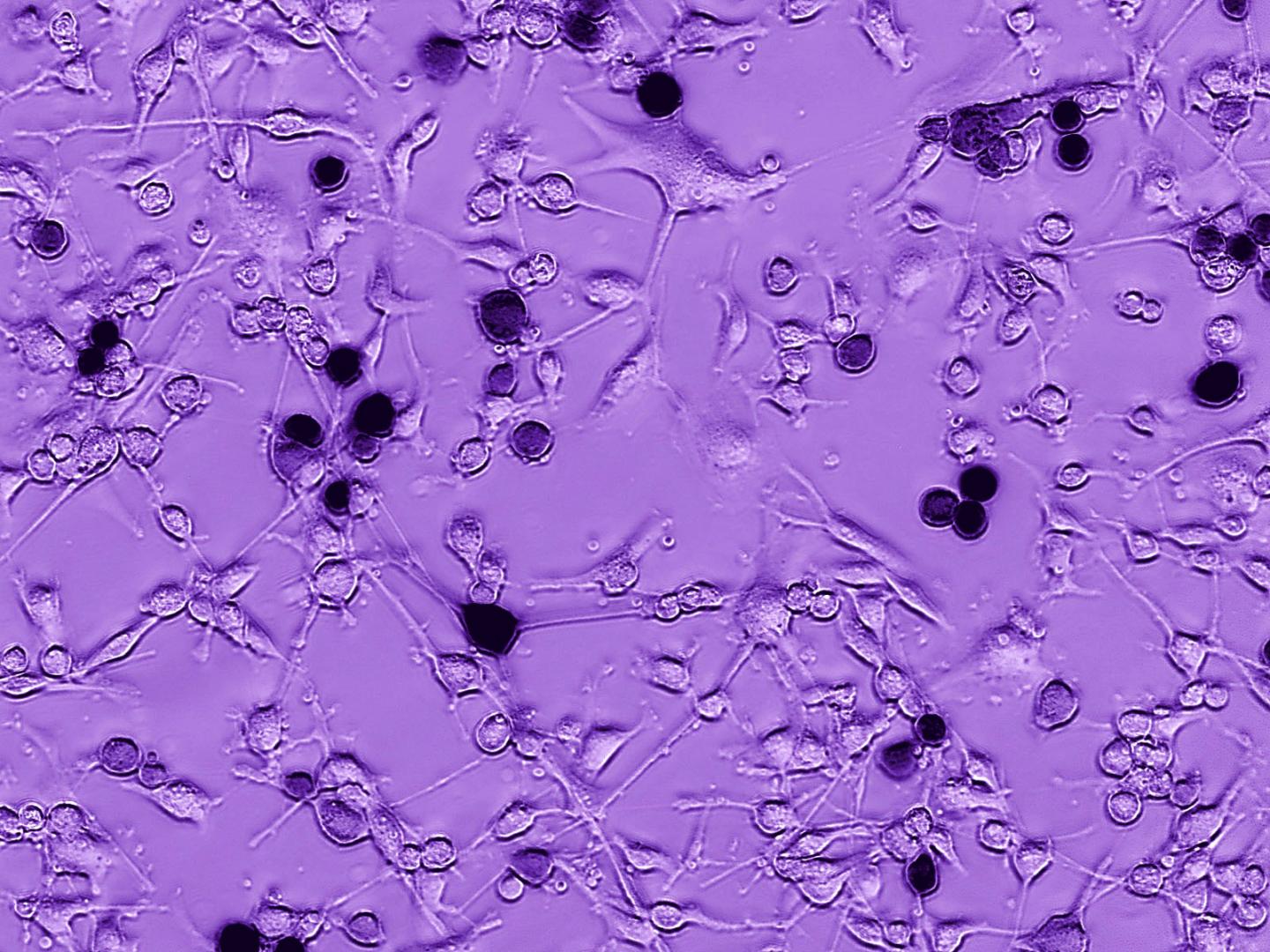
Credit: Image by A van den Pol


Glioblastomas are relentless, hard-to-treat, and often lethal brain tumors. Yale scientists have enlisted a most unlikely ally in efforts to treat this form of cancer — elements of the Ebola virus.

“The irony is that one of the world’s deadliest viruses may be useful in treating one of the deadliest of brain cancers,” said Yale’s Anthony van den Pol, professor of neurosurgery, who describes the Yale efforts Feb. 12 in the Journal of Virology.

The approach takes advantage of a weakness in most cancer tumors and also of an Ebola defense against the immune system response to pathogens.

Unlike normal cells, a large percentage of cancer cells lack the ability to generate an innate immune response against invaders such as viruses. This has led cancer researchers to explore the use of viruses to combat a variety of cancers.

Using viruses carries an obvious risk — they can introduce potentially dangerous infections. To get around this problem, scientists, including van den Pol, have experimented with creating or testing chimeric viruses, or a combination of genes from multiple viruses. They have the ability to target cancer cells without harming patients.

One of the seven genes of the Ebola virus that helps it avoid an immune system response also contributes to its lethality. This intrigued van den Pol.

He and the study’s first author, Xue Zhang, also of Yale, used a chimeric virus containing one of gene from the Ebola virus — a glycoprotein with a mucin-line domain (MLD). In wild-type Ebola virus, the MLD plays a role in hiding Ebola from the immune system. They injected this chimeric virus into the brains of mice with glioblastoma — and found that the MLD helped selectively target and kill deadly glioblastoma brain tumors.

(The team worked with the MLD glycoprotein, not with the full Ebola virus.)

Van den Pol said MLD’s beneficial effect appears to be that it protects normal cells from infection — but not cancer cells, which lack the ability to mount an immune response to pathogens.

A key factor may be that the virus with the glycoprotein MLD replicates less rapidly, potentially making it safer than viruses without the MLD part of the glycoprotein, he said.

In theory, such a virus might be used in conjunction with surgery to eliminate glioblastoma tumors and help prevent a recurrence of cancer, he said.

###

The research was funded by the National Cancer Institute of the National Institutes of Health.

Media Contact
Bess Connolly
[email protected]

Original Source

https://jvi.asm.org/content/early/2020/02/06/JVI.01967-19

Related Journal Article

http://dx.doi.org/10.1128/JVI.01967-19

Tags: cancerMedicine/Health
Share12Tweet8Share2ShareShareShare2

Related Posts

Advancements and Insights into Life Expectancy for Chronic Obstructive Pulmonary Disease Patients

May 17, 2026

Intrinsic Capacity, Resilience, Frailty in Stroke Recovery

May 17, 2026

Physical Resilience Linked to Aging Views in Chinese Elders

May 17, 2026

Tau T205 Phosphorylation Controls Memory and Engrams

May 17, 2026
Please login to join discussion

POPULAR NEWS

  • Research Indicates Potential Connection Between Prenatal Medication Exposure and Elevated Autism Risk

    844 shares
    Share 338 Tweet 211
  • New Study Reveals Plants Can Detect the Sound of Rain

    730 shares
    Share 291 Tweet 182
  • Salmonella Haem Blocks Macrophages, Boosts Infection

    62 shares
    Share 25 Tweet 16
  • Breastmilk Balances E. coli and Beneficial Bacteria in Infant Gut Microbiomes

    58 shares
    Share 23 Tweet 15

About

We bring you the latest biotechnology news from best research centers and universities around the world. Check our website.

Follow us

Recent News

Lavandula-Zn(II) Hybrid Shields Steel from Corrosion

Targeted Radiotherapy Extends Control of Early-Stage Breast Cancer Spread

Just Two Radiotherapy Sessions Over Eight Days Effectively Treat Prostate Cancer Without Additional Side Effects

Subscribe to Blog via Email

Enter your email address to subscribe to this blog and receive notifications of new posts by email.

Join 82 other subscribers
  • Contact Us

Bioengineer.org © Copyright 2023 All Rights Reserved.

Welcome Back!

Login to your account below

Forgotten Password?

Retrieve your password

Please enter your username or email address to reset your password.

Log In
No Result
View All Result
  • Homepages
    • Home Page 1
    • Home Page 2
  • News
  • National
  • Business
  • Health
  • Lifestyle
  • Science

Bioengineer.org © Copyright 2023 All Rights Reserved.

