• HOME
  • NEWS
  • EXPLORE
    • CAREER
      • Companies
      • Jobs
    • EVENTS
    • iGEM
      • News
      • Team
    • PHOTOS
    • VIDEO
    • WIKI
  • BLOG
  • COMMUNITY
    • FACEBOOK
    • INSTAGRAM
    • TWITTER
Monday, May 11, 2026
BIOENGINEER.ORG
No Result
View All Result
  • Login
  • HOME
  • NEWS
  • EXPLORE
    • CAREER
      • Companies
      • Jobs
        • Lecturer
        • PhD Studentship
        • Postdoc
        • Research Assistant
    • EVENTS
    • iGEM
      • News
      • Team
    • PHOTOS
    • VIDEO
    • WIKI
  • BLOG
  • COMMUNITY
    • FACEBOOK
    • INSTAGRAM
    • TWITTER
  • HOME
  • NEWS
  • EXPLORE
    • CAREER
      • Companies
      • Jobs
        • Lecturer
        • PhD Studentship
        • Postdoc
        • Research Assistant
    • EVENTS
    • iGEM
      • News
      • Team
    • PHOTOS
    • VIDEO
    • WIKI
  • BLOG
  • COMMUNITY
    • FACEBOOK
    • INSTAGRAM
    • TWITTER
No Result
View All Result
Bioengineer.org
No Result
View All Result
Home NEWS Science News Biology

Scientists discovered mechanisms behind neonatal diabetes

Bioengineer by Bioengineer
December 17, 2018
in Biology
Reading Time: 2 mins read
0
IMAGE
Share on FacebookShare on TwitterShare on LinkedinShare on RedditShare on Telegram

IMAGE

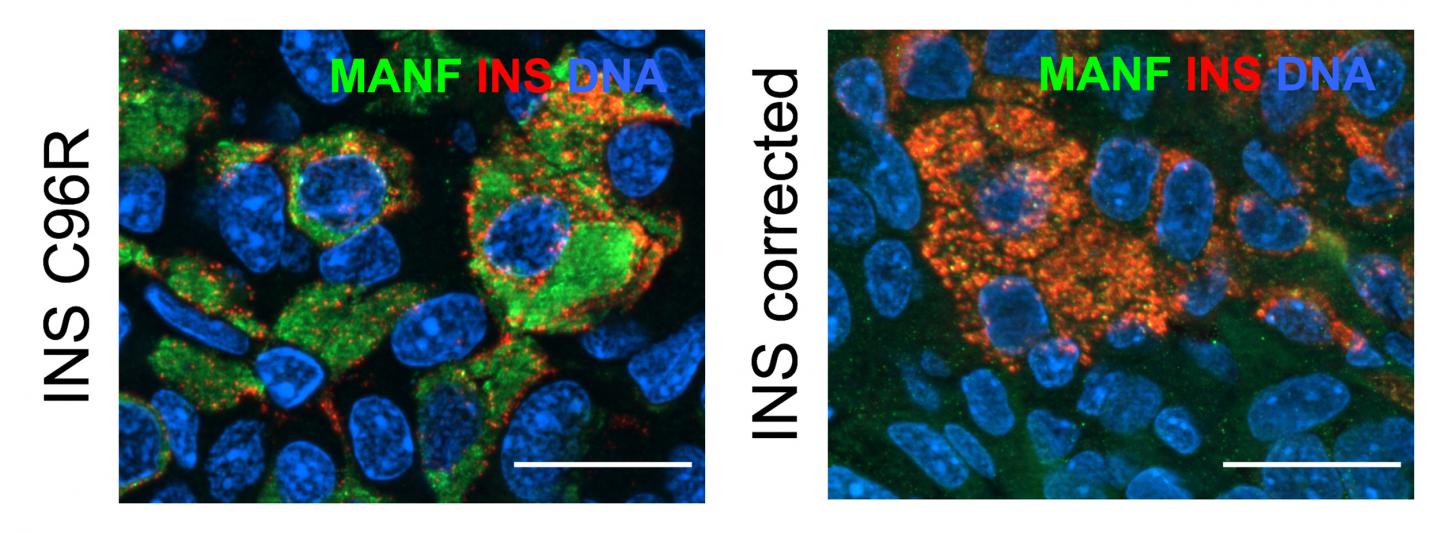
Credit: Otonkoski Lab / University of Helsinki

Insulin is secreted from the beta cells which are located in the pancreas, and it is crucial for the maintenance of normal blood sugar levels. Deficiency of insulin leads to diabetes, characterized by elevated blood sugar. Diabetes most commonly presents in childhood as Type 1 diabetes and in adults as Type 2 diabetes.

Sometimes diabetes is diagnosed already in very small babies, during the first six months of life. In these cases, mutations in the gene encoding insulin are often found.

These mutations are only found in one copy of the gene; that means that half of the produced insulin is normal, which should be enough to secure normal blood sugar. However, this is not the case: insulin secretion stops totally after a few months. It is believed that this is caused by a toxic effect of the mutant insulin inside the cell, but the exact mechanisms are poorly understood.

Mutant insulin is known to cause a chronic stress reaction in the beta cell, and it has been thought that this leads to the death of the cell. It is important to understand the detailed consequences of beta-cell stress, because this may help to develop drugs for the prevention of both rare and common forms of diabetes.

“We now had the chance to test this with real patient-derived cells”, tells Professor Timo Otonkoski from the University of Helsinki.

Researchers created a human disease model using stem cells from people carrying insulin gene mutations; then they corrected cells using a gene editing technique called CRISPR. The mutant and corrected stem cells were then induced to turn into insulin-secreting beta cells and the researchers followed the function of the cells after transplanting them in mice.

“The main finding of the study was that these cells do not die from the chronic stress, but their growth and development is disturbed. These effects are mediated through processes that could potentially be targeted by drugs”, Dr. Diego Balboa says.

“In this study, we describe mechanisms linking chronic cellular stress to the poor development of the insulin-producing cells. A strongly reduced number of beta-cells will cause diabetes immediately, but even a milder defect will increase the risk of diabetes later in life. Understanding the molecular mechanisms of these processes may help in devising ways to preserve the mass and function of beta cells”, Otonkoski states.

###

Media Contact
Timo Otonkoski
[email protected]
358-504-486-392

Original Source

https://www.helsinki.fi/en/news/health-news/scientists-discovered-mechanisms-behind-neonatal-diabetes

Related Journal Article

http://dx.doi.org/10.7554/eLife.38519

Tags: BiologyCell BiologyDevelopmental/Reproductive BiologyDiabetesGeneticsMedicine/HealthMetabolism/Metabolic Diseases
Share12Tweet8Share2ShareShareShare2

Related Posts

HIV-1 Strains Reveal Varied Paths to Antibody Escape — Biology

HIV-1 Strains Reveal Varied Paths to Antibody Escape

May 11, 2026
CRISPRi Screening Identifies Fungal-Specific Drug Targets — Biology

CRISPRi Screening Identifies Fungal-Specific Drug Targets

May 11, 2026

Transforming Jellyfish Bycatch into a Valuable Collagen Source for Cosmetics and Biotechnology

May 11, 2026

Ancient Plant Populations Reveal Fresh Insights into Climate Resilience

May 8, 2026
Please login to join discussion

POPULAR NEWS

  • Research Indicates Potential Connection Between Prenatal Medication Exposure and Elevated Autism Risk

    841 shares
    Share 336 Tweet 210
  • New Study Reveals Plants Can Detect the Sound of Rain

    728 shares
    Share 290 Tweet 182
  • Salmonella Haem Blocks Macrophages, Boosts Infection

    62 shares
    Share 25 Tweet 16
  • Breastmilk Balances E. coli and Beneficial Bacteria in Infant Gut Microbiomes

    57 shares
    Share 23 Tweet 14

About

We bring you the latest biotechnology news from best research centers and universities around the world. Check our website.

Follow us

Recent News

HIV-1 Strains Reveal Varied Paths to Antibody Escape

Rapid Nanopore Genomics Tracks Malaria Across Africa

Global City Growth Decouples from Fossil Fuels

Subscribe to Blog via Email

Success! An email was just sent to confirm your subscription. Please find the email now and click 'Confirm' to start subscribing.

Join 82 other subscribers
  • Contact Us

Bioengineer.org © Copyright 2023 All Rights Reserved.

Welcome Back!

Login to your account below

Forgotten Password?

Retrieve your password

Please enter your username or email address to reset your password.

Log In
No Result
View All Result
  • Homepages
    • Home Page 1
    • Home Page 2
  • News
  • National
  • Business
  • Health
  • Lifestyle
  • Science

Bioengineer.org © Copyright 2023 All Rights Reserved.