• HOME
  • NEWS
  • EXPLORE
    • CAREER
      • Companies
      • Jobs
    • EVENTS
    • iGEM
      • News
      • Team
    • PHOTOS
    • VIDEO
    • WIKI
  • BLOG
  • COMMUNITY
    • FACEBOOK
    • INSTAGRAM
    • TWITTER
Wednesday, May 13, 2026
BIOENGINEER.ORG
No Result
View All Result
  • Login
  • HOME
  • NEWS
  • EXPLORE
    • CAREER
      • Companies
      • Jobs
        • Lecturer
        • PhD Studentship
        • Postdoc
        • Research Assistant
    • EVENTS
    • iGEM
      • News
      • Team
    • PHOTOS
    • VIDEO
    • WIKI
  • BLOG
  • COMMUNITY
    • FACEBOOK
    • INSTAGRAM
    • TWITTER
  • HOME
  • NEWS
  • EXPLORE
    • CAREER
      • Companies
      • Jobs
        • Lecturer
        • PhD Studentship
        • Postdoc
        • Research Assistant
    • EVENTS
    • iGEM
      • News
      • Team
    • PHOTOS
    • VIDEO
    • WIKI
  • BLOG
  • COMMUNITY
    • FACEBOOK
    • INSTAGRAM
    • TWITTER
No Result
View All Result
Bioengineer.org
No Result
View All Result
Home NEWS Science News

Scientists discover unique Cornish ‘falgae’

Bioengineer by Bioengineer
March 31, 2021
in Science News
Reading Time: 2 mins read
0
IMAGE
Share on FacebookShare on TwitterShare on LinkedinShare on RedditShare on Telegram

IMAGE

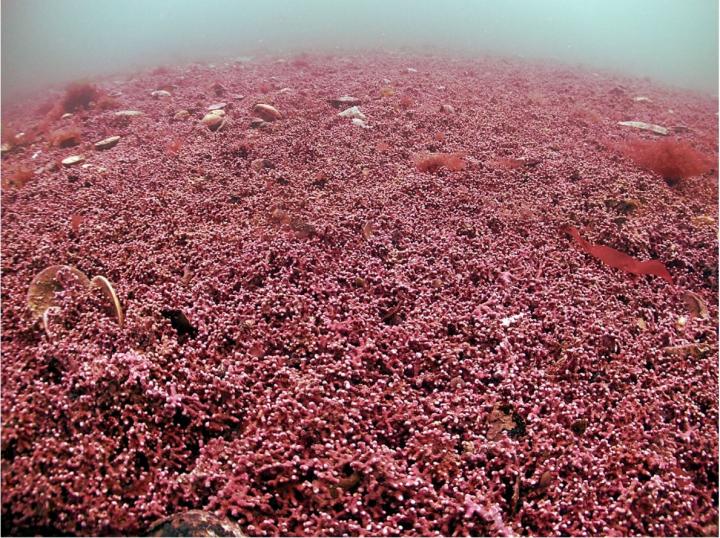
Credit: Mark Milburn/Atlantic Scuba

Red algae that grow in Cornwall’s Fal Estuary are genetically unique, new research shows.

University of Exeter scientists studied the population genetics of Phymatolithon calcareum, a coralline red algal species that forms maerl beds in shallow coastal seas from Portugal to Norway.

Large maerl beds fulfil a similar role to tropical coral reefs, providing habitats and vital shelter for hundreds or even thousands of fish and invertebrates. These algae also play an important role in storing carbon.

The findings reveal genetic differences are “structured geographically”, with slight variations between populations sampled from across this large geographic area.

However, maerl in the Fal Estuary were found to be “genetically distinct from all other sites” – including at the Manacles reef, just 13 km away across Falmouth Bay.

Maerl-forming species are extremely slow-growing algae and some maerl beds are estimated to be thousands of years old.

However, they are threatened by shipping, dredging and climate change, and the researchers say their findings highlight the need for site-by-site conservation management.

“It appears that the unique diversity in the Fal Estuary has likely been shaped over time by geographical isolation of this maerl bed and a lack of genetic exchange with other P. calcareum populations,” said Dr Tom Jenkins, of the University of Exeter.

“The wider genetic differences we found across north-east Atlantic are probably explained by the low dispersal capacity of this species, which limits connectivity between particular populations separated by large distances.”

Speaking about the Fal Estuary, Dr Jamie Stevens added: “This is a busy waterway and is heavily used by commercial and naval shipping accessing Falmouth port.

“Consequently, the genetically unique Fal maerl bed is very much at risk from marine pollution and the threat of sedimentation from dredging which is undertaken periodically to maintain navigable access to the port.

“There are several large maerl beds around the coast of south and south-west England, and the genetic differences we identified show that these need to be managed on a site-by-site basis, as separate and distinct populations.”

###

This study was funded by a British Ecological Society Research Grant.

The paper, published in the journal Evolutionary Applications, is entitled: “Whole genome genotyping reveals discrete genetic diversity in north-east Atlantic maerl beds.”

Media Contact
Alex Morrison
[email protected]

Related Journal Article

http://dx.doi.org/10.1111/eva.13219

Tags: BiodiversityBiologyClimate ChangeEcology/EnvironmentEvolutionFisheries/AquacultureGeneticsMarine/Freshwater BiologyPopulation Biology
Share12Tweet8Share2ShareShareShare2

Related Posts

Older Adults’ Views on Medication After Hospital Discharge

May 13, 2026
Flexible Carbon Nanotube Transistors Surpass 100 GHz — Technology and Engineering

Flexible Carbon Nanotube Transistors Surpass 100 GHz

May 13, 2026

Glycocalyx Exchange Powers Liquid Biopsies of Endothelium

May 13, 2026

Intensive Caregiving Duties Linked to Accelerated Cognitive Decline, Study Finds

May 13, 2026
Please login to join discussion

POPULAR NEWS

  • Research Indicates Potential Connection Between Prenatal Medication Exposure and Elevated Autism Risk

    842 shares
    Share 337 Tweet 211
  • New Study Reveals Plants Can Detect the Sound of Rain

    728 shares
    Share 290 Tweet 182
  • Salmonella Haem Blocks Macrophages, Boosts Infection

    62 shares
    Share 25 Tweet 16
  • Breastmilk Balances E. coli and Beneficial Bacteria in Infant Gut Microbiomes

    57 shares
    Share 23 Tweet 14

About

We bring you the latest biotechnology news from best research centers and universities around the world. Check our website.

Follow us

Recent News

Older Adults’ Views on Medication After Hospital Discharge

Flexible Carbon Nanotube Transistors Surpass 100 GHz

Glycocalyx Exchange Powers Liquid Biopsies of Endothelium

Subscribe to Blog via Email

Enter your email address to subscribe to this blog and receive notifications of new posts by email.

Join 82 other subscribers
  • Contact Us

Bioengineer.org © Copyright 2023 All Rights Reserved.

Welcome Back!

Login to your account below

Forgotten Password?

Retrieve your password

Please enter your username or email address to reset your password.

Log In
No Result
View All Result
  • Homepages
    • Home Page 1
    • Home Page 2
  • News
  • National
  • Business
  • Health
  • Lifestyle
  • Science

Bioengineer.org © Copyright 2023 All Rights Reserved.