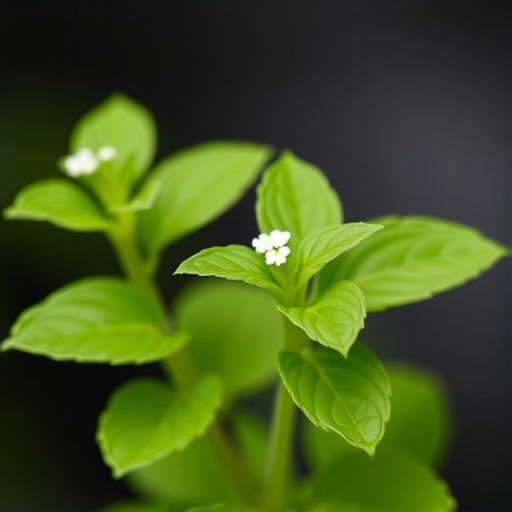
In the ongoing quest to uncover the genetic and biochemical secrets behind natural sweeteners, a groundbreaking study from the University of Toyama has illuminated the molecular intricacies governing the sweetness of Stevia rebaudiana. This plant, famed for producing steviol glycosides—compounds up to 300 times sweeter than sucrose—has long captured the attention of both researchers and food industry professionals. Yet, despite its popularity as a sugar alternative, the variation in taste quality among stevia cultivars has remained elusive. Some stevia varieties boast a clean, sugar-like flavor, whereas others are often plagued by lingering bitter notes. The latest research offers a compelling explanation: the secret lies not only in the plant’s genetic code but also in the precise spatial activation of certain glycosyltransferase genes within leaf tissues.
Dedicated to unraveling the biochemical roots of stevia’s flavor complexity, Professor Tsubasa Shoji and his colleagues employed a multi-disciplinary approach, deftly combining genetics, metabolomics, and cellular-level imaging. By constructing a high-quality reference genome for Stevia rebaudiana, the team established an indispensable blueprint that maps the plant’s entire DNA landscape. This comprehensive genomic framework facilitated the identification of critical genes responsible for the biosynthesis of steviol glycosides, particularly those contributing to the synthesis of premium sweet molecules like Rebaudioside D and M, known for their more desirable sensory profiles.
One of the study’s remarkable breakthroughs was the detection of a specialized subset of glycosyltransferase enzymes—specifically a family dubbed UGT76G—that actively modulate the sweetness profile of stevia. These enzymes engage in the glycosylation process, where glucose units are intricately attached to steviol backbones. The resulting molecular modifications directly influence the relative balance of sweet compounds within the leaf, skewing the flavor towards a sweeter, cleaner experience. Such enzymatic activity effectively tunes the sweetness by optimizing the production of favorable glycoside variants while suppressing those associated with bitterness.
The investigation took a pivotal step further by deploying single-nucleus RNA sequencing technology—a cutting-edge method allowing the examination of gene activity on a per-cell basis. This technique uncovered the nuanced cellular geography of gene expression within leaves, revealing that certain glycosyltransferase genes, like UGT91D4, exhibit a strikingly selective activation pattern. Rather than being uniformly expressed, UGT91D4 was found to be predominantly active in specific cellular niches such as the mesophyll, the photosynthetically active inner tissue, and the epidermal layers, which serve as protective barriers. This compartmentalized gene expression intimates that the localization of sweet compound biosynthesis plays an underappreciated role in shaping the taste profile.
Moreover, the study ventured into the population genetics of Stevia rebaudiana by exploring haplotypes—distinct genetic variants within the glycosyltransferase genes. These subtle genetic differences predispose each cultivar to unique enzymatic efficiencies and activities, accounting for the observable taste variations among stevia strains. This haplotype specialization further implicates that the optimization of stevia flavor lies in both gene sequence variation and the tissue-specific regulation of these genes’ expression.
The implications of this research are profound for the food and beverage industry, particularly as consumer demand surges for natural sweeteners that do not compromise on taste or health. By pinpointing the genetic determinants of cleaner and more sugar-like sweetness, the findings open pathways for precision breeding and genetic modification approaches aimed at producing next-generation stevia varieties. These enhanced cultivars may not only deliver improved sweetness with minimized bitterness but also ensure more consistent quality across production batches.
Beyond traditional breeding, this body of work also paves the way for synthetic biology interventions. By manipulating the cellular contexts in which these glycosyltransferase genes operate, scientists could engineer biosynthetic pathways to maximize the yield of high-value sweet compounds. As sugar consumption continues to be linked with global health challenges such as diabetes and obesity, innovations derived from this research could contribute significantly to dietary sugar reduction strategies without sacrificing palatability.
Professor Shoji’s team is optimistic about the broader utility of their findings, noting that their multi-omics approach—integrating genomic, transcriptomic, and metabolomic data—represents a powerful template for dissecting complex plant traits. Their methodology is adaptable and could be extended to other plant species that produce specialized metabolites with commercial significance, such as medicinal alkaloids or flavor-enhancing terpenes.
The study also highlights the importance of the spatial context within plant tissues when evaluating gene function. The discovery that gene activation is a cell-type-specific phenomenon underscores the limitations of bulk tissue analyses and emphasizes the necessity for high-resolution cellular investigations in plant biochemistry research.
As the scientific community digests these insights, the next steps will likely focus on translating molecular findings into practical applications. This includes the development of molecular markers for selective breeding, the formulation of biosynthetic models to predict flavor outcomes, and ultimately, the commercial cultivation of stevia lines tailored for the modern palate.
By advancing our understanding of how genetic and cellular factors interplay to orchestrate sweetness in stevia, this work not only enriches fundamental plant science but also heralds a healthier, more flavorful future for natural sweeteners.
Subject of Research: Cells
Article Title: Multi-Omics Dissection of Steviol Glycoside Synthesis Reveals Haplotype-Linked Specialization of UGT76G Genes in Stevia rebaudiana
News Publication Date: 14-May-2026
Web References: https://doi.org/10.1111/nph.71191
Image Credits: Ethel Aardvark from Wikimedia Commons
Keywords
Stevia, Steviol Glycosides, UGT76G, Glycosyltransferase, Gene Expression, Haplotypes, Multi-Omics, Single-Nucleus RNA Sequencing, Imaging Mass Spectrometry, Plant Genetics, Natural Sweeteners, Plant Biochemistry
Tags: biochemistry of stevia sweet compoundscellular imaging of stevia leaf tissuesgenetic basis of stevia sweetnesshigh-quality stevia reference genomemetabolomics in stevia researchmolecular mechanisms of steviol glycosidesnatural sweetener biosynthesis geneticsplant genomics for natural sweetenersstevia cultivar flavor variationstevia rebaudiana glycosyltransferase genesstevia sweetness and bitterness geneticssugar alternative genetic studies