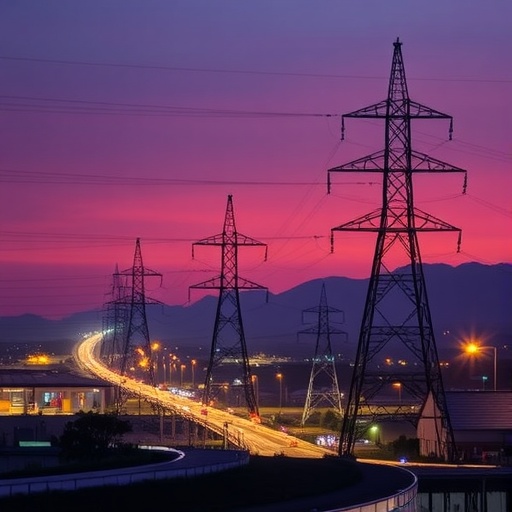
For more than half a century, power-system resilience has been treated as a question with a relatively narrow answer: how well does the grid withstand a particular disaster? Engineers have typically examined the consequences of a hurricane, heatwave, flood, wildfire or ice storm, then measured how quickly electricity service can be restored. That event-by-event approach has helped utilities prepare for recognizable threats, but a new review argues that it is no longer sufficient in a climate whose extremes are becoming more frequent, interconnected and difficult to predict. In the journal Nature Reviews Electrical Engineering, researchers propose a fundamental shift toward “long-horizon resilience”—an enduring property of a power system that determines how reliably it performs across many possible futures, rather than during one isolated catastrophe.
The distinction is more than a change in terminology. An event-based assessment usually begins with a defined hazard: a storm of a particular intensity, a flood with a specified return period or a heatwave lasting a known number of days. Analysts then model damage to generation plants, transmission lines, substations and distribution networks. They estimate the resulting loss of load, the number of affected customers and the time required for recovery. Such studies can reveal weaknesses and guide targeted investments. Yet their conclusions are tied to the assumptions surrounding one event. If the climate shifts faster than expected, or if several hazards occur in succession, a grid that appears resilient in one scenario may perform poorly in another.
Climate change makes those limitations increasingly consequential. Extreme heat can reduce the efficiency of thermal power plants while simultaneously driving air-conditioning demand to record levels. Drought can restrict hydropower production and reduce the availability of cooling water for conventional generators. Wildfires may damage transmission corridors, while smoke and high temperatures affect solar output and the health of grid equipment. Severe storms can disrupt several parts of the system at once, and recovery from one event may still be under way when a second hazard arrives. These interactions create what researchers describe as compounding uncertainty: planners must account not only for how intense future hazards may become, but also for when they will occur, how they will interact and how the power system itself will evolve.
The proposed long-horizon perspective treats resilience as a system-level capability that persists across a broad range of conditions. Instead of asking whether the grid can survive a particular hurricane, planners would ask whether its architecture, operational practices and recovery resources allow it to maintain acceptable performance across many plausible climate, demand and technology pathways. This includes the ability to absorb disturbances, adapt while conditions change and recover without prolonged loss of essential service. The concept is therefore closely connected to reliability, flexibility and adaptability, but it is not identical to any of them. Reliability often concerns normal operation and specified contingencies; long-horizon resilience extends the question to deep uncertainty, changing hazards and transformations in the grid itself.
That transformation is already under way. Electricity systems are incorporating larger shares of variable wind and solar generation, battery storage, electric vehicles, heat pumps, digital controls and distributed energy resources. These technologies can create new operational challenges, but they can also provide powerful resilience benefits. A network of batteries may supply critical services during an outage. Rooftop solar paired with storage can support homes, hospitals or emergency shelters when centralized infrastructure is damaged. Flexible demand can reduce pressure during heatwaves, while microgrids can isolate essential facilities from a failing regional network. The review’s framework places such resources within a wider system perspective, emphasizing that resilience depends on how technologies are combined, coordinated and maintained over decades.
A key technical challenge is deciding how long-horizon resilience should be measured. A single score can be misleading because grid performance has several dimensions. It may include the probability of service interruption, the amount of unmet electricity demand, the duration of outages, the speed of restoration and the ability to supply critical loads. It may also account for the geographic distribution of impacts, since a short outage in one area can have very different consequences from a similar outage affecting a hospital, water-treatment plant or emergency communications network. Under a long-horizon approach, these indicators would be evaluated over ensembles of possible futures rather than against one predicted event. The result would be a resilience profile showing how performance changes as hazards, technologies, demand and infrastructure conditions vary.
This approach also changes how uncertainty is handled. Traditional planning often seeks a best estimate of future conditions and then designs a system around it. But climate projections, technology costs, electricity demand and social priorities all contain uncertainty that cannot be eliminated. Long-horizon resilience instead encourages strategies that remain useful under multiple outcomes. Robust transmission connections, diversified generation, strategically located storage, vegetation management and equipment designed for higher temperatures may deliver benefits across many scenarios. Flexible investments can be expanded or redirected as new information arrives. In this sense, the best resilience measure may not be the one that optimizes performance under a single forecast, but the one that limits serious failure across the widest range of plausible futures.
The review emphasizes that resilience is not produced by hardware alone. Governance, institutions, markets and communities strongly influence whether a system can prepare for disruption and recover from it. Utilities need access to trained workers, replacement equipment, fuel, communications and emergency coordination. Regulators must create incentives for investments whose benefits may appear only during rare or uncertain events. Planners must also consider equity, because climate-related outages do not affect all communities equally. Households with fewer financial resources may be less able to purchase backup equipment, relocate temporarily or recover from spoiled food and lost income. A technically resilient grid that leaves vulnerable populations exposed would therefore represent an incomplete form of resilience.
Turning the concept into operational practice will require new models, data and decision tools. Researchers must improve representations of compound hazards, cascading failures, infrastructure ageing and interdependent systems such as transport, telecommunications and water networks. They will need methods that connect climate projections with detailed power-flow, reliability and recovery simulations without creating false precision. Long-term planning must also compare investments whose benefits are difficult to quantify, including avoided disruption, public safety and faster restoration. The authors identify these challenges as a broad research agenda: define measurable resilience objectives, develop consistent assessment methods, understand interactions between emerging technologies and climate hazards, and design adaptive strategies that can be revised as evidence accumulates.
The central message is that a resilient power system cannot be judged solely by how it performs during the last disaster or the next forecast storm. Its deeper test is whether it can continue delivering essential electricity as hazards evolve, technologies change and uncertainty persists. By replacing the event-centered paradigm with a long-horizon view, the researchers offer a framework for treating climate adaptation as a continuing property of system design rather than a sequence of emergency responses. The shift could influence how grids are modeled, regulated and financed, encouraging investments that preserve options instead of locking planners into one assumed future. As electrification expands and societies become more dependent on power, resilience across decades may become as important as reliability from one moment to the next.
Subject of Research: Long-horizon resilience of power systems under climate change
Article Title: Long-horizon resilience of power systems under climate change
Article References: Ruan, J., Li, Y., Gu, C. et al. “Long-horizon resilience of power systems under climate change.” Nature Reviews Electrical Engineering (2026). https://doi.org/10.1038/s44287-026-00322-6
Image Credits: AI Generated
DOI: 10.1038/s44287-026-00322-6
Keywords: Power systems, climate change, long-horizon resilience, extreme weather, electricity grids, energy infrastructure, adaptation, grid reliability, energy storage, climate risk
Tags: assessing power system vulnerability to interconnected climate extremeschallenges of predicting interconnected climate hazardsClimate change impact on power grid resilienceenhancing power system reliability amidst increasing climate disruptionsevent-based vs. long-horizon resilience in electrical engineeringfuture-proofing electrical grids against unpredictable climate eventsinfrastructure resilience strategies for climate-induced natural disastersintegrating climate risk into power grid planning and operationlong-term power system performance under climate variabilitylong-term resilience metrics for power system sustainabilitymodeling power grid response to future climate scenarios