• HOME
  • NEWS
  • EXPLORE
    • CAREER
      • Companies
      • Jobs
    • EVENTS
    • iGEM
      • News
      • Team
    • PHOTOS
    • VIDEO
    • WIKI
  • BLOG
  • COMMUNITY
    • FACEBOOK
    • INSTAGRAM
    • TWITTER
Tuesday, November 17, 2026
BIOENGINEER.ORG
No Result
View All Result
  • Login
  • HOME
  • NEWS
  • EXPLORE
    • CAREER
      • Companies
      • Jobs
        • Lecturer
        • PhD Studentship
        • Postdoc
        • Research Assistant
    • EVENTS
    • iGEM
      • News
      • Team
    • PHOTOS
    • VIDEO
    • WIKI
  • BLOG
  • COMMUNITY
    • FACEBOOK
    • INSTAGRAM
    • TWITTER
No Result
View All Result
Bioengineer.org
No Result
View All Result
Home NEWS Science News Biology

Scientists discover link between ALS genes

Bioengineer by Bioengineer
January 16, 2020
in Biology
Reading Time: 2 mins read
0
IMAGE
Share on FacebookShare on TwitterShare on LinkedinShare on RedditShare on Telegram

Study holds promise for ALS treatments
IMAGE

Credit: University of Malta

The enzyme Gemin3 was identified as the molecular ‘bridge’ between genes whose mutation or disruption causes amyotrophic lateral sclerosis (ALS), according to a new study in Nature‘s Scientific Reports from scientists at the University of Malta.

ALS robs patients of their ability to walk, eat or breathe. The late-onset neurodegenerative disease destroys motor neurons, the long nerve cells in the brain and spinal cord that tell the muscles what to do. Signals from these nerves gradually stop reaching the muscles, which weaken and die. There is no cure for ALS, and, eventually, the disease is fatal.

Genetics contributes significantly to the development of ALS. Mutations in any of an ever-increasing list of genes have been identified to cause ALS with TDP-43, FUS and SOD1 featuring at the top considering that together they are responsible for a large percentage of ALS cases with a family history.

“We have been perplexed by the seemingly diverse functions of genes linked to ALS. The lack of commonality complicates the process for developing treatments that are broadly beneficial,” said the study’s lead researcher Dr Ruben J. Cauchi, PhD, a senior lecturer at the University of Malta’s Faculty of Medicine & Surgery and principal investigator at the University of Malta’s Centre for Molecular Medicine and Biobanking.

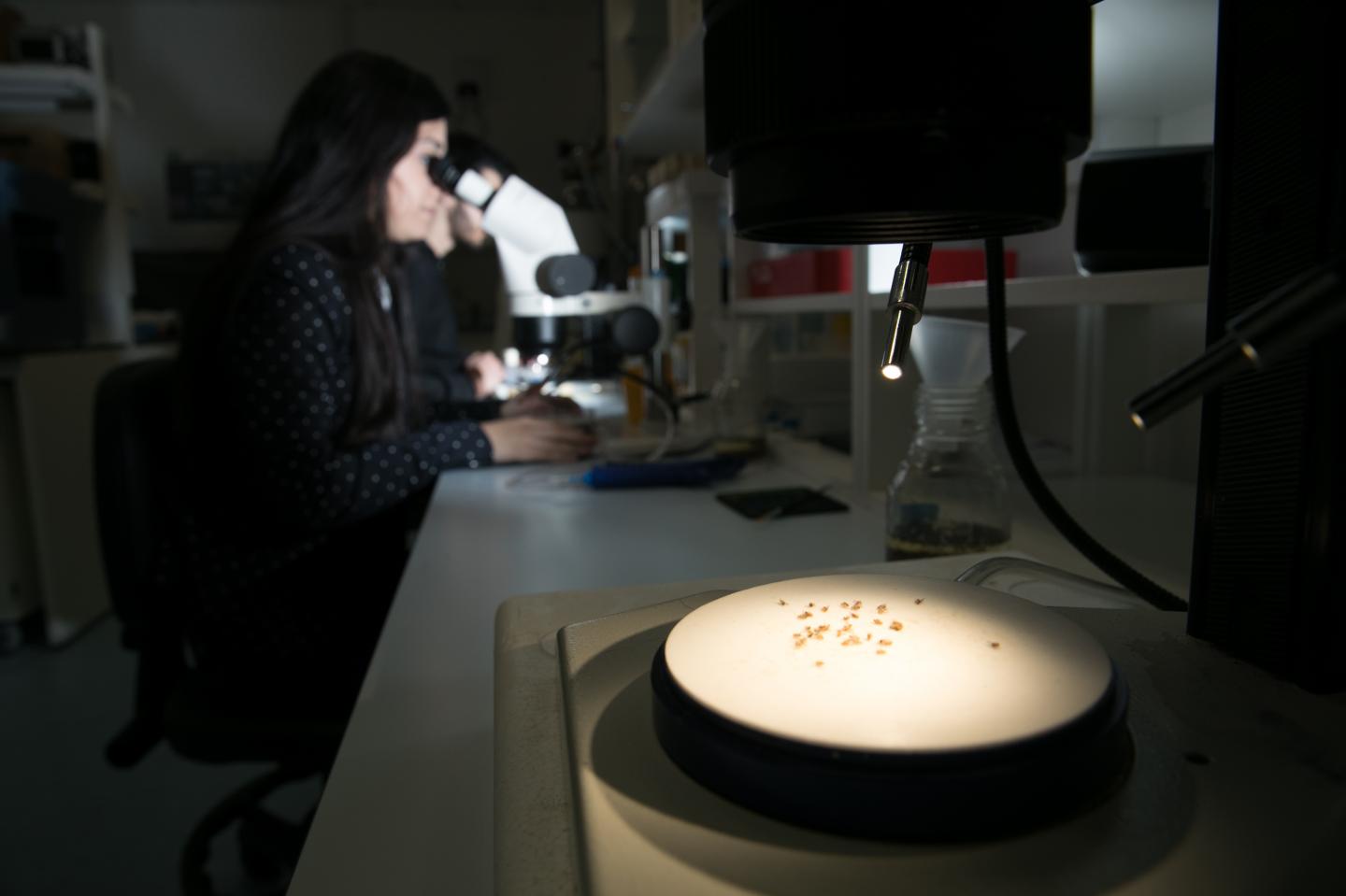
Through investigations on fruit flies, the research team were able to identify a gene whose mild perturbation was enough to trigger worsening of ALS symptoms caused by disruption of TDP-43, FUS or SOD1. The gene, named Gemin3, produces an enzyme offering researchers the possibility of tuning its function to ameliorate ALS symptoms.

“Our findings point to an overlap in disease-causing mechanisms underlying each different ALS-causing gene. This can potentially unveil new targets for therapies that are effective in a wide range of ALS patients,” added Dr Cauchi.

Gemin3 has long been known for its alliance with the survival motor neuron (SMN) protein. A deficiency of SMN causes spinal muscular atrophy (SMA), a motor neuron disease that strikes infants. Gemin3’s activity is crucial for building the splicing machinery which edits the cell’s genetic instructions. Earlier discoveries of the research group linked Gemin3 to several key players in this delicate process.

Right now, the research team is determining whether targeting multiple players in the pathway uncovered by Gemin3 can ameliorate ALS, a result that can potentially pave the way for development of treatments that are effective to a broad swathe of ALS patients.

###

Study co-authors are Rebecca Cacciottolo, Joanna Ciantar, Maia Lanfranco, Rebecca Borg and Prof Neville Vassallo from the University of Malta, and Dr Remy Bordonne from the Institut de Genetique Moleculaire de Montpellier (CNRS/Universite de Montpellier). Research in Dr. Cauchi’s laboratory is founded by the Malta Council for Science & Technology, an Endeavour Scholarship (part-financed by the European Social Fund), ALS Malta Foundation and the University of Malta’s Research Trust (RIDT).

Media Contact
Dr. Ruben J. Cauchi
ruben.cauchi@um.edu.mt
356-234-02145

Related Journal Article

http://dx.doi.org/10.1038/s41598-019-53508-4

Tags: GenesGeneticsMedicine/Healthneurobiology
Share12Tweet8Share2ShareShareShare2

Related Posts

Serum Mass Spectrometry Predicts Treatment Response in HER2-Positive Breast Cancer

Serum Mass Spectrometry Predicts Treatment Response in HER2-Positive Breast Cancer

November 17, 2026
Kangaroo Care Probably Reduces Deaths in Low Birthweight and Preterm Newborns

Kangaroo Care Probably Reduces Deaths in Low Birthweight and Preterm Newborns

November 17, 2026

County Forest Structure Often Shapes Bird Occurrence More Than Protected Park Area

November 17, 2026

Engineered E. coli Secretes Thermophilic Cellulase Cocktail for Seawater-Compatible Biorefining

November 17, 2026
Please login to join discussion

POPULAR NEWS

  • Structured IDEA Expert Elicitation Framework Enhances Design of Rare Disease Trials

    Structured IDEA Expert Elicitation Framework Enhances Design of Rare Disease Trials

    29 shares
    Share 12 Tweet 7
  • Syndesmotic Fixation Speeds Early Ankle Recovery but Matches Non-Fixation at Two Years

    29 shares
    Share 12 Tweet 7
  • German Nationwide Survey Identifies Workplace Bullying Patterns Across Industries and Age Groups

    29 shares
    Share 12 Tweet 7
  • TCAD Simulations Identify Efficiency Gains for Sustainable CZTS Solar Cells

    29 shares
    Share 12 Tweet 7

About

We bring you the latest biotechnology news from best research centers and universities around the world. Check our website.

Follow us

Recent News

Alloplastic Temporomandibular Joint Replacement Offers Uncertain Benefits After Mandibular Neoplasm Resection

Serum Mass Spectrometry Predicts Treatment Response in HER2-Positive Breast Cancer

Polypharmacy Linked to Higher Odds of Sarcopenia in Older Adults

Subscribe to Blog via Email

Enter your email address to subscribe to this blog and receive notifications of new posts by email.

Join 88 other subscribers
  • Contact Us

Bioengineer.org © Copyright 2023 All Rights Reserved.

Welcome Back!

Login to your account below

Forgotten Password?

Retrieve your password

Please enter your username or email address to reset your password.

Log In
No Result
View All Result
  • Homepages
    • Home Page 1
    • Home Page 2
  • News
  • National
  • Business
  • Health
  • Lifestyle
  • Science

Bioengineer.org © Copyright 2023 All Rights Reserved.