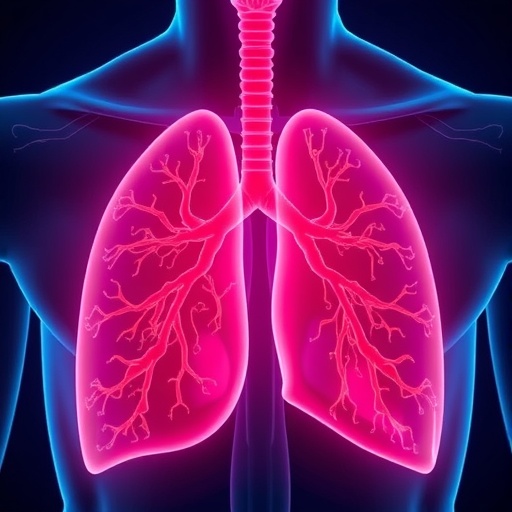
Researchers at Oregon State University have pioneered a transformative approach for simultaneously targeting lung cancer and the debilitating muscle-wasting syndrome known as cachexia—a condition that plagues many lung cancer patients. Their groundbreaking work employs lipid nanoparticles (LNPs) as a delivery vehicle for messenger RNA (mRNA) therapeutics, addressing critical challenges in precision drug delivery for aggressive tumors deep within the lung tissue.
Lipid nanoparticles, microscopic carriers composed of fatty compounds like lipids, have revolutionized drug delivery with their ability to ferry genetic material directly into cells. In this study, the OSU team engineered LNPs comprised of DC-cholesterol and a specialized ionizable lipid, 113-O12B, which exhibited a remarkable ability to bind a blood serum protein called vitronectin. This binding triggers the formation of a protein corona on the nanoparticles, a dynamic interface that actively guides the LNPs to lung tissue, and more importantly, lung tumor microenvironments.
Vitronectin’s recruitment is no coincidence. It interacts with integrin receptors—cellular docking proteins highly expressed on lung cancer cells. These integrins act as biological gateways, facilitating enhanced uptake of the therapeutic nanoparticles by tumor cells while sparing healthy tissue. This receptor-mediated targeting marks a significant advance over conventional LNPs, which commonly accumulate in the liver, limiting their therapeutic index against lung malignancies.
A key therapeutic payload in the OSU nanoparticles is the mRNA encoding follistatin, a potent protein with dual biological activity. Within the tumor microenvironment, follistatin acts as an inhibitor of tumor growth pathways, but it also plays an essential role in promoting muscle mass. This dual function is crucial, as cancer cachexia leads to extreme muscle wasting and weight loss, significantly increasing mortality risks for patients.
Through intravenous administration in murine models, the specially formulated LNPs demonstrated preferential accumulation in lung tumors, achieving approximately 2.5 times greater tumor burden reduction compared to liver-tropic LNPs. The delivery of follistatin mRNA induced local protein expression that not only suppressed tumor growth but also mitigated cachexia symptoms by preserving muscle and adipose tissues, enhancing food intake and maintaining body weight.
This dual-action approach is pioneering. Where traditional cancer therapies often ignore systemic wasting syndromes like cachexia, the OSU-developed nanoparticles tackle both the primary tumor and the debilitating muscle degradation, with no observed adverse side effects in preclinical studies. This represents a step change in integrative oncology, where combination treatment efficacy emerges from a single therapeutic platform.
Despite these promising results, the researchers caution that further preclinical testing remains essential before translation to human trials. Their findings, published in the Journal of Controlled Release, provide compelling evidence for the therapeutic potential of mRNA nanocarriers tailored for lung cancer and associated cachexia—two intertwined conditions that severely undermine patient survival and quality of life.
Dr. Oleh Taratula, one of the lead investigators, emphasized the novelty of their strategy, noting that “systemic delivery of mRNA therapeutics to lung tumors has remained a formidable challenge,” primarily due to ineffective drug accumulation and off-target organ toxicity. The incorporation of vitronectin-binding LNPs to circumvent these obstacles offers a powerful new avenue for mRNA-based therapies.
The broader context of this research highlights lung cancer as the third most common cancer in the United States and the leading cause of cancer mortality. Each year, approximately 230,000 new cases are diagnosed, with about 125,000 deaths, underscoring an urgent need for innovative treatments. The disproportionate risk among smokers amplifies public health concerns surrounding this disease.
Cachexia complicates clinical prognosis for lung cancer patients, affecting up to 30% of individuals diagnosed. It causes profound weight loss despite nutritional intake—primarily due to catabolic breakdown of skeletal muscle and loss of adipose tissue. Traditional cancer therapies have proven insufficient in addressing this syndrome, creating a critical therapeutic void.
The OSU team’s success leveraged interdisciplinary expertise spanning pharmaceutics, molecular biology, and bioengineering. Collaborative efforts included faculty members from various departments and partnerships with industry experts specializing in peptide therapies. This synergy enabled precise nanoparticle formulation and in-depth mechanistic studies to validate the targeted delivery approach.
Fundamental to the clinical relevancy of this research is the integration of ionizable lipids within the nanoparticle structure. These lipids facilitate endosomal escape—a crucial step for mRNA to reach the cytoplasm and trigger protein synthesis. The ionizable lipid 113-O12B was critical for endowing the LNPs with both stability in circulation and efficient cellular delivery potential.
From a translational perspective, the prospect of intravenous LNP administration simplifies systemic treatment regimens, improving patient compliance compared to localized delivery methods. The targeted nature of this therapeutic minimizes systemic exposure and potential immune-related adverse events, which have historically impeded mRNA therapeutic development for oncology.
The implications of this work extend beyond lung cancer and cachexia, suggesting a versatile platform adaptable for other cancers with known receptor profiles that can be exploited for tissue-specific targeting. Moreover, the demonstrated capacity to mitigate muscle wasting opens doors for treating other cachexia-associated malignancies and chronic conditions involving muscle catabolism.
As this research advances toward clinical trials, it promises to redefine therapeutic paradigms by coupling precision nanomedicine with genetic medicine, offering hope for improved outcomes and enhanced quality of life for patients afflicted by lung cancer and its severe systemic complications.
Subject of Research: Animals
Article Title: Not provided
News Publication Date: 30-Mar-2026
Web References: http://dx.doi.org/10.1016/j.jconrel.2026.114870
Image Credits: Graphic by Parinaz Ghanbari
Keywords: Lung cancer, lipid nanoparticles, mRNA delivery, follistatin, cachexia, integrin receptors, vitronectin, targeted therapy, nanoparticle drug delivery, tumor microenvironment, muscle wasting, systemic therapy
Tags: cachexia treatment in lung cancer patientsDC-cholesterol and ionizable lipid nanoparticlesdual therapy for cancer and muscle wastingintegrin receptor targeting in cancer therapylung cancer treatment with lipid nanoparticlesmRNA therapeutics for lung tumorsnanoparticle drug delivery to lung tissuenanoparticle-mediated mRNA delivery systemsOregon State University cancer researchovercoming liver accumulation in nanoparticle deliveryprecision medicine for aggressive lung tumorsvitronectin protein corona on nanoparticles