• HOME
  • NEWS
  • EXPLORE
    • CAREER
      • Companies
      • Jobs
    • EVENTS
    • iGEM
      • News
      • Team
    • PHOTOS
    • VIDEO
    • WIKI
  • BLOG
  • COMMUNITY
    • FACEBOOK
    • INSTAGRAM
    • TWITTER
Friday, June 26, 2026
BIOENGINEER.ORG
No Result
View All Result
  • Login
  • HOME
  • NEWS
  • EXPLORE
    • CAREER
      • Companies
      • Jobs
        • Lecturer
        • PhD Studentship
        • Postdoc
        • Research Assistant
    • EVENTS
    • iGEM
      • News
      • Team
    • PHOTOS
    • VIDEO
    • WIKI
  • BLOG
  • COMMUNITY
    • FACEBOOK
    • INSTAGRAM
    • TWITTER
  • HOME
  • NEWS
  • EXPLORE
    • CAREER
      • Companies
      • Jobs
        • Lecturer
        • PhD Studentship
        • Postdoc
        • Research Assistant
    • EVENTS
    • iGEM
      • News
      • Team
    • PHOTOS
    • VIDEO
    • WIKI
  • BLOG
  • COMMUNITY
    • FACEBOOK
    • INSTAGRAM
    • TWITTER
No Result
View All Result
Bioengineer.org
No Result
View All Result
Home NEWS Science News Chemistry

Scientists develop world most-sensitive IR photon video detector

Bioengineer by Bioengineer
November 17, 2020
in Chemistry
Reading Time: 3 mins read
1
IMAGE
Share on FacebookShare on TwitterShare on LinkedinShare on RedditShare on Telegram

IMAGE

Credit: Sergey Gnuskov/NUST MISIS

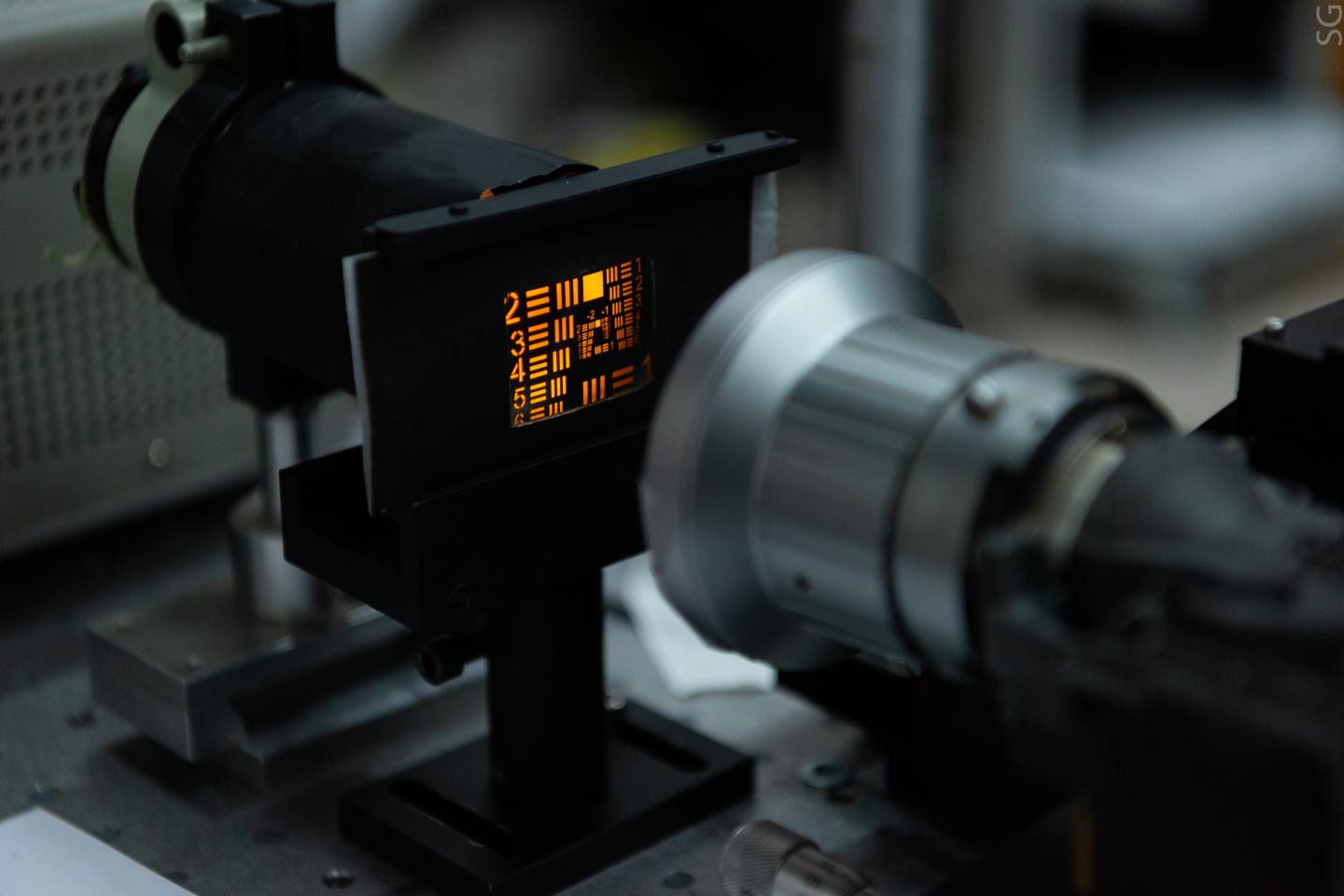
Scientists from NUST MISIS National Technological Initiative Center “Quantum Communications” are developing the world’s first prototype of an infrared photon video detector. This will be a camera so powerful that it would be able to track the movement of single particles. The camera will be equipped with a 1000-pixel matrix. Such a system will be used in a number of areas where high-precision measurements are required: secure communications, including satellite ones, quantum computing, and diagnostic medicine. The development is carried out within a contract with the Ministry of Industry and Trade of the Russian Federation.

A photon is an elementary quantum particle of electromagnetic radiation or, in other words, light. If you can track individual quanta of infrared light, you can significantly improve the security of communication lines and the accuracy of measuring devices.

This is not a new idea, as the first attempts to detect single photons were made at the beginning of the 20th century via electronic lamps, photoelectronic multipliers. However, the first devices, due to the weak technological component, worked slowly, sometimes did not work, and sometimes they worked falsely. Then there were semiconductor devices: avalanche photodiodes, which worked better, but only with visible light. A significant breakthrough was made in the early 2000s when the team of Russian physicist Grigory Goltsman founded the company “Skontel”, created a single-pixel photo detector of single infrared photons on superconductors.

Now in 2020, as part of NUST MISIS NTI Center “Quantum Communications”, the team is developing a 1000-pixel single photon video detector within a contract with the Ministry of Industry and Trade of the Russian Federation. The device, which has no analogues in the world, will not only detect particles, but also get an image in almost complete darkness. At the moment, the first stage has been completed and 8 pixels have been created. According to scientists, this number already allows one to understand and control the principles of the matrix. The next step is scaling.

“The detector itself is located inside the cryostat at a temperature of only 2 K, which is close to absolute zero. When a photon is detected, it sends a signal to the processing circuit, and an image appears on the display”, comments Grigory Goltsman, Chief Researcher at NUST MISIS NTI Center “Quantum Communications”, founder of “Skontel” company.

Our next step is to get an image of 1,000,000 pixels from a matrix of 1000 pixels. You can “open” one pixel at a time, as in old TVs, but this will be a very slow process. Therefore, to further scale the resulting image, scientists apply special patterns.

“There is a way to speed up the process: open pixels in groups. For this purpose, special stencils are used. You open one pattern, measure how much light hits the detector, then you open the second pattern, and so on”, says Alexander Korneev, Senior Researcher at NUST MISIS NTI Center “Quantum Communications”.

As noted, the final device can be applied in the most high-tech areas: when creating secure quantum communication lines, including satellite communication channels, when designing a quantum, as well as in diagnostic medical devices.

###

Media Contact
Lyudmila Dozhdikova
[email protected]

Original Source

https://en.misis.ru/university/news/science/2020-11/7060/

Tags: Atomic/Molecular/Particle PhysicsChemistry/Physics/Materials SciencesElectrical Engineering/ElectronicsOpticsParticle PhysicsResearch/DevelopmentTechnology/Engineering/Computer Science
Share12Tweet8Share2ShareShareShare2

Related Posts

AI and Physics Collaborate to Design Advanced Hydrogen Storage Materials

June 25, 2026

International Team Including Dresden Scientists Develops Novel Designer Proteins for Advanced Study of Living Tissue

June 25, 2026

New Study Uncovers Key Factors Driving Water Chemistry in Nanoscale Environments

June 25, 2026

Plasma Technology Extends Catalyst Lifespan in Hydrogen Production

June 24, 2026
Please login to join discussion

POPULAR NEWS

  • Saying Goodbye to PGY-6: Pediatric Fellowship Realities

    103 shares
    Share 41 Tweet 26
  • Multi-Hospital Study Reveals Long Covid Burden Is Twice as High as Current Estimates

    92 shares
    Share 36 Tweet 23
  • Detection of EDCs in Breast Milk and Infant Urine Up to Six Months Highlights Early Exposure Risks

    77 shares
    Share 31 Tweet 19
  • New Drug Candidate Developed at McMaster Shows Potential for Treating Brain Cancer

    58 shares
    Share 23 Tweet 15

About

We bring you the latest biotechnology news from best research centers and universities around the world. Check our website.

Follow us

Recent News

Tracking Lanthanide-Labeled Microplastics in Plants

POSTECH Researchers Slash Cost of Reconstituted Cell-Free Systems by 95%

AI and Physics Collaborate to Design Advanced Hydrogen Storage Materials

Subscribe to Blog via Email

Success! An email was just sent to confirm your subscription. Please find the email now and click 'Confirm' to start subscribing.

Join 82 other subscribers
  • Contact Us

Bioengineer.org © Copyright 2023 All Rights Reserved.

Welcome Back!

Login to your account below

Forgotten Password?

Retrieve your password

Please enter your username or email address to reset your password.

Log In
No Result
View All Result
  • Homepages
    • Home Page 1
    • Home Page 2
  • News
  • National
  • Business
  • Health
  • Lifestyle
  • Science

Bioengineer.org © Copyright 2023 All Rights Reserved.