Credit: ©M. Lemke
Next-generation sequencing–the ability to sequence millions or billions of small fragments of DNA in parallel–has revolutionized the biological sciences, playing an essential role in everything from locating mutations that cause human disease to determining how a newly discovered animal fits into the tree of life. But a study published today in the journal Scientific Reports reveals that a favored sequencing method for measuring microbial biodiversity is not as accurate as once thought.
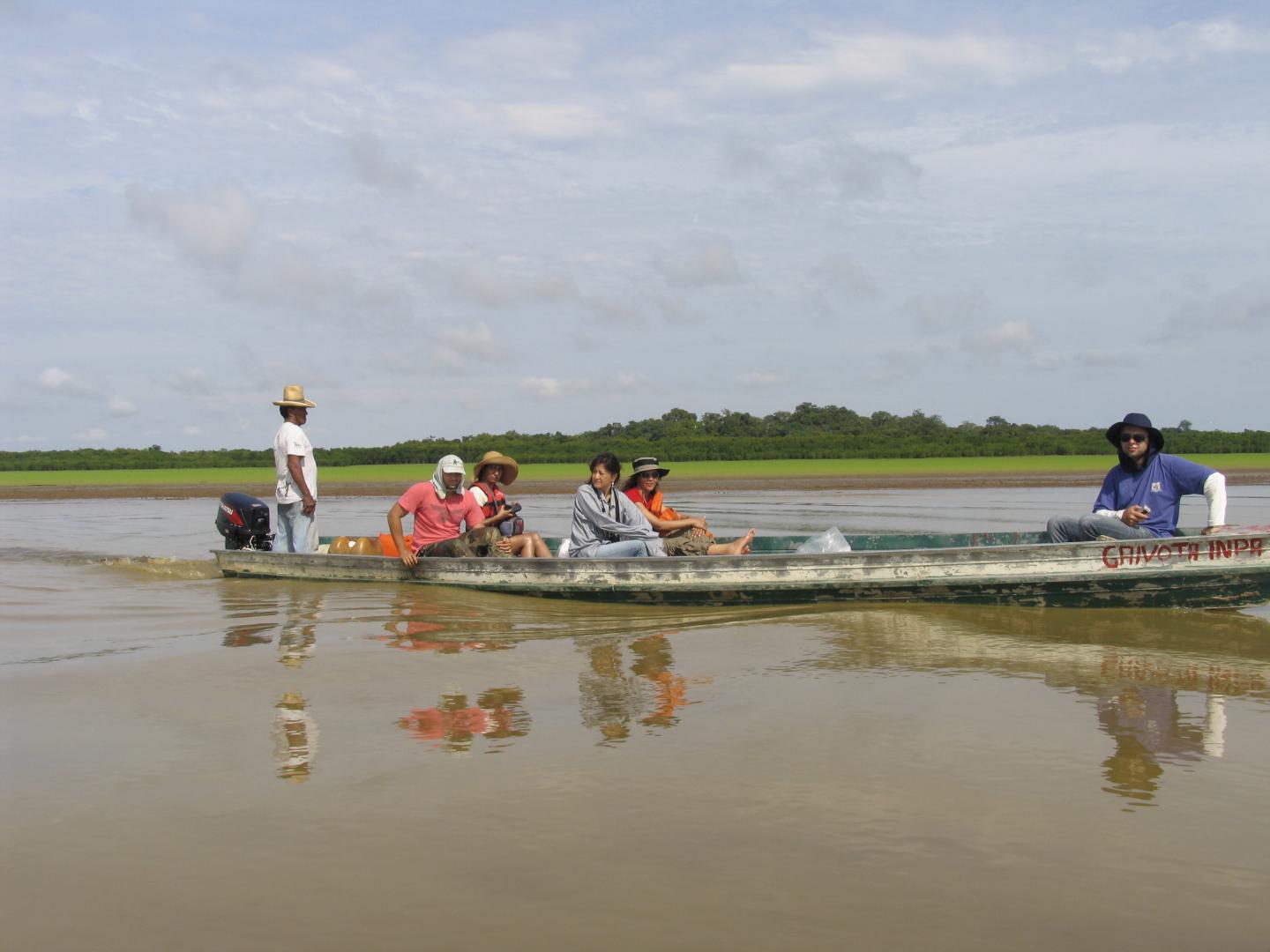
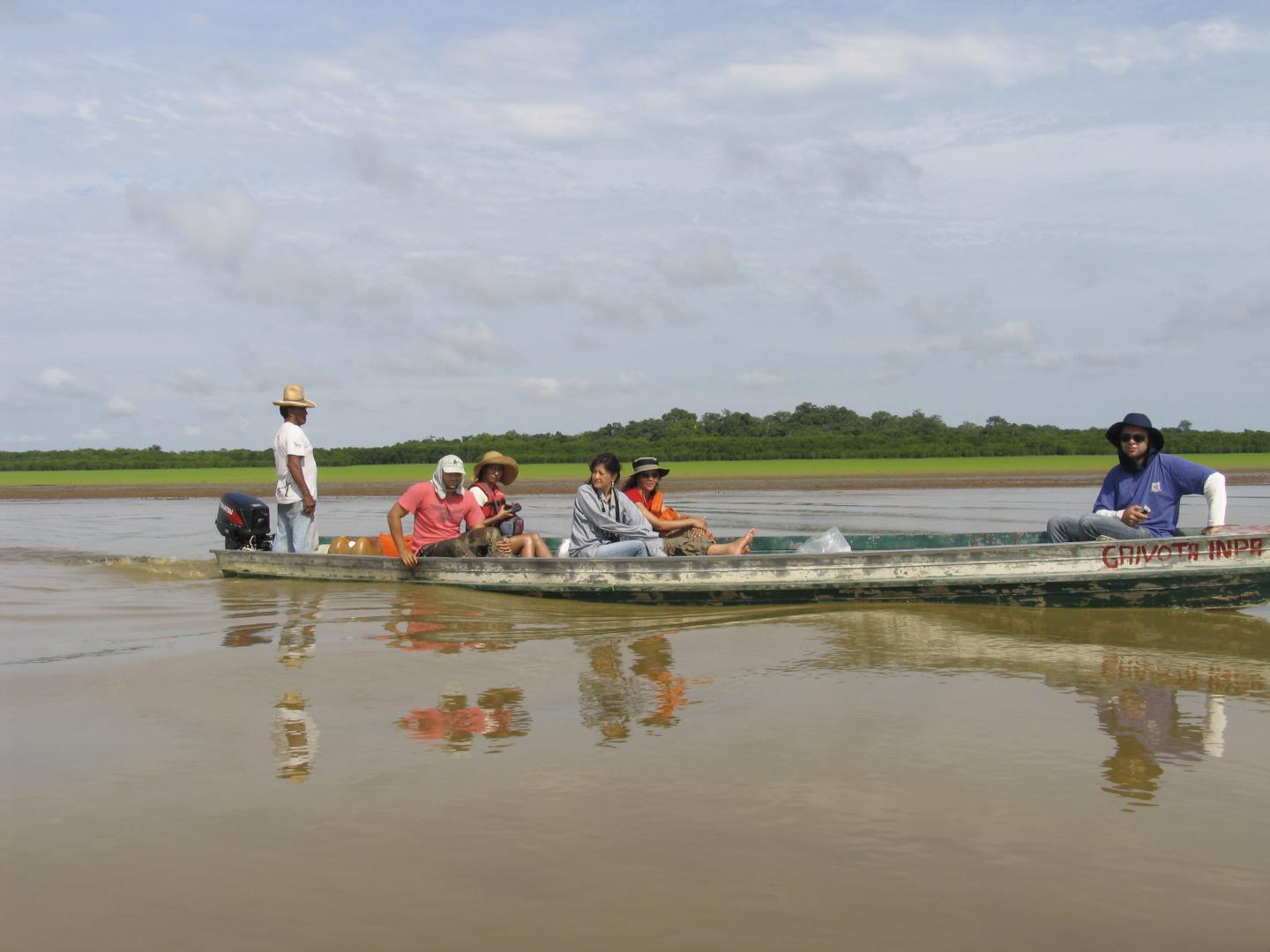
The research team, led by scientists from the American Museum of Natural History, the City University of New York (CUNY), Weill Cornell Medicine, Universidade Estadual de Maringá, Instituto Cesumar de Ci?ncia, Tecnologia e Inovação, and the University of Illinois Springfield, compared two next-generation sequencing techniques – called amplicon and shotgun – on water samples from four of Brazil's major river floodplain systems. Less than 50 percent of phyla–a category for a very broad group of related organisms–identified via amplicon sequencing were recovered from shotgun sequencing, challenging the dogma that shotgun recovers more diversity than amplicon-based approaches. Amplicon sequencing also revealed about 27 percent more families.
"As an example of the potential impact of our finding, you can think about the phyla Cnidaria, which contains all of the world's anemones, corals, and jellyfish," said senior author Mercer R. Brugler, a research associate in the Museum's Division of Invertebrate Zoology and an assistant professor at NYC College of Technology, CUNY. "One method would find a representative from this group and the other would not. Phyla are huge groups that are completely missing from the shotgun sequencing data."
With amplicon, the same gene (16S ribosomal RNA in this case) is sequenced from every sample, while DNA fragments are randomly sequenced when working with a shotgun technique. Although amplicon has been the traditional workhorse for studies on microbial life, the spike in human microbiome research inspired many scientists to switch to shotgun, which is cheaper and generates more genetic information. Previous human microbiome studies comparing the two techniques have also shown that shotgun produces equivalent, if not better, results. So the researchers involved in this Brazilian water study were surprised when they found something very different.
"After our earlier publication on these samples, we switched from amplicon to shotgun, with the intention of simply getting larger sample sizes," said lead author Michael Tessler, a recent graduate of the Museum's Richard Gilder Graduate School. "We just happened to compare the two methods because we had the data, so why not? We thought the shotgun data were at least going to be equal, if not rock the socks off of the amplicon data."
They thought that because of the huge disparity in the amount of genetic data each method generates: amplicon gave them about 346,000 fragments of useable DNA, while shotgun resulted in about 575 million reads. Yet amplicon revealed more than twice the number of phyla.
"It's like a fisherman with a single fishing rod catching more fish than a commercial trawler," Tessler said.
So why did amplicon sequencing, which is thought by many as an aging technique, outperform shotgun in this case? Shotgun sequences random fragments of DNA, not one consistent gene, so it requires researchers to have a strong database they can use to match the sequences to an organism. If the data for that organism do not exist, you only get the closest match, or no match at all. For this study, which looks at fairly understudied freshwater bacteria, the database is extremely weak.
"The takehome message is that if you're working in a more remote system, you need to be testing your methods," Tessler said.
Brugler added: "Studies to date that have used shotgun alone to infer microbial diversity estimates should be viewed cautiously, as they are likely underestimating true diversity."
###
This study was supported in part by the Korein Foundation, the Gerstner Family Foundation, the Irma T. Hirschl and Minque Weill-Caulier Charitable Trusts, the Bert L. and N. Kuggie Vallee Foundation, the WorldQuant Foundation, the Bill and Melinda Gates Foundation (grant #OPP1151054), and the Brazilian National Council of Technological and Scientific Development.
Scientific Reports paper: https://www.nature.com/articles/s41598-017-06665-3
AMERICAN MUSEUM OF NATURAL HISTORY (AMNH.ORG)
The American Museum of Natural History, founded in 1869, is one of the world's preeminent scientific, educational, and cultural institutions. The Museum encompasses 45 permanent exhibition halls, including the Rose Center for Earth and Space and the Hayden Planetarium, as well as galleries for temporary exhibitions. It is home to the Theodore Roosevelt Memorial, New York State's official memorial to its 33rd governor and the nation's 26th president, and a tribute to Roosevelt's enduring legacy of conservation. The Museum's five active research divisions and three cross-disciplinary centers support approximately 200 scientists, whose work draws on a world-class permanent collection of more than 34 million specimens and artifacts, as well as specialized collections for frozen tissue and genomic and astrophysical data, and one of the largest natural history libraries in the world. Through its Richard Gilder Graduate School, it is the only American museum authorized to grant the Ph.D. degree and the Master of Arts in Teaching degree. Annual attendance has grown to approximately 5 million, and the Museum's exhibitions and Space Shows can be seen in venues on five continents. The Museum's website and collection of apps for mobile devices extend its collections, exhibitions, and educational programs to millions more beyond its walls. Visit amnh.org for more information.
Follow
Become a fan of the Museum on Facebook at facebook.com/naturalhistory, and follow us on Instagram at @AMNH, Tumblr at amnhnyc, or Twitter at twitter.com/AMNH.
Media Contact
Kendra Snyder
[email protected]
212-496-3419
@amnh
http://www.amnh.org