Researchers at Gansu Agricultural University have completed a comprehensive genome-wide analysis of the GID1 gene family in sainfoin, a leguminous plant prized for its high nutritional value and unique ability to prevent bloat in ruminant livestock. Published in BMC Plant Biology, this study identifies six distinct GID1 genes within the sainfoin genome and characterizes their structural properties, evolutionary relationships, and expression patterns during critical developmental stages. By integrating phylogenetic analysis with transcriptomic data from stress treatments and germination assays, the team provides a detailed molecular framework for understanding how gibberellin signaling regulates seed viability and environmental adaptation in this important forage crop.
Sainfoin, scientifically known as Onobrychis viciifolia, is distinguished by its high concentration of condensed tannins throughout all growth stages. These compounds bind to soluble proteins in the rumen of grazing animals, precipitating them into stable foam that prevents the rapid gas expansion responsible for bloat. While this trait offers significant agricultural advantages, the molecular mechanisms governing the plant’s growth and stress responses have remained less understood compared to major cereal crops. The GID1 gene family, which encodes receptors for the plant hormone gibberellin, plays a central role in coordinating growth, development, and responses to environmental stimuli, making it a prime candidate for investigating the regulatory networks in sainfoin.
The study began with the identification of six GID1 genes, designated OvGID1, from the sainfoin genome. Physicochemical analysis revealed notable variations among these proteins, with molecular weights ranging from 38.93 to 39.55 kDa and isoelectric points spanning from 6.51 to 8.37. These differences in basic protein properties suggest potential functional diversification within the family. Furthermore, the analysis of hydrophobicity profiles indicated distinct structural characteristics that may influence protein stability and interaction with other signaling components in the gibberellin pathway.
Phylogenetic analysis classified the six identified genes into three distinct subfamilies, reflecting evolutionary divergence within the GID1 family. The genomic distribution of these genes was uneven, with the six members located across five different chromosomes. This non-random distribution suggests that the genes may have undergone specific evolutionary pressures or chromosomal rearrangements that shaped their current genomic architecture. Understanding the evolutionary history of these genes provides context for their functional roles and potential interactions with other components of the gibberellin signaling network.
To explore the regulatory potential of these genes, the researchers analyzed the promoter regions for cis-acting elements. The analysis detected numerous motifs associated with abiotic stress responses, including LTR and MBS elements, as well as hormone regulation motifs such as ABRE and GARE-motif. The presence of these regulatory sequences indicates that the OvGID1 genes are likely responsive to various environmental cues and hormonal signals. This regulatory landscape suggests that the GID1 family in sainfoin is poised to integrate multiple signaling pathways, allowing the plant to fine-tune its growth and development in response to changing conditions.
Expression analysis under abiotic stress conditions revealed specific responses for certain gene members. The OvGID1B2 gene was significantly upregulated under drought conditions, suggesting a potential role in water stress tolerance. Additionally, both OvGID1B2 and OvGID1C2 showed significant upregulation 48 hours after low-temperature treatment. These findings indicate that specific GID1 genes may be involved in the plant’s adaptive responses to environmental stresses, potentially linking gibberellin signaling to stress tolerance mechanisms. The differential expression patterns highlight the functional specialization of individual genes within the family.
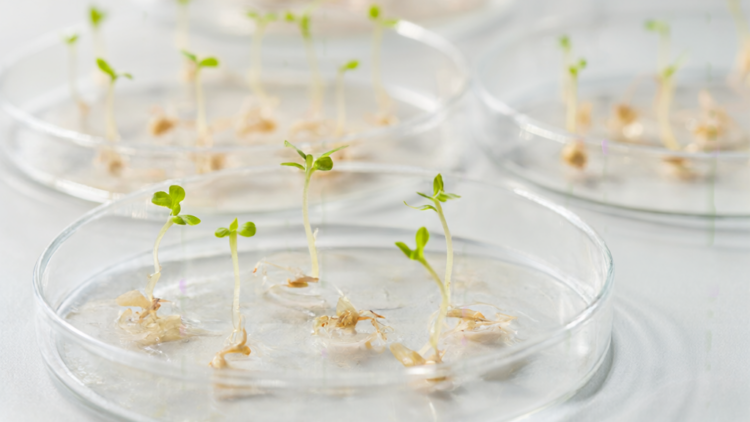
The study also examined the expression of the six OvGID1 genes during seed germination, a critical phase for plant establishment. The researchers tracked gene expression across four distinct germination stages: the dry seed stage, imbibition stage, split stage, and radicle emergence stage. Treatment with gibberellin 3 (GA3) demonstrated dynamic expression patterns for all six genes throughout these stages. The varying expression levels at different germination phases suggest that the GID1 family plays a coordinated role in regulating the transition from seed dormancy to active growth. This dynamic regulation is essential for ensuring proper timing of germination in response to environmental cues.
The integration of genome-wide identification with expression analysis provides a robust theoretical foundation for understanding the evolutionary mechanisms of the GID1 family in sainfoin. The findings elucidate the molecular networks involved in gibberellin-regulated seed germination and stress responses, offering new insights into the genetic basis of plant adaptation. By characterizing the structural and functional properties of these genes, the study contributes to the broader understanding of how leguminous plants manage growth and environmental interactions. This knowledge is particularly relevant for improving forage crops that are exposed to variable environmental conditions.
The research was supported by the National Natural Science Foundation of China and other national and provincial initiatives, underscoring the importance of fundamental plant biology research in agricultural science. The authors, including Yanyan Luo, Jiao Cheng, Yuheng Yao, and Lili Nan, are affiliated with the Key Laboratory of Grassland Ecosystem and the Pratacultural College at Gansu Agricultural University. Their work represents a significant step forward in the genomic characterization of sainfoin, a crop that holds promise for sustainable livestock feeding systems. The open-access nature of the publication ensures that these findings are widely available to the scientific community, facilitating further research and potential applications in crop improvement.
As climate change and environmental stresses continue to impact agricultural systems, understanding the genetic basis of plant resilience becomes increasingly important. The identification and characterization of the GID1 gene family in sainfoin provide a valuable resource for future studies aimed at enhancing crop performance under adverse conditions. The detailed analysis of gene expression during germination and stress responses offers a blueprint for investigating similar pathways in other leguminous species. This study not only advances our knowledge of plant molecular biology but also has practical implications for the development of more resilient forage crops, contributing to food security and sustainable agriculture.
Subject of Research: Genome-wide identification and expression analysis of GID1 genes in sainfoin
Article Title: Genome-wide identification of the GID1 genes family and expression analysis during seed germination in sainfoin (Onobrychis viciifolia)
Article References: Luo, Y., Cheng, J., Yao, Y., & Nan, L. (2026). Genome-wide identification of the GID1 genes family and expression analysis during seed germination in sainfoin (Onobrychis viciifolia). BMC Plant Biology. https://doi.org/10.1186/s12870-026-10045-3
Image Credits: AI Generated
DOI: 10.1186/s12870-026-10045-3
Keywords: sainfoin, GID1, gibberellin, seed germination, plant genetics, abiotic stress, legume, gene expression, phylogenetics, BMC Plant Biology, Genome-wide, identification
Cite Scienmag News
APA
MLA
Chicago
Juliet Wilcox. (October 2, 2026). Sainfoin Genes Reveal Gibberellin Role in Seed Germination. Scienmag. https://scienmag.com/sainfoin-genes-reveal-gibberellin-role-in-seed-germination/
Juliet Wilcox. “Sainfoin Genes Reveal Gibberellin Role in Seed Germination.” Scienmag, 2 October 2026, https://scienmag.com/sainfoin-genes-reveal-gibberellin-role-in-seed-germination/. Accessed 2 October 2026.
Juliet Wilcox. “Sainfoin Genes Reveal Gibberellin Role in Seed Germination.” Scienmag. October 2, 2026. https://scienmag.com/sainfoin-genes-reveal-gibberellin-role-in-seed-germination/
Copy citation
Download RIS
Tags: abiotic stressBMC Plant Biologyevolutionary analysis of GID1 genesforage crop stress adaptationgene expressiongenome-widegenome-wide analysis of plant genesgibberellingibberellin regulation of seed viabilitygibberellin signaling in sainfoinGID1GID1 gene family in legumesidentificationlegumemolecular basis of sainfoin growthphylogeneticsplant developmental gene expressionplant geneticsplant hormone receptor genessainfoinsainfoin genetic diversityseed germinationseed germination molecular mechanismsstress response in forage crops