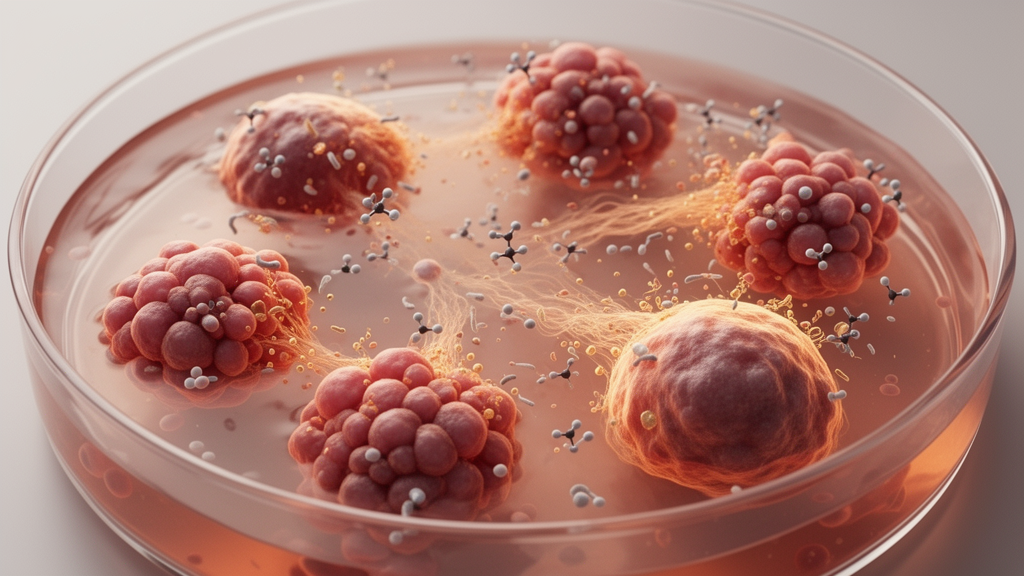
Filter-sterilized culture supernatant from Streptococcus anginosus induced inflammatory and tumor-associated responses in laboratory macrophage models, according to an accepted study in the Journal of Translational Medicine. The study found that the supernatant increased inflammatory cytokine release, formation of ASC specks, and expression of cleaved caspase-1, GSDMD-N, and interleukin-1 beta. It also enhanced the viability and migration of gastric cancer cells in vitro.
These results support a mechanistic link between soluble bacterial products and inflammatory signaling, but they do not establish that S. anginosus causes gastric cancer in people. The investigators combined observations in human stomach tissue with experiments involving macrophages, gastric cancer cells, and gastric epithelial cells. They examined bacterial abundance, macrophage infiltration, and pyroptosis-related marker expression in tissue from people without Helicobacter pylori infection who had chronic superficial gastritis, intestinal metaplasia, or gastric cancer.
S. anginosus abundance, macrophage infiltration, and markers associated with the NLRP3/interleukin-1 beta pathway were higher in the intestinal metaplasia and gastric cancer groups than in the chronic superficial gastritis group. These measures were positively correlated. Because the tissue comparison was observational, it cannot establish whether the bacteria, macrophage activation, and disease-associated changes cause one another or whether other factors associated with more advanced gastric disease contribute to the pattern.
RNA sequencing of macrophages treated with S. anginosus supernatant identified 1,175 differentially expressed genes, including 535 that were upregulated and 640 that were downregulated. NLRP3 and interleukin-1 beta were significantly upregulated, whereas caspase-1 and GSDMD showed no significant changes at the transcriptional level. Pathway analysis identified enrichment of NOD-like receptor, tumor necrosis factor, interleukin-17, nuclear factor-kappa B, and Toll-like receptor signaling.
Functional assays provided evidence beyond the transcript measurements by showing increased inflammatory cytokine release, ASC speck formation, and expression of cleaved caspase-1, GSDMD-N, and interleukin-1 beta. Conditioned medium collected from S. anginosus supernatant-treated macrophages increased epithelial-to-mesenchymal transition-associated markers in gastric cancer cells and intestinal metaplasia-associated markers in gastric epithelial cells. Partial attenuation of these effects by MCC950, an inhibitor of NLRP3-related signaling, supported the involvement of that pathway.
The study did not directly test whether interleukin-1 beta was required for the downstream changes, so the increased expression and release of this cytokine cannot be assigned a specific causal role. Untargeted metabolomics identified 15(S)-HPETE as a differentially abundant metabolite associated with the supernatant treatment. Functional assays found that 15(S)-HPETE enhanced malignant phenotype-associated responses in AGS gastric cancer cells, promoted pyroptosis-associated activation in macrophages, and increased intestinal metaplasia-associated marker expression in gastric epithelial cells.
This supports 15(S)-HPETE as a candidate metabolic mediator, but it does not establish the complete mechanism connecting bacterial supernatant exposure to the cellular responses. Overall, the findings are consistent with a model in which soluble products associated with S. anginosus activate inflammatory macrophage responses involving NLRP3-related signaling, while material released by the treated macrophages promotes tumor-associated and intestinal metaplasia-associated features in epithelial cells. The evidence comes from a combination of human tissue associations and in vitro mechanistic experiments, not from a longitudinal clinical study or an animal disease model.
The reported results therefore cannot demonstrate patient outcomes, quantify cancer risk, or show that blocking the pathway would prevent progression.
Subject of Research: In vitro effects of Streptococcus anginosus supernatant on macrophage activation linked to gastric inflammation-to-cancer phenotypes
Article Title: Streptococcus anginosus supernatant promotes macrophage pyroptosis-associated activation and phenotypes associated with the gastric inflammation-to-cancer transition via NLRP3-related signaling
Article References: Han, X., Ji, J., Cao, D., Zhu, L., Liu, Z., Hui, Y., Yang, M., Lin, L., Yu, Z., Yuan, J., Yao, Q., Zhong, W., Zhang, Q., & Chen, X. (2026). Streptococcus anginosus supernatant promotes macrophage pyroptosis-associated activation and phenotypes associated with the gastric inflammation-to-cancer transition via NLRP3-related signaling. Journal of Translational Medicine. https://doi.org/10.1186/s12967-026-09060-7
Image Credits: AI Generated
DOI: 10.1186/s12967-026-09060-7
Keywords: Streptococcus anginosus, gastric cancer, intestinal metaplasia, macrophages, NLRP3 signaling, pyroptosis, interleukin-1 beta, 15(S)-HPETE, in vitro research, Streptococcus, anginosus, supernatant
News Source: Nathaniel Bowman. (October 21, 2026). S. anginosus supernatant activates macrophages in gastric cancer models. Scienmag.