

• HOME
  • NEWS
  • EXPLORE
    • CAREER
      • Companies
      • Jobs
    • EVENTS
    • iGEM
      • News
      • Team
    • PHOTOS
    • VIDEO
    • WIKI
  • BLOG
  • COMMUNITY
    • FACEBOOK
    • INSTAGRAM
    • TWITTER
Saturday, February 7, 2026
BIOENGINEER.ORG
No Result
View All Result
  • Login
  • HOME
  • NEWS
  • EXPLORE
    • CAREER
      • Companies
      • Jobs
        • Lecturer
        • PhD Studentship
        • Postdoc
        • Research Assistant
    • EVENTS
    • iGEM
      • News
      • Team
    • PHOTOS
    • VIDEO
    • WIKI
  • BLOG
  • COMMUNITY
    • FACEBOOK
    • INSTAGRAM
    • TWITTER
  • HOME
  • NEWS
  • EXPLORE
    • CAREER
      • Companies
      • Jobs
        • Lecturer
        • PhD Studentship
        • Postdoc
        • Research Assistant
    • EVENTS
    • iGEM
      • News
      • Team
    • PHOTOS
    • VIDEO
    • WIKI
  • BLOG
  • COMMUNITY
    • FACEBOOK
    • INSTAGRAM
    • TWITTER
No Result
View All Result
Bioengineer.org
No Result
View All Result
Home NEWS Science News Health

Russian scientists patent new agent for X-ray

Bioengineer by Bioengineer
June 26, 2019
in Health
Reading Time: 2 mins read
0
IMAGE
Share on FacebookShare on TwitterShare on LinkedinShare on RedditShare on Telegram

IMAGE

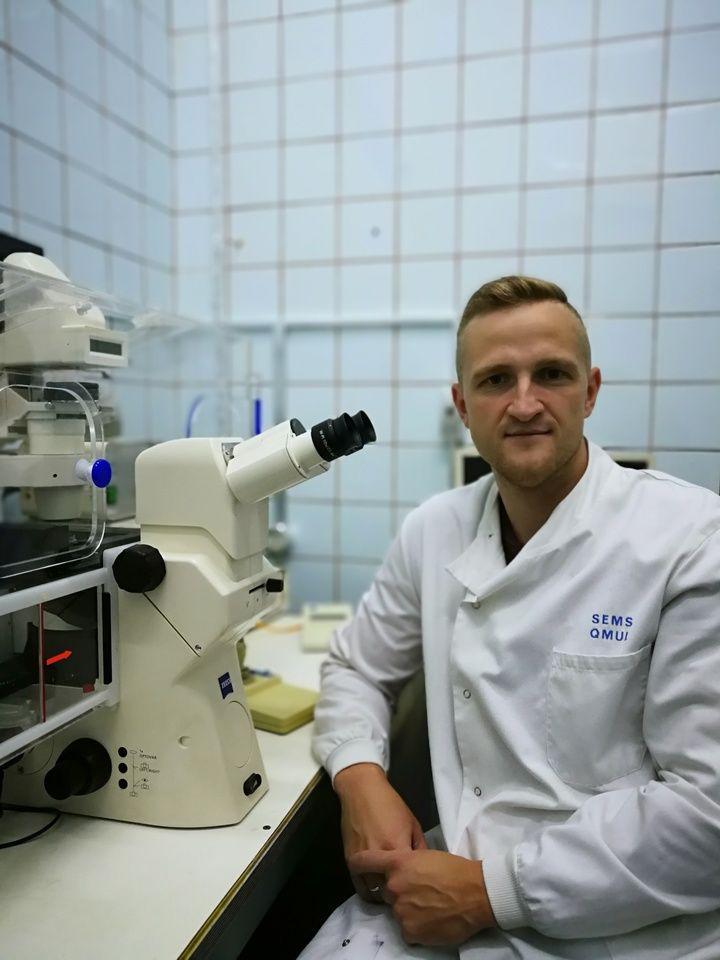
Credit: Anton Popov

Russian scientists found that nanocrystal tungsten trioxide can be used instead of barium for X-ray examinations and also in cancer treatment. The results of the study are published in &laquoJournal of Nanomaterials».

Due to the physical-chemical properties of tungsten, in particular, the effective absorptive capacity of X-rays, its compounds are considered as a possible basis for creating a new class of contrast agents. This method can be used in computer tomography. Computer tomography (CT) is a method of visualizing the internal organs. The method is based on one-dimensional or two-dimensional projections obtained by passing of X-rays through tissues, when an X-ray source and a detector opposite to it simultaneously rotate around an object.

To obtain high-quality images, it is essential to have a visually distinct difference in the attenuation of X-rays between the organs. To differentiate organ, normal and pathological structures better, various contrast enhancement techniques are used. Usually this is done with the use of radiopaque agents that are injected in the form of solution. The greatest effect of attenuation of radiation is achieved with the use of chemical elements with a large mass of atom. When choosing such agents it is necessary to take into account five criteria for their clinical use in CT: effective radiopacity, selective distribution, lack of pharmacological and / or toxicological effects, in vitro and in vivo stability, cost and availability.

Today, only iodine and barium are used in radiography. However, in order to obtain a contrast X-ray image of the organ, one needs to take a relatively large amount of agent solution, which can cause discomfort and side effects.

Scientists from Kurnakov Institute of General and Inorganic Chemistry and the Institute of Theoretical and Experimental Biophysics RAS found that tungsten can be used instead of iodine and barium. They showed the biosafety of tungsten nanoparticles for human cells even in high concentrations, and also developed a scheme for the synthesis of highly crystallized tungsten trioxide nanoparticles, which can form the basis for creating a new radiopaque agent.

&laquoPreviously, we synthesized and investigated photochromic tungsten oxide nanoparticles, which have pronounced bactericidal activity against gram-positive and gram-negative bacteria, as well as selective photocatalytic activity against cancer cells, which can be used in perspective for photodynamic therapy of cancer. Our team works in two directions: development of a radiopaque agent and creation of a new class of photosensitizers for photodynamic cancer therapy», — comments one of the authors of the study, Anton Popov.

###

Media Contact
V. K. Ivanov
[email protected]

Related Journal Article

http://dx.doi.org/10.1155/2019/5384132

Tags: DiagnosticsMedicine/Health
Share12Tweet8Share2ShareShareShare2

Related Posts

Decoding Prostate Cancer Origins via snFLARE-seq, mxFRIZNGRND

February 7, 2026

Digital Health Perspectives from Baltic Sea Experts

February 7, 2026

Exploring Decision-Making in Dementia Caregivers’ Mobility

February 7, 2026

Succinate Receptor 1 Limits Blood Cell Formation, Leukemia

February 7, 2026
Please login to join discussion

POPULAR NEWS

  • Robotic Ureteral Reconstruction: A Novel Approach

    Robotic Ureteral Reconstruction: A Novel Approach

    82 shares
    Share 33 Tweet 21
  • Digital Privacy: Health Data Control in Incarceration

    63 shares
    Share 25 Tweet 16
  • Study Reveals Lipid Accumulation in ME/CFS Cells

    57 shares
    Share 23 Tweet 14
  • Breakthrough in RNA Research Accelerates Medical Innovations Timeline

    53 shares
    Share 21 Tweet 13

About

We bring you the latest biotechnology news from best research centers and universities around the world. Check our website.

Follow us

Recent News

Decoding Prostate Cancer Origins via snFLARE-seq, mxFRIZNGRND

Digital Health Perspectives from Baltic Sea Experts

Florida Cane Toad: Complex Spread and Selective Evolution

Subscribe to Blog via Email

Enter your email address to subscribe to this blog and receive notifications of new posts by email.

Join 73 other subscribers
  • Contact Us

Bioengineer.org © Copyright 2023 All Rights Reserved.

Welcome Back!

Login to your account below

Forgotten Password?

Retrieve your password

Please enter your username or email address to reset your password.

Log In
No Result
View All Result
  • Homepages
    • Home Page 1
    • Home Page 2
  • News
  • National
  • Business
  • Health
  • Lifestyle
  • Science

Bioengineer.org © Copyright 2023 All Rights Reserved.


