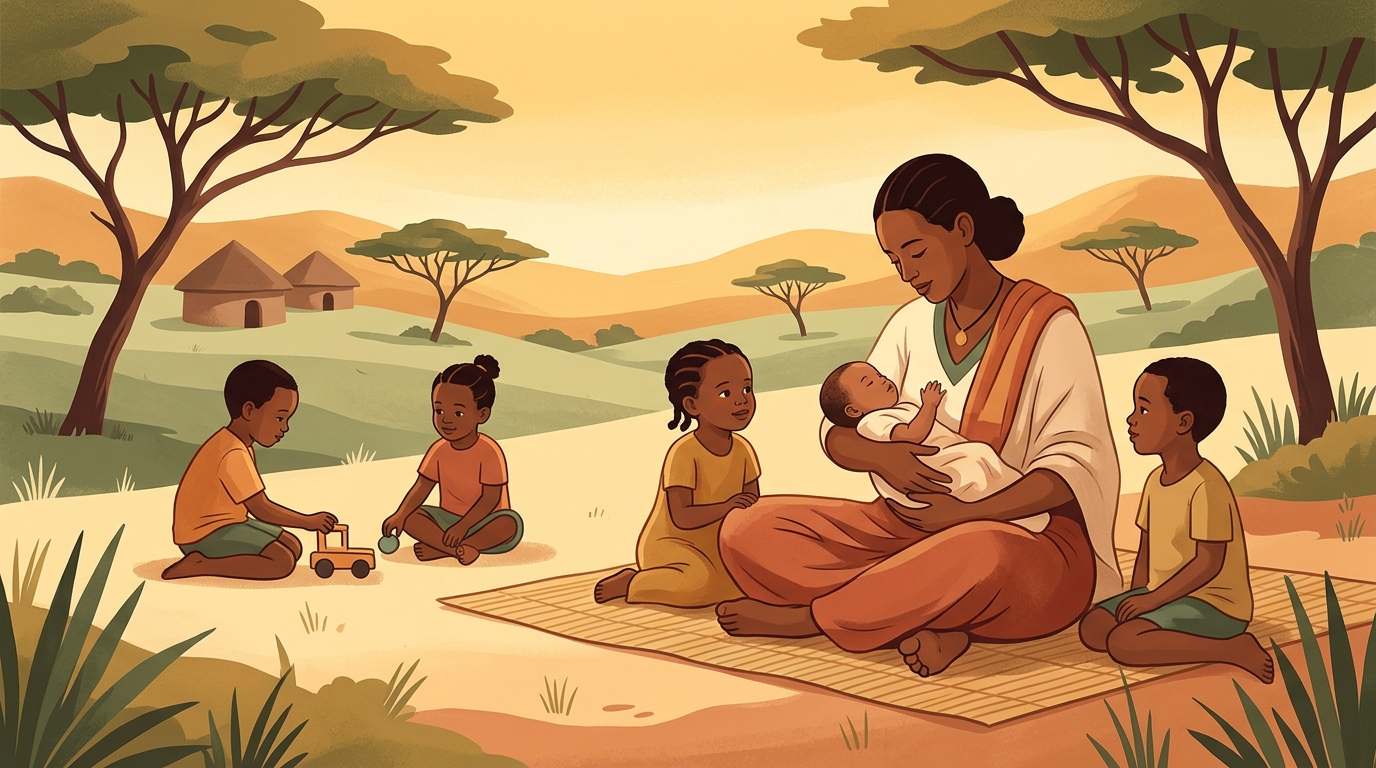
Children under three years of age who live in rural areas, belong to large families, were born preterm, experienced illness in the previous six months, or whose mothers suffered obstetric complications during labor face significantly higher odds of developmental delay, according to a case-control study conducted in public hospitals in South West Shewa Zone, Ethiopia.
The first three years of life represent a critical window for brain growth, establishing the foundation for long-term health, cognitive function and overall well-being. When a child fails to achieve milestones on schedule, the consequences can extend well beyond the individual, affecting communities and society more broadly. Identifying which children carry the greatest risk of delay is therefore a central concern for health systems, and the authors note that targeted developmental screening should be prioritized for children born preterm, those with a history of recent illness, and those whose mothers experienced obstetric complications during labor.
The study employed an institution-based unmatched case-control design. Cases were children diagnosed with developmental delay based on a clinical developmental assessment, while controls were children without delay, confirmed by age-appropriate milestone achievement on clinical evaluation. The researchers selected 103 cases and 206 controls using systematic random sampling and gathered information through interviewer-administered questionnaires. Data were entered into EpiData and analyzed with SPSS software, and associations were considered statistically significant when the adjusted odds ratio carried a 95 percent confidence interval that excluded one and a p value below 0.05.
The results pointed to five independent determinants. Children living in rural areas had roughly three times the odds of developmental delay compared with their urban counterparts, with an adjusted odds ratio of 3.04 and a 95 percent confidence interval of 1.645 to 5.625. Children from large families of five or more members showed an adjusted odds ratio of 2.5, with a confidence interval of 1.23 to 4.35. Preterm birth, defined as delivery before 37 weeks of gestation, emerged as the strongest single factor, with an adjusted odds ratio of 4.00 and a confidence interval of 1.93 to 8.27.
A history of illness in the past six months was also significantly associated with delay, carrying an adjusted odds ratio of 3.34 and a 95 percent confidence interval of 1.76 to 6.29. Finally, maternal obstetric complications during labor doubled the odds, with an adjusted odds ratio of 2 and a confidence interval of 1.05 to 4.01. Taken together, these findings suggest that the risk of developmental delay in this population is shaped by a combination of where a child lives, the size of the household, the circumstances of birth and the child’s recent health history.
The authors note that these are associations drawn from a single zone and a hospital-based sample, so the findings describe the children attending these facilities rather than the entire regional population, and the case-control design identifies associations rather than proving causation.
Even with those limits, the study offers a practical roadmap for health planners. Because the significant factors are identifiable at or shortly after birth, or through routine contact with health services, they can serve as triggers for targeted developmental screening. The researchers recommend that screening be prioritized for children born preterm, those with a history of recent illness, and those whose mothers experienced obstetric complications during labor, so that delays are caught and addressed as early as possible.
The authors also call for broader support beyond the clinic. Rural families and large households, they conclude, require extra help with early childhood stimulation and nutrition, the two ingredients most closely tied to healthy development in the first three years of life. In a setting where formal screening is scarce, the study’s message is that the children most likely to fall behind can already be identified by the circumstances of their birth, their household and their recent medical history, giving health workers a concrete starting point for intervention.
Subject of Research: Factors associated with developmental delay among children under three years of age in South West Shewa Zone, Ethiopia
Article Title: Determinants of delayed early childhood development among children under three years of age in South West Shewa Zone, Ethiopia: a case–control study
Article References: Diriba, D., Negera, F., Beyera, A., Tamiru, D., Adugna, M., Regea, F., & Merga, H. (2026). Determinants of delayed early childhood development among children under three years of age in South West Shewa Zone, Ethiopia: a case–control study. BMC Pediatrics. https://doi.org/10.1186/s12887-026-07987-w
Image Credits: AI Generated
DOI: 10.1186/s12887-026-07987-w
Keywords: developmental delay, early childhood development, case-control study, Ethiopia, preterm birth, rural residence, family size, child health, obstetric complications, public hospitals, childhood illness, developmental screening
News Source: Harold Sullivan. (November 4, 2026). Rural life, big families and preterm birth linked to developmental delay in Ethiopian children under three. Scienmag.