

• HOME
  • NEWS
  • EXPLORE
    • CAREER
      • Companies
      • Jobs
    • EVENTS
    • iGEM
      • News
      • Team
    • PHOTOS
    • VIDEO
    • WIKI
  • BLOG
  • COMMUNITY
    • FACEBOOK
    • INSTAGRAM
    • TWITTER
Sunday, January 11, 2026
BIOENGINEER.ORG
No Result
View All Result
  • Login
  • HOME
  • NEWS
  • EXPLORE
    • CAREER
      • Companies
      • Jobs
        • Lecturer
        • PhD Studentship
        • Postdoc
        • Research Assistant
    • EVENTS
    • iGEM
      • News
      • Team
    • PHOTOS
    • VIDEO
    • WIKI
  • BLOG
  • COMMUNITY
    • FACEBOOK
    • INSTAGRAM
    • TWITTER
  • HOME
  • NEWS
  • EXPLORE
    • CAREER
      • Companies
      • Jobs
        • Lecturer
        • PhD Studentship
        • Postdoc
        • Research Assistant
    • EVENTS
    • iGEM
      • News
      • Team
    • PHOTOS
    • VIDEO
    • WIKI
  • BLOG
  • COMMUNITY
    • FACEBOOK
    • INSTAGRAM
    • TWITTER
No Result
View All Result
Bioengineer.org
No Result
View All Result
Home NEWS Science News Health

Running research: Heel-toe or toe-heel?

Bioengineer by Bioengineer
December 12, 2019
in Health
Reading Time: 2 mins read
0
IMAGE
Share on FacebookShare on TwitterShare on LinkedinShare on RedditShare on Telegram

IMAGE

Credit: Unsplash

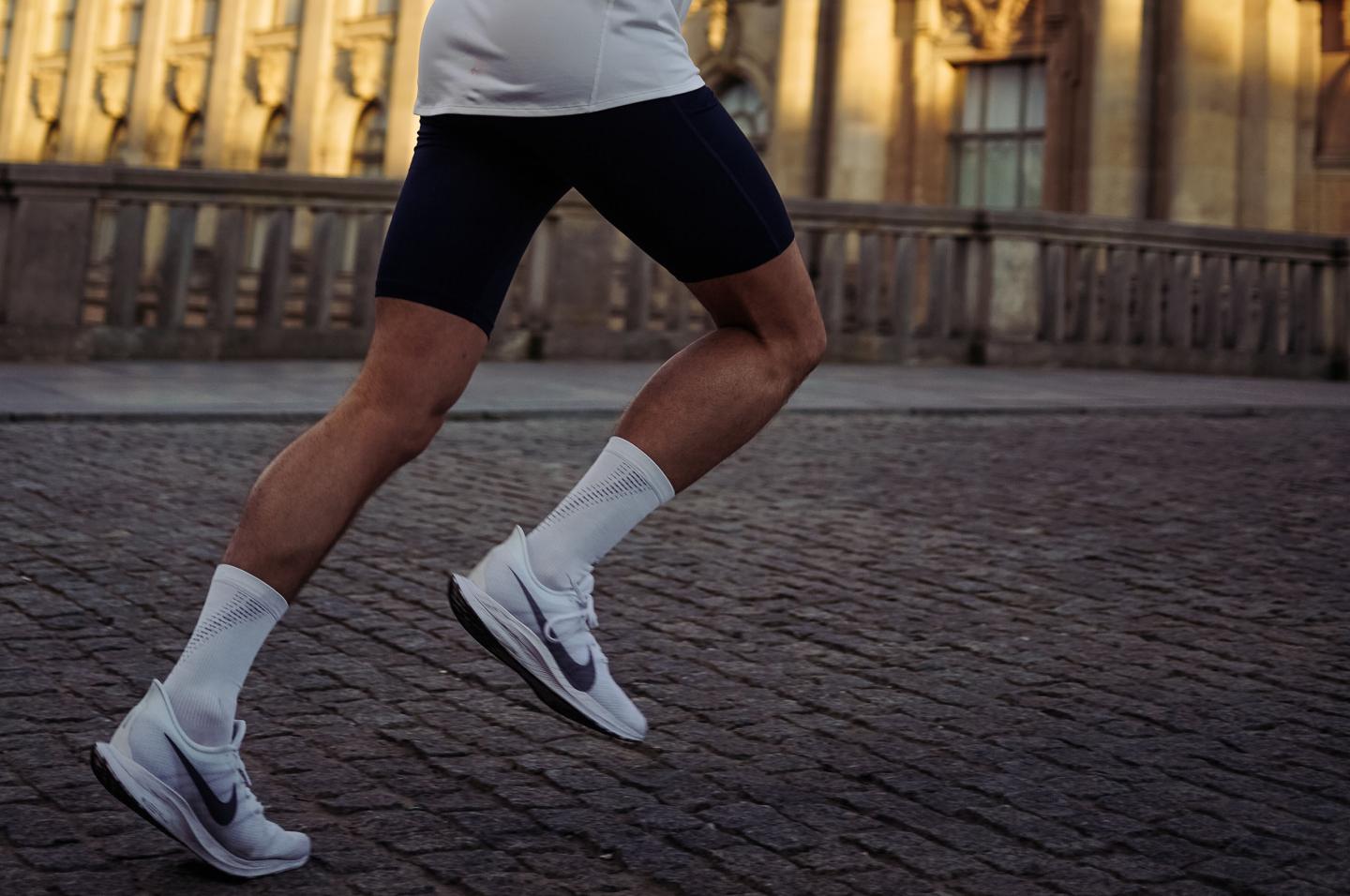
New research from La Trobe University suggests there is no evidence that changing a runner’s strike pattern will help prevent injuries or give them a speed boost.

In a bid to avoid shin splints, sore knees and other injuries, many runners have adopted a toe-to-heel trend, running on the balls of their feet. This is often encouraged by coaches and health professionals.

However, in research out this week in Sports Medicine, La Trobe injury researcher and physiotherapist Dr Christian Barton found there is no evidence to suggest running on the front of your feet reduces injury risk or improves performance.

“We analysed 53 studies which looked at the impact of forefoot, rearfoot and flatfoot running patterns on injury, running economy and running biomechanics,” senior author of the study, Dr Barton said

“Our comprehensive review suggests that telling someone to run on the ball of their foot instead of their heel may make them less efficient, at least in the short term. Additionally, there is no evidence either way on whether running on the balls of your feet reduces injury.”

Dr Barton said switching your running style shifts the body’s loads but doesn’t make them disappear.

“Running toe-heel might help injuries at the knee, where loads are reduced. However, it may cause injuries to the feet and ankle, where loads are increased,” Dr Barton said.

“Put simply, when it comes to running style: If it ain’t broke, don’t fix it.”

###

The research is led by the La Trobe Sport and Exercise Medicine Research Centre and La Trobe’s School of Podiatry.

Media Contact
Dragana Mrkaja
[email protected]
61-447-508-171

Original Source

https://www.latrobe.edu.au/news/articles/2019/release/running-research-heel-toe-or-toe-heel

Related Journal Article

http://dx.doi.org/10.1007/s40279-019-01238-y

Tags: Medicine/HealthOrthopedic MedicinePainPhysiologyPublic HealthSports MedicineTrauma/Injury
Share13Tweet8Share2ShareShareShare2

Related Posts

Developing Eye Care Guidelines for Prone Ventilation

January 11, 2026

Guillain-Barré Syndrome Linked to TNF Inhibitor in Blau

January 11, 2026

Dual Nanocarriers Target Smad3 and Runx2 in Aortic Valve Disease

January 11, 2026

Psychological Resilience Eases Loneliness in Caregivers

January 11, 2026
Please login to join discussion

POPULAR NEWS

  • Enhancing Spiritual Care Education in Nursing Programs

    154 shares
    Share 62 Tweet 39
  • PTSD, Depression, Anxiety in Childhood Cancer Survivors, Parents

    146 shares
    Share 58 Tweet 37
  • Robotic Ureteral Reconstruction: A Novel Approach

    50 shares
    Share 20 Tweet 13
  • Impact of Vegan Diet and Resistance Exercise on Muscle Volume

    47 shares
    Share 19 Tweet 12
v>

About

We bring you the latest biotechnology news from best research centers and universities around the world. Check our website.

Follow us

Recent News

Developing Eye Care Guidelines for Prone Ventilation

Guillain-Barré Syndrome Linked to TNF Inhibitor in Blau

Dual Nanocarriers Target Smad3 and Runx2 in Aortic Valve Disease

Subscribe to Blog via Email

Enter your email address to subscribe to this blog and receive notifications of new posts by email.

Join 71 other subscribers
  • Contact Us

Bioengineer.org © Copyright 2023 All Rights Reserved.

Welcome Back!

Login to your account below

Forgotten Password?

Retrieve your password

Please enter your username or email address to reset your password.

Log In
No Result
View All Result
  • Homepages
    • Home Page 1
    • Home Page 2
  • News
  • National
  • Business
  • Health
  • Lifestyle
  • Science

Bioengineer.org © Copyright 2023 All Rights Reserved.


