• HOME
  • NEWS
  • EXPLORE
    • CAREER
      • Companies
      • Jobs
    • EVENTS
    • iGEM
      • News
      • Team
    • PHOTOS
    • VIDEO
    • WIKI
  • BLOG
  • COMMUNITY
    • FACEBOOK
    • INSTAGRAM
    • TWITTER
Wednesday, July 8, 2026
BIOENGINEER.ORG
No Result
View All Result
  • Login
  • HOME
  • NEWS
  • EXPLORE
    • CAREER
      • Companies
      • Jobs
        • Lecturer
        • PhD Studentship
        • Postdoc
        • Research Assistant
    • EVENTS
    • iGEM
      • News
      • Team
    • PHOTOS
    • VIDEO
    • WIKI
  • BLOG
  • COMMUNITY
    • FACEBOOK
    • INSTAGRAM
    • TWITTER
  • HOME
  • NEWS
  • EXPLORE
    • CAREER
      • Companies
      • Jobs
        • Lecturer
        • PhD Studentship
        • Postdoc
        • Research Assistant
    • EVENTS
    • iGEM
      • News
      • Team
    • PHOTOS
    • VIDEO
    • WIKI
  • BLOG
  • COMMUNITY
    • FACEBOOK
    • INSTAGRAM
    • TWITTER
No Result
View All Result
Bioengineer.org
No Result
View All Result
Home NEWS Science News Biology

RUDN University soil scientist: Paddy soil fertilization can help reduce greenhouse effect

Bioengineer by Bioengineer
October 16, 2020
in Biology
Reading Time: 3 mins read
0
IMAGE
Share on FacebookShare on TwitterShare on LinkedinShare on RedditShare on Telegram

IMAGE

Credit: RUDN University

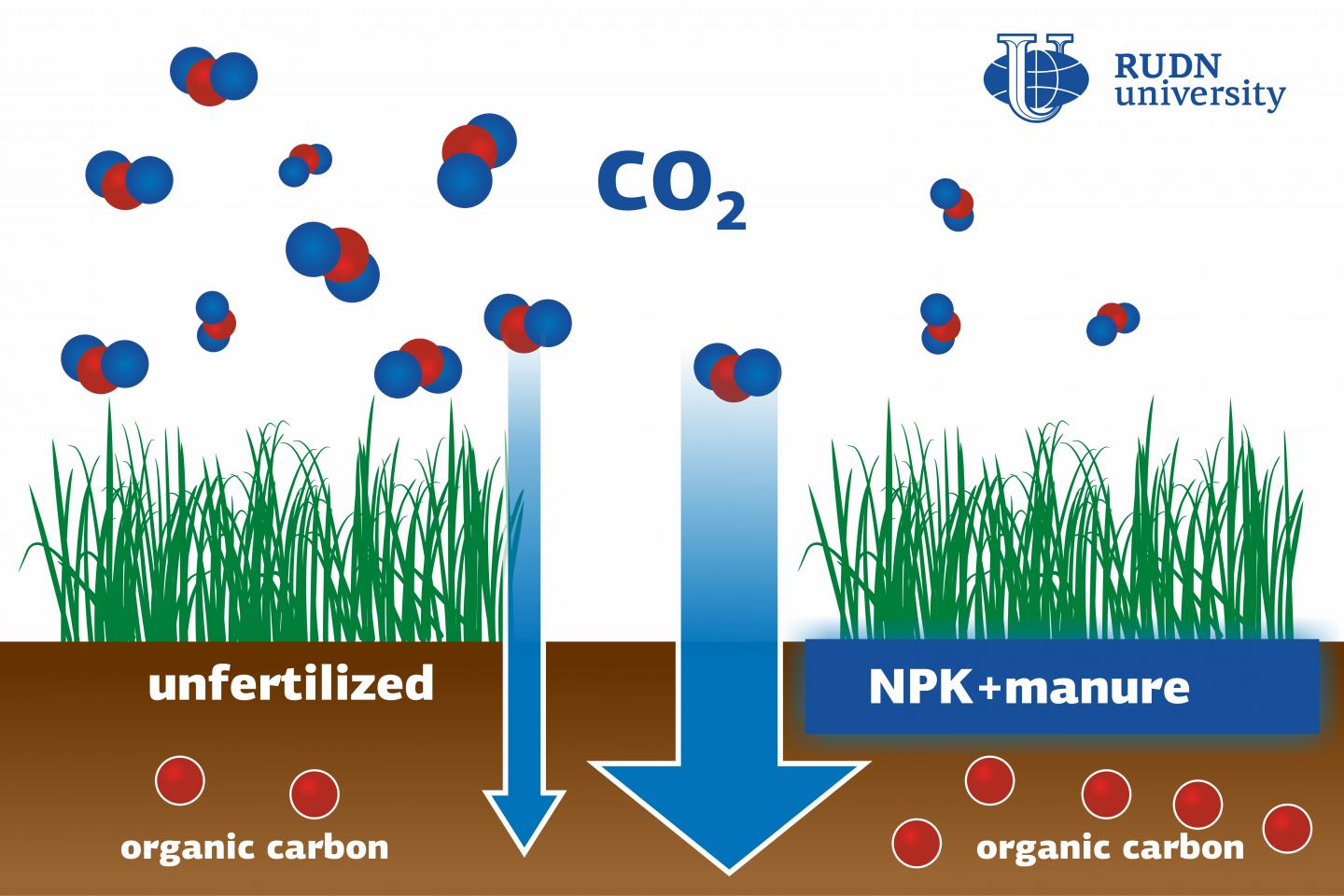
A soil scientist from RUDN University discovered the effect of fertilization on the ability of the soil to retain carbon. To understand this mechanism, he and his team studied the movement of organic carbon in the soil of rice paddies. The results of the study can help increase the fertility of the paddies while at the same time reducing the volume of greenhouse gases in the atmosphere. An article about the study was published in the Soil Biology and Biochemistry journal.

The main reason for global climate change is the increasing amount of carbon dioxide in the atmosphere. CO2 prevents thermal emissions from leaving our planet, and the so-called greenhouse effect occurs. Being able to absorb up to 10% of carbon dioxide from the atmosphere (which amounts to approximately 20,000 megatons of carbon in 25 years), soils could mitigate this effect. A soil scientist from RUDN University studied the mechanism of carbon retention in the soils of rice paddies that account for 40% of natural atmospheric carbon absorption in China. According to him, the ability of the soil to retain carbon depends, among other factors, on its structure and the presence of fertilizers.

“The soils of rice paddies play an important role in mitigating the consequences of global warming and contribute a lot to the retention of carbon. The most effective way to study the processes that lead to the accumulation of organic carbon in the soil is to measure the concentration of its isotopes. We used this method to find out how mineral and organic fertilizers affect carbon flows between fractions of different density in rice paddy soils,” said Yakov Kuzyakov, the Head of the Center for Mathematical Modeling and Design of Sustainable Ecosystems at RUDN University.

The team studied three groups of soils with different types of fertilizers: azophoska, or nitrogen-phosphorus-potassium fertilizer, was added to the first group; the second one contained azophoska with straw, and the third–azophoska with organic supplements. The content of carbon in the soils and its movement between density fractions was determined based on the ratio of 13C and 12? isotopes. The second and the third group showed better carbon retention results: after fertilization, their carbon content grew by 69%, while the increase in the first group amounted to 30%.

The scientists also paid attention to the changes in soil structure under the influence of fertilizers and the effect of such changes on carbon retention. Fertilizers consolidate the structural elements of the soil, and the number of large soil particles (over 0.25 mm in diameter) grows. Soils of medium density showed the highest carbon retention efficiency after fertilization: the amount of accumulated carbon increased by 70% compared to unfertilized soils. Less dense soil fractions showed a 21-56% increase, and carbon retention in dust and clay grew by 24-49%.

“We confirmed that fertilizers support organic carbon retention in the soil. Knowing this, we could better understand the processes that lead to the accumulation of soil carbon in rice paddies. These agricultural ecosystems already play an important role in world food security and now can also help us combat climate change,” addedYakov Kuzyakov.

###

Media Contact
Valeriya Antonova
[email protected]

Related Journal Article

http://dx.doi.org/10.1016/j.soilbio.2020.107931

Tags: Climate ChangeEarth ScienceGeology/Soil
Share12Tweet8Share2ShareShareShare2

Related Posts

Here are a few rewritten headlines for a science magazine post, each with a slightly different tone: Intriguing & poetic: How do organs sculpt themselves? Sea stars hold the secret Direct & research-focused: Sea stars reveal the hidden rules of organ formation Metaphorical & inviting: Tiny architects beneath the waves: What sea stars teach us about building organs Short & punchy: Star-shaped clues to how our organs take shape Question-led: Could a sea star show us how organs form? Elegant & feature-style: The body’s blueprint, glimpsed in a sea star’s arm

July 6, 2026
Bacteria evolve faster with unconventional gene copies — Biology

Bacteria evolve faster with unconventional gene copies

July 6, 2026

Neighbours rewire soil feedback via root microbiome shifts

July 6, 2026

Evolution-Inspired Biosensors Revolutionize Lipid Tracking in Real Time

July 2, 2026
Please login to join discussion

POPULAR NEWS

  • Detection of EDCs in Breast Milk and Infant Urine Up to Six Months Highlights Early Exposure Risks

    77 shares
    Share 31 Tweet 19
  • New Drug Candidate Developed at McMaster Shows Potential for Treating Brain Cancer

    58 shares
    Share 23 Tweet 15
  • KTU Researchers Explore Ultrasound’s Role in Enhancing Blood Flow Beyond Diagnostics

    53 shares
    Share 21 Tweet 13
  • 高齢者の骨粗鬆症治療の持続性比較

    51 shares
    Share 20 Tweet 13

About

We bring you the latest biotechnology news from best research centers and universities around the world. Check our website.

Follow us

Recent News

Encellin’s diabetes implant shows non-fibrotic engraftment in phase 1

Return exactly one rewritten English science news headline for the original title below. Maximum 12 words. Output plain text only. Do not use HTML, Markdown, quotes, labels, explanations, bullets, numbering, or multiple options. Original title: MIT engineers whip up a more breathable hydrogel

Flame retardant BDE-209 targets molecularly linked to ulcerative colitis

Subscribe to Blog via Email

Enter your email address to subscribe to this blog and receive notifications of new posts by email.

Join 83 other subscribers
  • Contact Us

Bioengineer.org © Copyright 2023 All Rights Reserved.

Welcome Back!

Login to your account below

Forgotten Password?

Retrieve your password

Please enter your username or email address to reset your password.

Log In
No Result
View All Result
  • Homepages
    • Home Page 1
    • Home Page 2
  • News
  • National
  • Business
  • Health
  • Lifestyle
  • Science

Bioengineer.org © Copyright 2023 All Rights Reserved.