• HOME
  • NEWS
  • EXPLORE
    • CAREER
      • Companies
      • Jobs
    • EVENTS
    • iGEM
      • News
      • Team
    • PHOTOS
    • VIDEO
    • WIKI
  • BLOG
  • COMMUNITY
    • FACEBOOK
    • INSTAGRAM
    • TWITTER
Monday, July 6, 2026
BIOENGINEER.ORG
No Result
View All Result
  • Login
  • HOME
  • NEWS
  • EXPLORE
    • CAREER
      • Companies
      • Jobs
        • Lecturer
        • PhD Studentship
        • Postdoc
        • Research Assistant
    • EVENTS
    • iGEM
      • News
      • Team
    • PHOTOS
    • VIDEO
    • WIKI
  • BLOG
  • COMMUNITY
    • FACEBOOK
    • INSTAGRAM
    • TWITTER
  • HOME
  • NEWS
  • EXPLORE
    • CAREER
      • Companies
      • Jobs
        • Lecturer
        • PhD Studentship
        • Postdoc
        • Research Assistant
    • EVENTS
    • iGEM
      • News
      • Team
    • PHOTOS
    • VIDEO
    • WIKI
  • BLOG
  • COMMUNITY
    • FACEBOOK
    • INSTAGRAM
    • TWITTER
No Result
View All Result
Bioengineer.org
No Result
View All Result
Home NEWS Science News Health

RUDN biochemists found a way to stop the immortality of cancer cells with oligonucleotides

Bioengineer by Bioengineer
February 11, 2019
in Health
Reading Time: 2 mins read
0
IMAGE
Share on FacebookShare on TwitterShare on LinkedinShare on RedditShare on Telegram

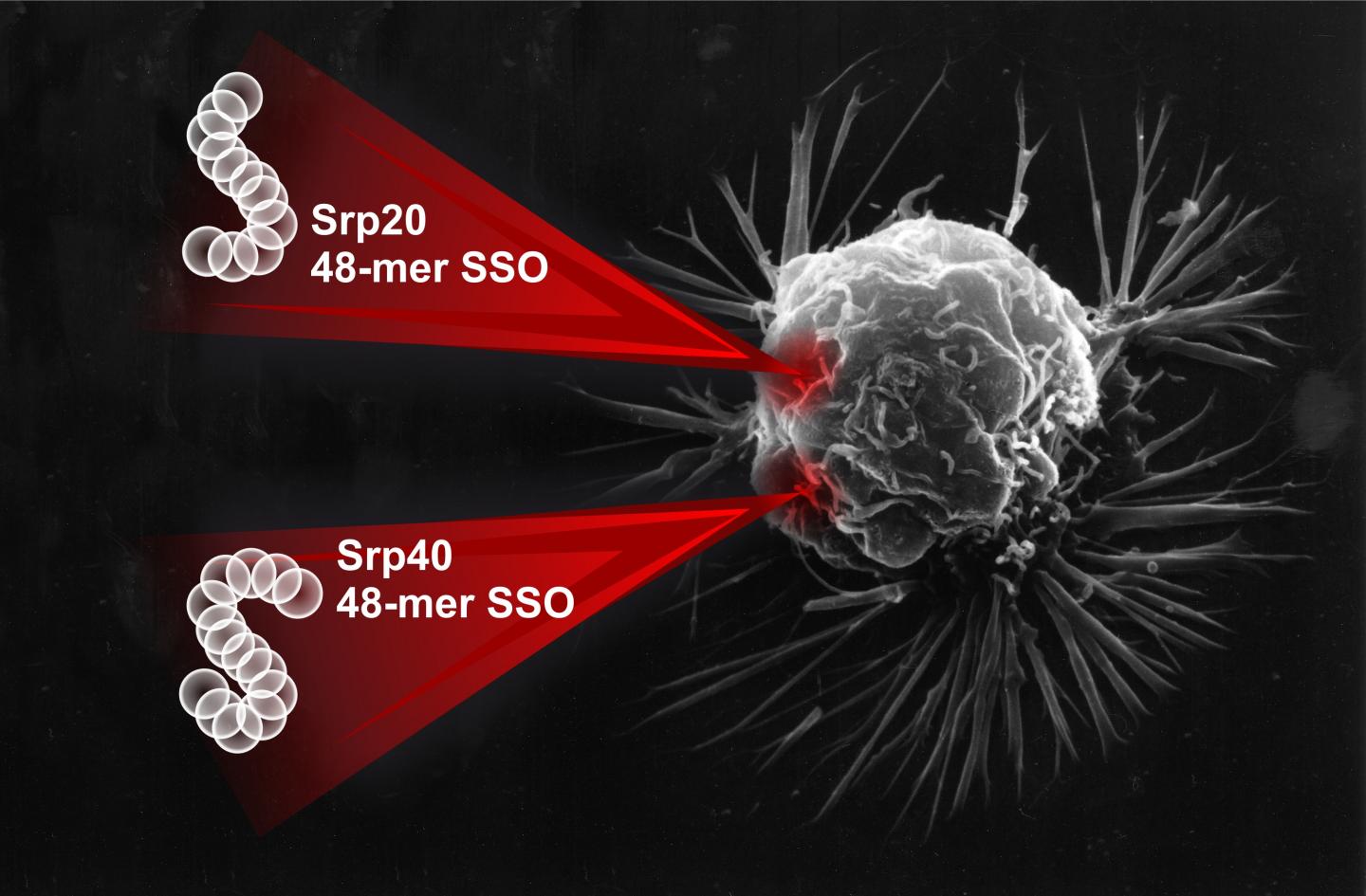
RUDN biochemists found a way to reduce the activity of telomerase (the enzyme of cell immortality) 10 times
IMAGE

Credit: Natalia Deryugina


RUDN biochemists found a way to reduce the activity of telomerase (the enzyme of cell immortality) 10 times. The discovery will help create new antitumor drugs and give a better understanding of how the activity of the enzyme can be controlled. The results of the study were published in the Biochemical and Biophysical Research Communications journal.

The ends of chromosomes are covered with a kind of safety caps – telomeres. These are compact DNA sequences that stabilize chromatin structure. With each cell division telomeres become shorter, and the older a cell, the shorter are the telomeres of its chromosomes. However, certain types of cells (e.g. germ cells, stem cells, and lymphocytes) have an active immortality enzyme called telomerase. It compensates for the shortening of telomeres and allows the cells to divide practically endlessly. The highest telomerase activity is observed in cancer cells – this is one of the factors that makes them malignant. RUDN biochemists demonstrated that the activity of telomerase may be reduced using specific oligonucleotides (short DNA fragments).

“We wanted to find out whether the oligonucleotides in charge of splicing shift (splicing is the process of cutting and reattaching of mRNA segments) are able to slow down the activity of telomerase. We studied it on the example of human T-lymphocytes. As a result, we managed to find an oligonucleotide able to actively suppress telomerase and slow down cell proliferation without killing the cells,” said Dmitry Zhdanov, a co-author of the work, a candidate of biology, and assistant professor of Academician Beryozov Department of Biochemistry at RUDN.

The main way of influencing the activity of telomerase is associated with the inducing of alternative splicing of its mRNA. As a result of this process several non-active protein forms are synthesized in a cell. RUDN biochemists affected the alternative splicing using three types of oligonucleotides specific for different regulatory areas of telomerase mRNA. They were injected into human T-lymphocyte cells, and the activity of telomerase was measured after one day. It turned out that individual oligonucleotides did not influence the enzyme considerably, but the combination had a profound effect: the activity of telomerase reduced to 50% within the first 24 hours, to 18% – within the second, and to 10% – within the third.

According to the biochemists, oligonucleotides may serve as a basis for new drugs for anti-proliferative therapy that us used to treat benign and malignant tumors and other conditions associated with excessive cell division.

The participants of the study also represented Orekhovich Research and Science Institute of Biomedical Chemistry and Blokhin National Medical Research Center of Oncology (Russia).

###

Media Contact
Valeriya V. Antonova
[email protected]

Related Journal Article

http://dx.doi.org/10.1016/j.bbrc.2018.12.186

Tags: BiochemistryBiologyBiomedical/Environmental/Chemical EngineeringBiotechnologycancerCell Biology
Share12Tweet8Share2ShareShareShare2

Related Posts

Flame retardant BDE-209 targets molecularly linked to ulcerative colitis

July 6, 2026

Kidney transplant outcomes in older adults studied by German researchers

July 6, 2026

Salmonella protein SopB curbs early inflammation to slow disease progression

July 6, 2026

Multi-metal cooperation drives lung cancer chemoresistance, reversed by MiADMSA

July 6, 2026
Please login to join discussion

POPULAR NEWS

  • Detection of EDCs in Breast Milk and Infant Urine Up to Six Months Highlights Early Exposure Risks

    77 shares
    Share 31 Tweet 19
  • New Drug Candidate Developed at McMaster Shows Potential for Treating Brain Cancer

    58 shares
    Share 23 Tweet 15
  • Saying Goodbye to PGY-6: Pediatric Fellowship Realities

    103 shares
    Share 41 Tweet 26
  • KTU Researchers Explore Ultrasound’s Role in Enhancing Blood Flow Beyond Diagnostics

    53 shares
    Share 21 Tweet 13

About

We bring you the latest biotechnology news from best research centers and universities around the world. Check our website.

Follow us

Recent News

Flame retardant BDE-209 targets molecularly linked to ulcerative colitis

Ultra-high frequency particle impacts mimic rockbursts to shatter hard rock

Kidney transplant outcomes in older adults studied by German researchers

Subscribe to Blog via Email

Enter your email address to subscribe to this blog and receive notifications of new posts by email.

Join 83 other subscribers
  • Contact Us

Bioengineer.org © Copyright 2023 All Rights Reserved.

Welcome Back!

Login to your account below

Forgotten Password?

Retrieve your password

Please enter your username or email address to reset your password.

Log In
No Result
View All Result
  • Homepages
    • Home Page 1
    • Home Page 2
  • News
  • National
  • Business
  • Health
  • Lifestyle
  • Science

Bioengineer.org © Copyright 2023 All Rights Reserved.