• HOME
  • NEWS
  • EXPLORE
    • CAREER
      • Companies
      • Jobs
    • EVENTS
    • iGEM
      • News
      • Team
    • PHOTOS
    • VIDEO
    • WIKI
  • BLOG
  • COMMUNITY
    • FACEBOOK
    • INSTAGRAM
    • TWITTER
Tuesday, October 27, 2026
BIOENGINEER.ORG
No Result
View All Result
  • Login
  • HOME
  • NEWS
  • EXPLORE
    • CAREER
      • Companies
      • Jobs
        • Lecturer
        • PhD Studentship
        • Postdoc
        • Research Assistant
    • EVENTS
    • iGEM
      • News
      • Team
    • PHOTOS
    • VIDEO
    • WIKI
  • BLOG
  • COMMUNITY
    • FACEBOOK
    • INSTAGRAM
    • TWITTER
No Result
View All Result
Bioengineer.org
No Result
View All Result
Home NEWS Science News Health

Routine TSH Testing Adds Little Value in Primary Subjective Tinnitus Evaluation, Case-Control Study Finds

by
October 27, 2026
in Health
Reading Time: 2 mins read
0
Routine TSH Testing Adds Little Value in Primary Subjective Tinnitus Evaluation, Case-Control Study Finds

Routine TSH Testing Adds Little Value in Primary Subjective Tinnitus Evaluation, Case-Control Study Finds

Share on FacebookShare on TwitterShare on LinkedinShare on RedditShare on Telegram

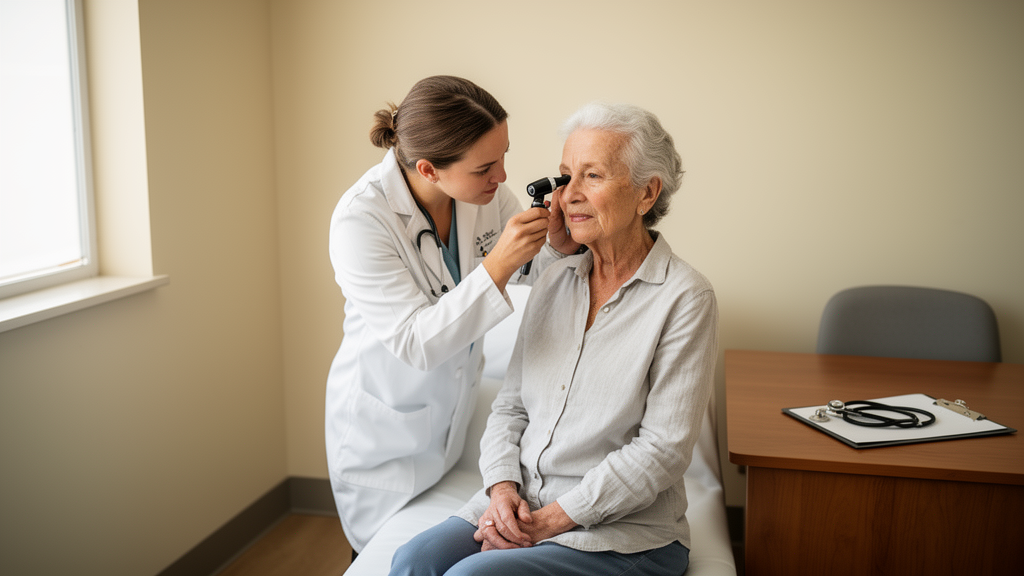
Routine measurement of serum thyroid-stimulating hormone (TSH) is unlikely to provide clinically useful information when evaluating patients with primary subjective tinnitus who have no known thyroid disease, according to a case-control study published in Frontiers in Neurology. The research team, led by Aphrodite Mavrogenis of Bajcsy-Zsilinszky Hospital in Budapest and colleagues in Hungary and Cyprus, recruited 557 patients with primary subjective tinnitus and 431 tinnitus-free controls, all without known thyroid disorders. Every participant underwent a full otorhinolaryngological examination and a serum TSH measurement.

The central comparison produced a strikingly flat result. Median TSH levels were 1.80 mIU/L (interquartile range 1.23–2.56) in the tinnitus group and 1.73 mIU/L (interquartile range 1.21–2.50) in the control group. The difference was not statistically significant (p = 0.63), and a Bayesian analysis actually provided moderate evidence in favour of the null hypothesis, with a Bayes factor of 4.459.

In plain terms, the data were roughly four and a half times more likely under the assumption that TSH levels do not differ between the groups than under the assumption that they do. The authors then asked whether TSH, even if it did not distinguish tinnitus patients from controls, might track the severity or character of the condition within the tinnitus group. Linear regression analyses found no significant association between TSH and total THI score, hearing level, tinnitus intensity, age, or symptom onset.

Bayesian regression analyses likewise returned evidence against a meaningful contribution of TSH to any of these tinnitus-related parameters, reinforcing the impression that the hormone carries little signal relevant to this patient population. TSH performed essentially at chance: the area under the curve was 0.509 (95% confidence interval 0.471–0.547, p = 0.640). The authors were careful to draw a precise boundary around their conclusion.

The findings apply to patients without known thyroid disorders and should not be extrapolated to people with confirmed thyroid dysfunction. Nor should the results be read as a recommendation against thyroid function testing when clinical signs, symptoms, or other findings suggest underlying thyroid disease. The study measured TSH alone; it did not assess free thyroxine (FT4), free triiodothyronine (FT3), or thyroid autoantibodies, so subtle or autoimmune thyroid pathology could theoretically have been missed in some participants.

That limitation points to the study's main open question. The authors call for further research incorporating comprehensive thyroid function assessment, including FT4, FT3, and thyroid autoantibodies, to clarify whether specific aspects of thyroid dysfunction may be relevant to selected tinnitus populations. Until such data exist, the safest reading is narrow but actionable: a normal-range TSH value, ordered reflexively in the tinnitus workup, tells the clinician essentially nothing about the tinnitus.

The study's design also deserves note.

Subject of Research: Association between serum TSH levels and primary subjective tinnitus

Article Title: Is routine serum TSH testing useful in the evaluation of primary subjective tinnitus? A case–control study

Article References: Mavrogenis, A., Maihoub, S., Mavrogeni, P., & Molnár, A. (2026). Is routine serum TSH testing useful in the evaluation of primary subjective tinnitus? A case–control study. Frontiers in Neurology, 17, Article 1973811. https://doi.org/10.3389/fneur.2026.1973811

Image Credits: AI Generated

DOI: 10.3389/fneur.2026.1973811

Keywords: tinnitus, TSH, thyroid-stimulating hormone, case-control study, audiology, Tinnitus Handicap Inventory, ROC analysis, Bayesian analysis, ENT, thyroid dysfunction, diagnostic testing, neuro-otology

News Source: Ophelia Keating. (October 27, 2026). Routine TSH Testing Adds Little Value in Primary Subjective Tinnitus Evaluation, Case-Control Study Finds. Scienmag.


Tags: audiologyBayesian analysiscase-control studyDiagnostic testingENTneuro-otologyROC analysisthyroid dysfunctionthyroid-stimulating hormonetinnitusTinnitus Handicap InventoryTSH
Share12Tweet7Share2ShareShareShare1

Related Posts

Achalasia Mistaken for Acid Reflux for 26 Years Before Surgery Restored Swallowing

Achalasia Mistaken for Acid Reflux for 26 Years Before Surgery Restored Swallowing

October 27, 2026
Research report: Enhancing student confidence and preparedness in pharmacology: a virtual pre-laboratory approach

Research report: Enhancing student confidence and preparedness in pharmacology: a virtual pre-laboratory approach

October 27, 2026

Research report: In vivo blood and ex vivo brain solid-phase microextraction coupled with LC-MS/MS for mapping unbound cannabidiol, phase I metabolites, and endocannabinoid tone

October 27, 2026

Traditional Herb Compound Oxymatrine Shows Promise Against Psoriasis by Taming a Key Immune Signaling Pathway

October 27, 2026

POPULAR NEWS

  • Body Image Distress Rises in Final Months for Pancreatic Cancer Patients of Both Sexes

    Body Image Distress Rises in Final Months for Pancreatic Cancer Patients of Both Sexes

    29 shares
    Share 12 Tweet 7
  • Botanists complete first full flora of Empoli, revealing heavy alien invasion

    29 shares
    Share 12 Tweet 7
  • Research report: SLAM Project – Long-Term Ecological Study of the Impacts of Climate Change in the natural forest of Azores: VII – Long-term arthropod monitoring in Graciosa Island

    29 shares
    Share 12 Tweet 7
  • Gemcitabine-Fused microRNA Shows Promise Against Chemoresistant Colorectal Cancer in Preclinical Models

    29 shares
    Share 12 Tweet 7

About

We bring you the latest biotechnology news from best research centers and universities around the world. Check our website.

Follow us

Recent News

Body Image Distress Rises in Final Months for Pancreatic Cancer Patients of Both Sexes

Botanists complete first full flora of Empoli, revealing heavy alien invasion

Research report: SLAM Project – Long-Term Ecological Study of the Impacts of Climate Change in the natural forest of Azores: VII – Long-term arthropod monitoring in Graciosa Island

Subscribe to Blog via Email

Enter your email address to subscribe to this blog and receive notifications of new posts by email.

Join 85 other subscribers
  • Contact Us

Bioengineer.org © Copyright 2023 All Rights Reserved.

Welcome Back!

Login to your account below

Forgotten Password?

Retrieve your password

Please enter your username or email address to reset your password.

Log In
No Result
View All Result
  • Homepages
    • Home Page 1
    • Home Page 2
  • News
  • National
  • Business
  • Health
  • Lifestyle
  • Science

Bioengineer.org © Copyright 2023 All Rights Reserved.