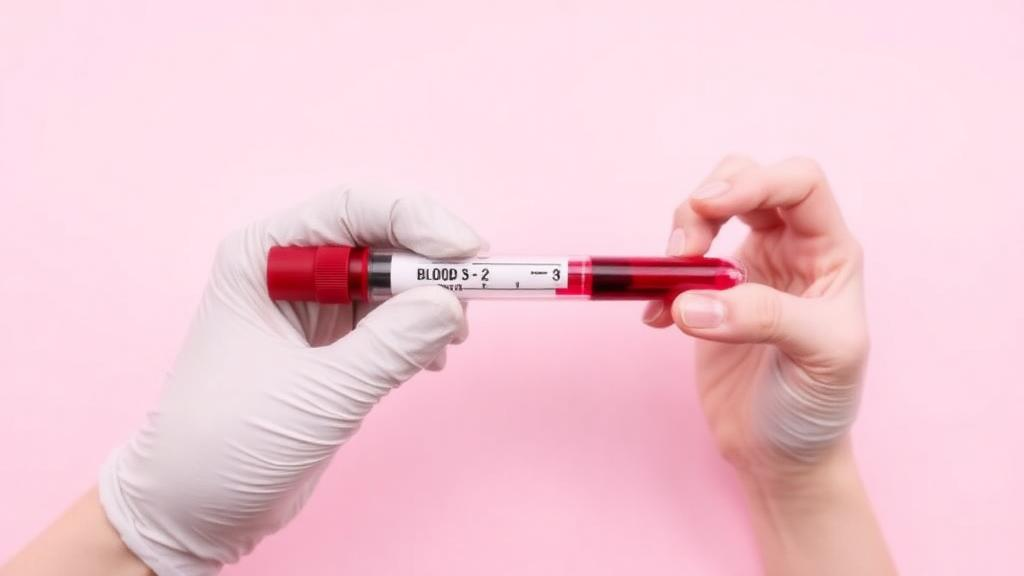
A simple calculation performed on an ordinary complete blood count may one day help clinicians identify children and adolescents at risk of self-harm, according to a new retrospective case-control study published in BMC Pediatrics. Researchers in Türkiye found that children and teenagers who arrived at a paediatric emergency department after non-suicidal self-injury carried a significantly higher neutrophil-to-lymphocyte ratio, or NLR, than healthy peers of the same age range. The finding adds to a growing body of literature linking systemic inflammation to psychiatric distress, but the authors themselves are careful to stress that the marker is far from ready for clinical use, and that its diagnostic power was moderate at best.
Non-suicidal self-injury, commonly abbreviated NSSI, refers to deliberate destruction of body tissue without suicidal intent, such as cutting, burning or hitting oneself. It is distressingly common in adolescence and ranks among the strongest known predictors of a later suicide attempt, which is precisely why researchers are hunting for accessible biological signals that might flag vulnerable young patients early. The neutrophil-to-lymphocyte ratio is an attractive candidate for exactly that role because it is essentially free: it requires nothing beyond the complete blood count that is routinely drawn in almost every emergency department on the planet. Neutrophils and lymphocytes are the two most abundant classes of white blood cells, and their balance shifts characteristically under physiological stress, with neutrophils rising as part of the innate inflammatory response while lymphocyte numbers fall under the influence of stress hormones such as cortisol.
The study, led by Azize Aydemir of Giresun University and child and adolescent psychiatrist Berkan Şahin, compared 89 participants aged 9 to 18 years. Thirty-six of them had received a DSM-5 diagnosis of non-suicidal self-injury after presenting to the paediatric emergency department of Giresun Maternity and Children’s Training and Research Hospital, while 53 healthy controls were recruited from routine outpatient wellness visits at the same institution. Rather than relying on automatically reported values, the team recomputed every index from the source cell counts, a methodological detail that matters because laboratory analysers calculate such ratios in slightly different ways and rounding errors can distort small differences.
The headline result was statistically robust. The median NLR in the self-injury group was 2.03, with an interquartile range running from 1.51 to 3.33, compared with a median of 1.42 and an interquartile range of 1.17 to 1.74 in the healthy comparison group. The difference was highly significant on the Mann-Whitney U test, with a p-value below 0.001 and a rank-biserial correlation of 0.47, a figure that indicates a moderately large effect. Notably, two closely related inflammatory indices, the platelet-to-lymphocyte ratio and the monocyte-to-lymphocyte ratio, showed no significant differences between the groups, suggesting the signal is specifically tied to the neutrophil-lymphocyte axis rather than to inflammation markers in general.
To test whether the association could be explained by age or sex, the researchers ran a binary logistic regression with self-injury status as the outcome and NLR, age and sex as covariates. After adjustment, each one-unit increase in NLR was associated with roughly 2.24 times higher odds of belonging to the self-injury group, with a 95 percent confidence interval stretching from 1.29 to 3.91 and a p-value of 0.005. Female sex emerged as the single strongest correlate in the model, carrying an adjusted odds ratio of 8.58, with a confidence interval from 2.79 to 26.36. That magnitude reflects both a genuine sex difference in adolescent self-injury epidemiology, which is well documented internationally, and the modest size of the sample, which inflates uncertainty around adjusted estimates. A sensitivity analysis using Firth penalised likelihood, a technique designed to stabilise regression estimates in small or imbalanced datasets, supported the main finding.
The story grew more complicated when the team examined how well NLR actually discriminated between cases and controls. Receiver operating characteristic analysis, the standard method for evaluating binary classifiers, yielded an area under the curve of 0.736, with a 95 percent confidence interval of 0.630 to 0.843. An AUC of 0.736 sits in the conventional category of moderate discrimination, well short of the 0.8 to 0.9 range typically expected of a clinically useful screening tool. More striking still, NLR proved no better than the absolute neutrophil count alone, which achieved an AUC of 0.724; a formal DeLong test comparing the two curves returned a p-value of 0.80, meaning the small apparent advantage of the ratio could easily be chance.
The Youden index, which balances sensitivity and specificity to find the optimal cut-off on an ROC curve, suggested a threshold of 1.72 for flagging concerning cases. But internal validation punctured confidence in that number. A bootstrap analysis produced a 95 percent percentile interval for the optimal threshold stretching all the way from 1.22 to 2.19, an enormous range for a value that would have to be applied at the bedside, and when the model was tested through repeated cross-validation, its discrimination slipped from 0.736 to 0.717. These procedures simulate how a model performs on data it has never seen, and the drop indicates real optimism in the apparent performance of the original fit.
The researchers probed the robustness of the association from several angles, and the core signal held up in most of them. The elevated NLR persisted after the analysis excluded patients with a diagnosis of major depressive disorder, after excluding anyone with any psychiatric comorbidity, and after excluding patients who had presented following self-poisoning, a presentation that could itself perturb inflammatory markers. One exception was revealing: among patients who were unmedicated at the time of presentation, the association was attenuated and no longer statistically significant. Medication status appears to act as an effect modifier of some kind, though the study cannot determine whether psychotropic drugs, the underlying illness severity that prompts their prescription, or chance in a small subgroup explains the pattern.
The authors are explicit that the findings should be treated as hypothesis-generating rather than practice-changing. The cases were sampled during an acute emergency presentation, a moment when pain, fear, sleep deprivation and the stress response itself can all shift white cell dynamics, so the elevated NLR may reflect the physiological storm of the crisis rather than a stable trait of young people prone to self-injury. The case group also carried substantial psychiatric morbidity, and the comparison group consisted of healthy wellness-visit attendees rather than emergency department patients with other complaints, so the study cannot say whether NLR is specific to self-injury or simply a general marker of acute distress or illness. The proper next step, they argue, is research that incorporates both psychiatric comparison groups and emergency department controls.
Even with those caveats, the study matters for what it signals about the direction of biological psychiatry. Indices such as NLR cost nothing to compute, are already embedded in every admission workflow, and are being investigated across depression, psychosis and suicidal behaviour in adult populations; paediatric emergency data of this kind, and data from Türkiye specifically, had been lacking. If larger, prospective studies with appropriate comparison groups replicate and refine the association, a value printed automatically on every blood count report could eventually serve as one more data point in a multimodal risk assessment that combines clinical interview, validated screening instruments and, perhaps, inexpensive biomarkers. For now, no child should be flagged for self-harm risk on the basis of a blood ratio alone, and the Youden-optimal cut-off of 1.72 should be regarded as unstable until validated externally. What the Giresun team has delivered is a carefully validated but modest signal, honest about its own limits, that points toward a future in which the humble complete blood count does a little more work in protecting young people in crisis than anyone expected.
Subject of Research: The neutrophil-to-lymphocyte ratio as an inflammatory marker associated with non-suicidal self-injury in children and adolescents
Article Title: Neutrophil-to-lymphocyte ratio in children and adolescents presenting to a paediatric emergency department with non-suicidal self-injury: a retrospective case-control study with healthy comparison participants
Article References: Aydemir, A., & Şahin, B. (2026). Neutrophil-to-lymphocyte ratio in children and adolescents presenting to a paediatric emergency department with non-suicidal self-injury: a retrospective case-control study with healthy comparison participants. BMC Pediatrics. https://doi.org/10.1186/s12887-026-07669-7
Image Credits: AI Generated
DOI: 10.1186/s12887-026-07669-7
Keywords: non-suicidal self-injury, neutrophil-to-lymphocyte ratio, inflammation, adolescents, paediatric emergency, complete blood count, case-control study, ROC analysis, biomarkers, child and adolescent psychiatry, suicide risk, systemic inflammation
News Source: Glenn Wilkins. (October 14, 2026). Routine Blood Test Ratio Linked to Self-Harm in Children, Study Suggests. Scienmag.