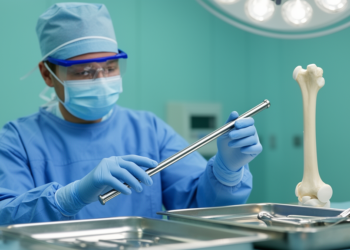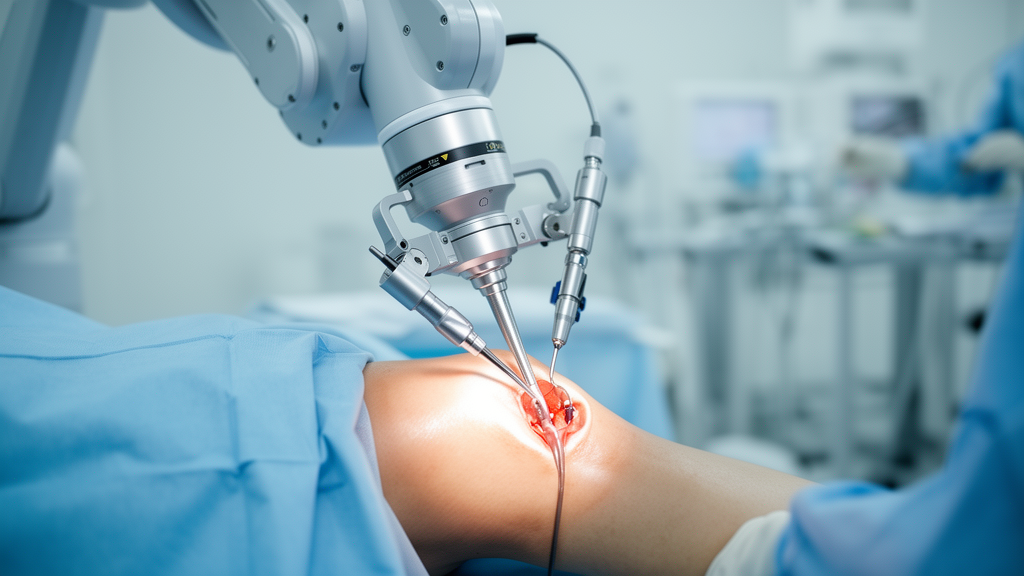
A comprehensive systematic review and meta-analysis has determined that conventional manual unicompartmental knee arthroplasty is associated with a significantly higher total revision rate compared to robotic-assisted unicompartmental knee arthroplasty. Evaluating surgical outcomes across thousands of procedures, investigators found that patients undergoing conventional manual techniques faced a 58 percent higher relative risk of requiring secondary operations compared to those treated with robotic assistance. The research systematically synthesized existing comparative data to resolve longstanding controversies regarding whether robotic systems translate into durable clinical advantages and lower failure frequencies during partial knee replacements.
Unicompartmental knee arthroplasty serves as an established surgical treatment for patients with osteoarthritis confined to a single compartment of the knee joint. Over recent years, technological progress has driven increasing adoption of robotic-assisted procedures, which utilize pre-operative and intra-operative computer planning to refine bone cutting, optimize component positioning, and improve mechanical alignment. While robotic guidance offers heightened precision to reduce surgical cutting discrepancies, it also introduces substantial equipment expenses, radiation exposure from pre-operative imaging, extended operative times, additional skin incisions for registration pins, and an initial technical learning curve for operating surgeons.
Because previous clinical trials and comparative cohorts reported conflicting conclusions regarding revision frequencies—with some studies observing lower revision rates for robotic methods and others documenting no distinct difference or even elevated failure rates—the authors conducted an exhaustive literature search. Following PRISMA guidelines and registering their protocol with PROSPERO under registration CRD420251042604, the investigative team searched PubMed, Embase, Cochrane Library, and Web of Science from database inception through April 28, 2025. Eligible studies were restricted to English-language publications directly comparing robotic-assisted and manual unicompartmental knee arthroplasty while reporting explicit failure causes.
Methodological quality across randomized controlled trials was appraised using the Cochrane collaboration risk of bias tool, whereas cohort and case-control studies were evaluated using the Newcastle-Ottawa Scale. Ultimately, fifteen studies comprising nine cohort investigations, two randomized controlled trials, and four case-control designs satisfied all inclusion criteria. The pooled cohort incorporated 29,982 individual patients and 30,099 operated knees, consisting of 22,290 knees in conventional manual surgery groups and 7,809 knees in robotic-assisted cohorts. Sample sizes among individual reports ranged up to 15,742 knees in the largest study, with patient mean ages spanning 60.7 to 71.2 years and follow-up periods extending from 6.4 months to 18 years.
Across the pooled dataset, conventional manual knee arthroplasty demonstrated a statistically significant elevation in overall revision procedures compared with robotic-assisted surgery, generating a pooled risk ratio of 1.58 with a 95 percent confidence interval spanning 1.33 to 1.87. Further subgroup evaluation based on duration of post-operative follow-up showed that conventional procedures exhibited significantly elevated revision rates within cohorts followed for two years or less, exhibiting a risk ratio of 1.50, and among cohorts followed beyond five years, where the risk ratio reached 3.81. Conversely, within the intermediate follow-up window between two and five years, the difference between the two techniques did not attain statistical significance.
The meta-analysis revealed distinct failure mechanisms and differing secondary revision causes between the two surgical approaches, although implant loosening represented the primary driver of failure across both groups. For robotic-assisted unicompartmental knee arthroplasty, the principal indications necessitating revision surgery were prosthesis loosening, joint infection, persistent pain, and subsequent progression of osteoarthritic disease. For conventional manual knee procedures, surgical revisions were predominantly driven by loosening, disease progression, infection, and mechanical limb malalignment. Loosening remained the predominant failure etiology across all evaluated follow-up windows for both surgical techniques, including short-term, intermediate, and long-term surveillance.
When investigating specific failure etiologies individually, the researchers identified marked disparities in revisions prompted by mechanical and biological failure modes. Eleven included studies encompassing 10,433 manual knees and 3,744 robotic knees reported implant loosening, encompassing aseptic, tibial, and femoral detachment. Conventional manual arthroplasty demonstrated more than double the risk of revision resulting from loosening, yielding a risk ratio of 2.43 with a 95 percent confidence interval between 1.63 and 3.64. Revisions resulting from osteoarthritic progression in adjacent or patellofemoral compartments were also significantly higher among manual procedures, producing a risk ratio of 2.41 across six studies.
The most pronounced divergence between surgical modalities emerged regarding revisions necessitated by limb malalignment. Across four studies reporting alignment failures, conventional manual surgery showed a substantially higher revision risk, presenting a pooled risk ratio of 6.88 with a 95 percent confidence interval of 2.00 to 23.59. The authors noted that while limb malalignment constitutes a direct technical failure identifiable early in follow-up, disease progression represents an indirect biological consequence that can be accelerated when sub-optimal component placement produces uneven joint contact pressures and accelerated contralateral wear over time.
In contrast to mechanical alignment and implant loosening, revisions provoked by persistent joint pain or surgical site infection did not differ significantly between robotic-assisted and manual cohorts. The synthesis of seven studies addressing revisions due to pain demonstrated equivalent outcomes, yielding a risk ratio of 0.92, while five studies assessing deep joint infections demonstrated a risk ratio of 0.72 without statistical significance. Subgroup evaluations examining bearing mechanics similarly revealed that among four studies assessing fixed-bearing implants alone, total revision differences did not reach statistical significance, whereas pooled analyses combining diverse bearing designs sustained clear advantages favoring robotic assistance.
Despite the observed reductions in total revisions, loosening remained the leading cause of revision in both cohorts, accounting for 0.7 percent of manual knees and 0.4 percent of robotic knees. The investigators emphasized that while robotic assistance provides precision during bone cutting and component positioning, final implant stability remains dependent on traditional manual cementation technique. Inappropriate cement mantle thickness, inadequate bone penetration, elevated patient body mass index, and osteoporotic bone quality can compromise fixation irrespective of cutting accuracy. Furthermore, because participating surgeons in the analyzed literature were predominantly experienced operators, the authors cautioned that these outcomes may not immediately translate to surgeons during their early learning curve, warranting future large-scale prospective randomized trials with standardized surgical parameters.
A closer examination of the search and study retrieval trajectory clarifies how the analytical cohort was compiled. Systematic querying across the four targeted databases initially yielded 1,025 citations, from which the removal of 547 duplicated files left 478 records for independent screening by title and abstract. After filtering extraneous topics, 55 complete articles underwent detailed eligibility evaluations, culminating in the final selection of 15 comparative investigations. Across these selected publications, publication dates ranged from 2014 through 2025, with 73.3 percent published since 2020. Robotic instrumentation primarily involved MAKO and BlueBelt Navio platforms, alongside a single trial evaluating the BrainLAB navigation system. Methodological hierarchies placed 12 studies at evidence level III, one at level IV, and two at level I.
Assessment of statistical robustness and publication bias provided further reassurance regarding the synthesized conclusions. Quality scores for cohort investigations evaluated with the Newcastle-Ottawa Scale ranged between eight and nine points, while case-control papers scored between six and eight points, with only a single paper receiving the minimal score of six. For the randomized trials, one was deemed to possess a low risk of bias, whereas another exhibited a elevated risk concerning participant and personnel blinding. Subsequent sensitivity analyses revealed that iteratively removing individual studies did not fundamentally alter the aggregate outcomes, though excluding Guild and colleagues produced a comparatively larger shift in pooled values. Funnel plot distributions demonstrated no apparent asymmetry, and formal statistical testing via Begg’s test and Egger’s test yielded values of 0.767 and 0.799, confirming no detectable publication bias.
The meta-analysis also characterized chronological shifts in why implants failed across specific postoperative intervals. During the early surveillance phase spanning the initial two years, joint infections, prosthesis loosening, and osteoarthritic disease progression constituted the leading grounds for reoperation in both groups. In the intermediate interval covering two to five years postoperatively, loosening remained the most frequent etiology, yet the secondary causes diverged between techniques: limb malalignment became the secondary contributor for manual procedures, while unexplained pain served as the secondary contributor for robotic procedures. Once patient surveillance extended past five years, implant loosening persisted as the dominant documented problem across both surgical groups.
The authors also weighed key clinical mechanisms and interpretive boundaries that temper these statistical comparisons. In biological terms, subtle malalignments that fail to trigger immediate mechanical revision may nonetheless accelerate joint wear over time, as overcorrecting valgus alignment past the optimal hip-knee-ankle angle of 171 to 179 degrees elevates compartment stress. Several methodological constraints warrant cautious interpretation. Few prospective randomized trials exist, meaning nonrandomized retrospective designs introduce potential confounding. Furthermore, grouping disparate surgical systems, variable bearing configurations, and both medial and lateral compartment procedures under a general unicompartmental heading prevented granular subgroup analyses for uncommon surgical variants, reinforcing the need for larger prospective trials.
Subject of Research: Comparative revision causes and rates between robotic-assisted and conventional manual unicompartmental knee arthroplasty
Article Title: Comparative analysis of revision causes between robotic-assisted and conventional manual unicompartmental knee arthroplasty: a systematic review and meta-analysis
Article References: Xiang, P., Jin, H., Dai, Y., Yang, Y., Jia, C., Sagar, L., Zhang, J., Wu, Y., Zhang, C., Yang, S., & Deng, Z. (2026). Comparative analysis of revision causes between robotic-assisted and conventional manual unicompartmental knee arthroplasty: a systematic review and meta-analysis. Knee Surgery & Related Research, 38(1), Article 10. https://doi.org/10.1186/s43019-026-00311-x
Image Credits: AI Generated
DOI: 10.1186/s43019-026-00311-x
Keywords: unicompartmental knee arthroplasty, robotic-assisted surgery, knee arthroplasty, orthopedic surgery, revision surgery, prosthesis loosening, disease progression, limb malalignment, conventional manual surgery, systematic review, meta-analysis, knee osteoarthritis, surgical revision rates, joint biomechanics, orthopedic implants, PRISMA
News Source: Ophelia Keating. (November 20, 2026). Robotic Partial Knee Replacement Cuts Total Revision Risk Compared With Manual Surgery. Scienmag.