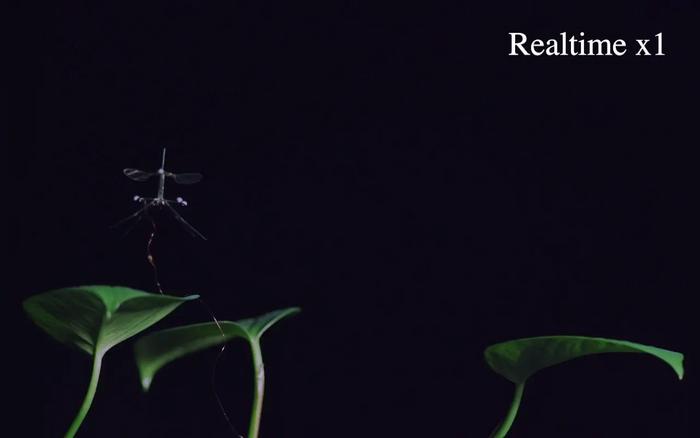

The advancements in robotics are on the verge of revolutionizing the way we interact with technology, and the latest development from the Harvard Microrobotics Laboratory embodies this promise. The incredible feat achieved with the Harvard RoboBee marks a significant stepping stone in the integration of bioinspired engineering with practical applications. This incredible flapping-wing micro-robot is designed not just to fly, but to land with precision and grace, mimicking one of nature’s most adept landers—the crane fly. Biomechanics and robotics now intertwine, and the RoboBee’s design logic leans heavily on what we can learn from the natural world.
The RoboBee has demonstrated its capabilities to fly, dive, and hover with impressive agility, but these feats would be undermined without an equally sophisticated landing mechanism. The latest redesign integrates a new set of long, jointed legs, allowing the RoboBee to make a seamless transition from flight to ground contact. Such improvements are essential for ensuring the longevity of the robot and minimizing damage upon landing—an aspect critical for any robotic platform relying on delicate mechanisms, particularly those using piezoelectric actuators.
The research team, headed by Professor Robert Wood, has meticulously addressed the longstanding issues of landing reliability experienced by previous iterations of the RoboBee. Thanks to the innovative integration of a modernized control system, the RoboBee is capable of decelerating as it approaches the landing surface, making its descent gentler and more controlled. This design breakthrough is critical because it dramatically reduces the chances of damaging the robot’s sensitive components during landing.
The challenge of landing poses a unique set of obstacles for the RoboBee. Its small size and lightweight structure—tipping the scales at only a tenth of a gram with a mere 3-centimeter wingspan—makes it particularly susceptible to environmental interferences. Previous designs experienced ‘ground effect’ phenomena, where the vortex generated by the rapidly flapping wings resulted in instability as the robot neared a landing surface. This phenomenon is akin to the turbulence generated by helicopter blades, making the final descending phase particularly precarious.
Christian Chan, a graduating student and co-first author on the project, highlighted that earlier methods of landing involved simply switching off the engine just prior to contacting the ground, leading to unpredictable landings. This approach was essentially a gamble, relying on luck to ensure a safe and upright landing. By integrating advanced mechanical designs inspired by the crane fly, the team has made monumental strides in creating a more reliable landing mechanism.
In their work, the team studied the crane fly’s physical characteristics. These insects boast long, flexible legs, which are thought to help reduce impact forces during landing. The crane fly’s capability can be attributed to its unique anatomy that allows for a substantial dampening effect as they engage with the ground. This anatomical insight has informed the design process, allowing researchers to create prototypes reflecting the crane fly’s joint structure and leg segmentation.
Alyssa Hernandez, a postdoctoral researcher and co-author of the study, brought vital insights from her background in biological locomotion, emphasizing that the RoboBee serves as an excellent experimental platform for exploring the intersection between biology and robotics. This synergy holds the potential to offer a plethora of insights that could enhance robotic design while simultaneously facilitating biological studies. Such translational research may pave the way for nuanced hypotheses in biomechanics, exploring how the mechanics of flying creatures might inspire future robotic innovations.
The RoboBee remains tethered to off-board power and control systems for the present, a step that the research team recognizes as a limitation in terms of experimentation. The aspiration, however, is to scale up the vehicle and embed autonomous systems within the RoboBee that would facilitate onboard sensory recognition and control. Achieving autonomy is cited as a ‘holy grail’ in micro-robotics, and involves not just flying but doing so without compromising safety mechanisms—the ability to land safely is central to this pursuit.
In terms of potential applications, the RoboBee’s unique capabilities position it well for tearing down the barriers of conventional drone usage. Its tiny size and functioning mimicry open the door for innovative uses, including environmental assessments and disaster response strategies. Perhaps one of the most exciting prospects is its application in artificial pollination—a potential game-changer in agriculture, allowing RoboBees to autonomously fertilize crops and significantly boost food production.
The ongoing research is supported by the National Science Foundation Graduate Research Fellowship Program, demonstrating a robust framework for innovation at the intersection of engineering and life sciences. Not only does the initiative promote scientific inquiry but also inter-disciplinary collaboration, ensuring that varied expertise can contribute to the development of next-generation robotics. As the RoboBee continues to evolve, it embodies the concept of learning from nature, addressing real-world problems while pushing the envelope of current technological capabilities.
The RoboBee stands as more than a robot; it is a symbol of the future potential that integrating biology with engineering can unlock. By understanding and replicating the intricate designs created by nature through millions of years of evolution, developers can continue to innovate in ways that benefit not just technology but society as a whole. The journey of the RoboBee highlights the importance of scientific progress, inspiring the bright minds of today and the innovators of tomorrow.
With ongoing experiments and refinements, the Harvard RoboBee is well on its way to achieving true autonomy, which could pave the way for practical applications we can only begin to envision. A future where swarms of RoboBees tend to our gardens or monitor our ecosystems is not only a vision but a very likely reality, hinging on the advancements made by dedicated research teams pushing the boundaries of what is possible today.
As we look forward to when this RoboBee will no longer need its tethered apparatus, we must acknowledge the tremendous strides made in robotic flight technology, showing how bioinspired strategies can lead to groundbreaking scientific advancements and appealing applications across a broad range of fields.
Subject of Research: Not applicable
Article Title: Sticking the landing: Insect-inspired strategies for safely landing flapping-wing aerial microrobots
News Publication Date: 16-Apr-2025
Web References: None
References: None
Image Credits: Harvard Microrobotics Laboratory
Keywords
– Robotics
– Aerial robots
– Swarm robotics
– Insect flight
– Bioinspired robotics
– Robot flight
– Microrobots
– Piezoelectricity
– Mechanical engineering
– Control systems
– Engineering
– Electrical engineering
Tags: advancements in robotic landing reliabilityagile flying and hovering robotsbioinspired engineering applicationsbiomechanics integration with technologycrane fly flight mimicryflapping-wing micro-robot designHarvard Microrobotics Laboratory breakthroughsjointed legs for improved landingpiezoelectric actuators in roboticsprecision landing mechanisms in roboticsProfessor Robert Wood research teamRoboBee robotic flight innovation