• HOME
  • NEWS
  • EXPLORE
    • CAREER
      • Companies
      • Jobs
    • EVENTS
    • iGEM
      • News
      • Team
    • PHOTOS
    • VIDEO
    • WIKI
  • BLOG
  • COMMUNITY
    • FACEBOOK
    • INSTAGRAM
    • TWITTER
Sunday, May 10, 2026
BIOENGINEER.ORG
No Result
View All Result
  • Login
  • HOME
  • NEWS
  • EXPLORE
    • CAREER
      • Companies
      • Jobs
        • Lecturer
        • PhD Studentship
        • Postdoc
        • Research Assistant
    • EVENTS
    • iGEM
      • News
      • Team
    • PHOTOS
    • VIDEO
    • WIKI
  • BLOG
  • COMMUNITY
    • FACEBOOK
    • INSTAGRAM
    • TWITTER
  • HOME
  • NEWS
  • EXPLORE
    • CAREER
      • Companies
      • Jobs
        • Lecturer
        • PhD Studentship
        • Postdoc
        • Research Assistant
    • EVENTS
    • iGEM
      • News
      • Team
    • PHOTOS
    • VIDEO
    • WIKI
  • BLOG
  • COMMUNITY
    • FACEBOOK
    • INSTAGRAM
    • TWITTER
No Result
View All Result
Bioengineer.org
No Result
View All Result
Home NEWS Science News Biology

Rise of oxygen on Earth: Initial estimates off by 100 million years

Bioengineer by Bioengineer
April 5, 2021
in Biology
Reading Time: 3 mins read
0
IMAGE
Share on FacebookShare on TwitterShare on LinkedinShare on RedditShare on Telegram

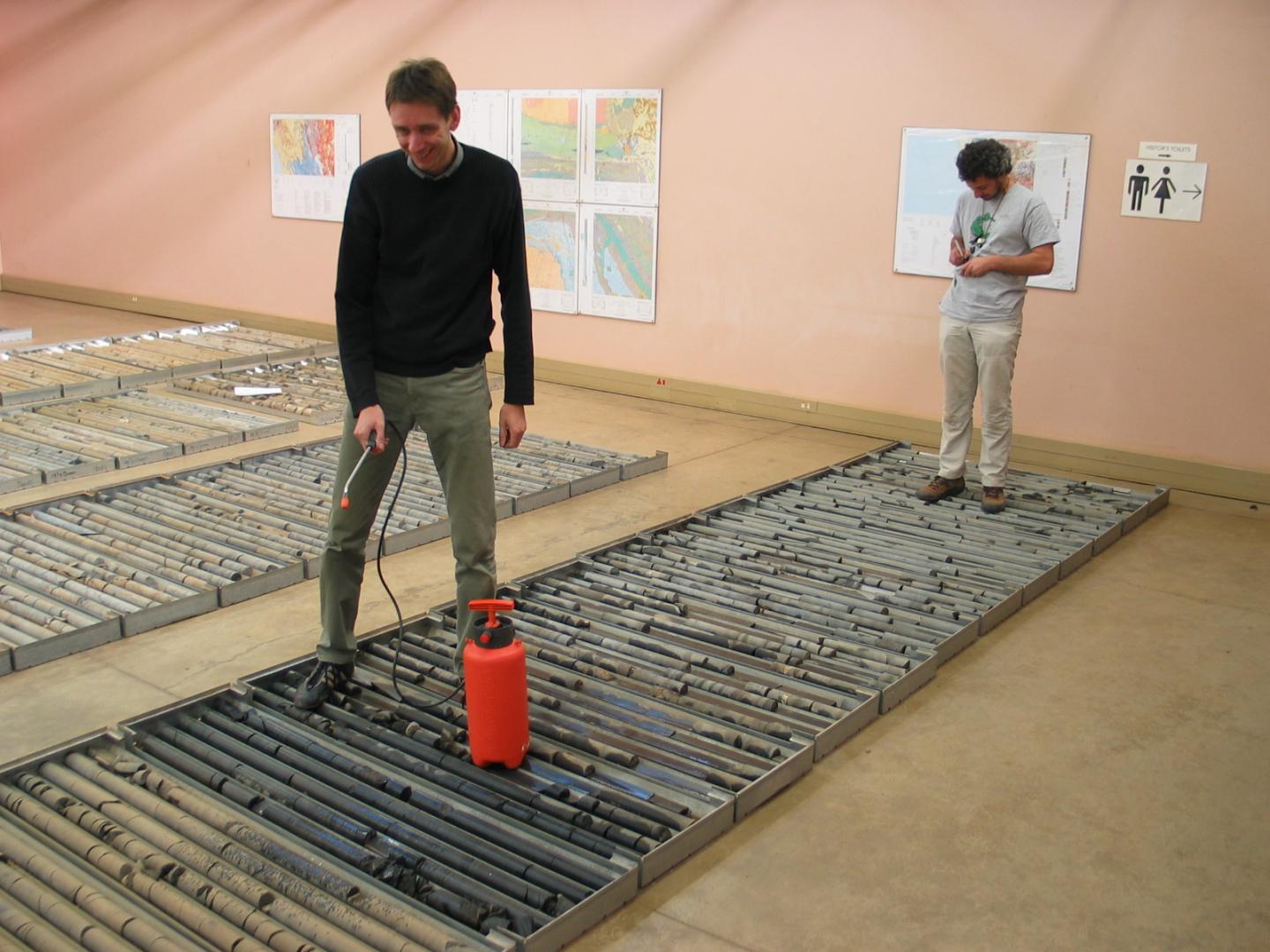
Permanent oxygenation occurred much later than previously thought
IMAGE

Credit: Andrey Bekker/UCR

New research shows the permanent rise of oxygen in our atmosphere, which set the stage for life as we know it, happened 100 million years later than previously thought.

A significant rise in oxygen occurred about 2.43 billion years ago, marking the start of the Great Oxidation Episode — a pivotal moment in Earth’s history. 

An international research team including a UC Riverside scientist analyzed rocks from South Africa formed during this event. Findings, published this week in the journal Nature, include the discovery that oxygen fluctuated dramatically after its early appearance until it became a permanent constituent of the atmosphere much later.

These fluctuations reinforce a direct link between atmospheric oxygen and concentrations of greenhouse gases such as methane, helping to explain some of the most extreme climate changes in the planet’s past.

During the same period, ancient Earth experienced four glaciations — periods when the whole planet was covered with ice and snow for millions of years. According to UC Riverside geologist Andrey Bekker, changes in atmospheric oxygen levels began and ended these events. 

Scientists have often wondered how the planet could have emerged from the periods in which ice and snow covered everything, including the oceans. According to Bekker, increases in atmospheric oxygen levels resulted in low concentrations of greenhouse gases, such as methane and carbon dioxide. This ushered in global glaciations by maintaining surface conditions below the water-freezing temperature. 

Volcanoes also continued to erupt on the frozen planet, building required high levels of carbon dioxide in the atmosphere to exit from climatic catastrophe by warming the planet and melting the snow and ice.

“Before this work, we all wondered why the fourth glacial event happened if oxygen was already a steady component in the atmosphere,” Becker said. “We found it was not steady. The permanent rise of oxygen actually occurred after the fourth, final glaciation in the Paleoproterozoc Era, and not before it, and this solves what had previously been a major puzzle in our understanding.” 

The Great Oxidation Episode ushered in a 1.5 billion-year period of subsequent environmental stability, which lasted until a second major transitional period, marked by rising atmospheric oxygen and similar climatic changes at the end of the Precambrian time. 

“We thought once oxygen increased it wouldn’t ever return back to lower levels,” Bekker said. “Now we have learned it fluctuated to very low levels and this could have dramatic implications in terms of understanding extinction events and the evolution of life.”

Open questions include the reasons for these multiple fluctuations, and whether complex life could have evolved and then died out again in response to them, said Simon Poulton, a biogeochemist at Leeds University who led the research. 

“We cannot begin to understand the causes and consequences of atmospheric oxygenation, the most significant control on Earth’s habitability, if we do not know when permanent atmospheric oxygenation actually occurred,” he said. “Now at last we have that piece of the puzzle.”

###

Media Contact
Jules Bernstein
[email protected]

Original Source

https://news.ucr.edu/node/8071/edit

Related Journal Article

http://dx.doi.org/10.1038/s41586-021-03393-7

Tags: Atmospheric ChemistryAtmospheric ScienceClimate ChangeClimate ScienceEarth ScienceEvolutionGeology/SoilTemperature-Dependent Phenomena
Share13Tweet8Share2ShareShareShare2

Related Posts

Ancient Plant Populations Reveal Fresh Insights into Climate Resilience — Biology

Ancient Plant Populations Reveal Fresh Insights into Climate Resilience

May 8, 2026
Rare Brain Disorders in Children Linked to Mutations in Lesser-Known Protein Complex — Biology

Rare Brain Disorders in Children Linked to Mutations in Lesser-Known Protein Complex

May 8, 2026

From Odd Insect to Underwater Predator: The Remarkable Evolution of a Bloodthirsty Fruit Fly

May 8, 2026

SNU Professor Sangwoo Seo’s Team Develops Next-Generation CRISPR Biocontainment Technology to Control Microbial Survival Without DNA Cleavage

May 8, 2026
Please login to join discussion

POPULAR NEWS

  • Research Indicates Potential Connection Between Prenatal Medication Exposure and Elevated Autism Risk

    840 shares
    Share 336 Tweet 210
  • New Study Reveals Plants Can Detect the Sound of Rain

    727 shares
    Share 290 Tweet 181
  • Scientists Investigate Possible Connection Between COVID-19 and Increased Lung Cancer Risk

    68 shares
    Share 27 Tweet 17
  • Salmonella Haem Blocks Macrophages, Boosts Infection

    61 shares
    Share 24 Tweet 15

About

We bring you the latest biotechnology news from best research centers and universities around the world. Check our website.

Follow us

Recent News

Evaluating Digoxin Use in Patients with Symptomatic Rheumatic Heart Disease

Evaluating the Effectiveness and Safety of Digitalis Glycosides in Treating Heart Failure

Urdu Fall Risk Questionnaire Adapted for Elderly

Subscribe to Blog via Email

Enter your email address to subscribe to this blog and receive notifications of new posts by email.

Join 82 other subscribers
  • Contact Us

Bioengineer.org © Copyright 2023 All Rights Reserved.

Welcome Back!

Login to your account below

Forgotten Password?

Retrieve your password

Please enter your username or email address to reset your password.

Log In
No Result
View All Result
  • Homepages
    • Home Page 1
    • Home Page 2
  • News
  • National
  • Business
  • Health
  • Lifestyle
  • Science

Bioengineer.org © Copyright 2023 All Rights Reserved.