• HOME
  • NEWS
  • EXPLORE
    • CAREER
      • Companies
      • Jobs
    • EVENTS
    • iGEM
      • News
      • Team
    • PHOTOS
    • VIDEO
    • WIKI
  • BLOG
  • COMMUNITY
    • FACEBOOK
    • INSTAGRAM
    • TWITTER
Wednesday, November 18, 2026
BIOENGINEER.ORG
No Result
View All Result
  • Login
  • HOME
  • NEWS
  • EXPLORE
    • CAREER
      • Companies
      • Jobs
        • Lecturer
        • PhD Studentship
        • Postdoc
        • Research Assistant
    • EVENTS
    • iGEM
      • News
      • Team
    • PHOTOS
    • VIDEO
    • WIKI
  • BLOG
  • COMMUNITY
    • FACEBOOK
    • INSTAGRAM
    • TWITTER
No Result
View All Result
Bioengineer.org
No Result
View All Result
Home NEWS Science News Biology

Rhodococcus Bacteria Bind Human Norovirus in Pediatric Gastroenteritis Stool Samples

by
November 18, 2026
in Biology
Reading Time: 2 mins read
0
Rhodococcus Bacteria Bind Human Norovirus in Pediatric Gastroenteritis Stool Samples

Rhodococcus Bacteria Bind Human Norovirus in Pediatric Gastroenteritis Stool Samples

Share on FacebookShare on TwitterShare on LinkedinShare on RedditShare on Telegram

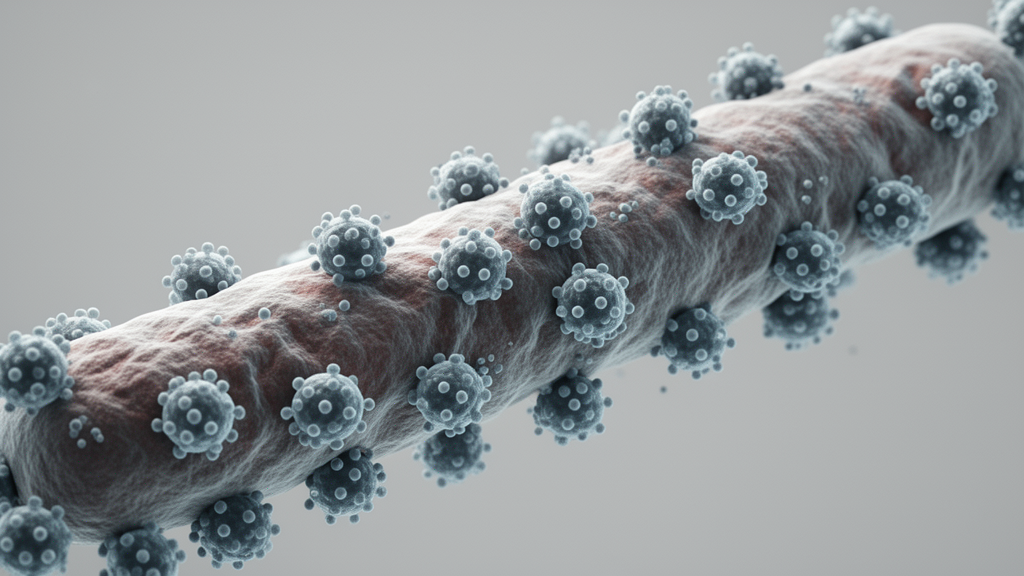
Recent findings have revealed that Rhodococcus species bind human norovirus particles in clinical stool samples collected from pediatric gastroenteritis cases. Researchers observed this recurring physical association across independent patient samples, indicating that the bacterial presence is linked to the viral pathogen in clinical presentations. The observation points to a potentially relevant biological interaction between the bacterial cells and norovirus particles during intestinal illness.

Published as a hypothesis and theory article in Frontiers in Microbiology within the virology section, the work evaluates how specific structural components of these bacteria may interact with viral surfaces during human infection.

According to the investigators, the observed binding appears to be mediated directly by bacterial exopolysaccharides. These exopolysaccharide structures are typically rich in specific sugar residues, including fucose, galactose, and glucuronic acid residues. The researchers outline that these bacterial surface carbohydrates may structurally mimic histo-blood group antigens, which serve as the recognized cellular receptors utilized by human norovirus to engage host targets.

Based on these biochemical characteristics, the research team proposes that bacterial exopolysaccharides could serve as transient viral carriers.

The authors further hypothesize an affinity-driven release mechanism that operates when the virus reaches susceptible host tissue. In this proposed sequence, authentic histo-blood group antigens located on host epithelial cells possess a higher binding affinity than the bacterial exopolysaccharides. This affinity gradient allows host epithelial receptors to displace norovirus particles from the bacterial carriers, thereby facilitating timely infection of the epithelial layer.

This proposed bacterial-viral interaction may perform a dual functional role by providing environmental stabilization for norovirus virions alongside controlled release upon contact with target host cells. The investigators conclude that if experimentally validated, this conceptual model would support the broader principle that bacterial glycans act as dynamic, reversible docking platforms capable of shaping norovirus ecology, transmission pathways, and infectious potential.

Subject of Research: Bacterial exopolysaccharide binding and affinity-driven release of human norovirus

Article Title: Rhodococcus–norovirus interactions: a hypothesis of affinity-driven viral release from bacterial exopolysaccharides

Article References: Monedero, V., Santiso-Bellón, C., Yebra, M. J., & Rodríguez-Díaz, J. (2026). Rhodococcus–norovirus interactions: a hypothesis of affinity-driven viral release from bacterial exopolysaccharides. Frontiers in Microbiology, 17, Article 1987610. https://doi.org/10.3389/fmicb.2026.1987610

Image Credits: AI Generated

DOI: 10.3389/fmicb.2026.1987610

Keywords: Rhodococcus, human norovirus, norovirus, exopolysaccharides, histo-blood group antigens, pediatric gastroenteritis, viral transmission, viral ecology, fucose, galactose, glucuronic acid, viral capsid, epithelial cells, affinity-driven release, viral stabilization, glycans

News Source: Harold Sullivan. (November 18, 2026). Rhodococcus Bacteria Bind Human Norovirus in Pediatric Gastroenteritis Stool Samples. Scienmag.

Tags: affinity-driven releaseEpithelial Cellsexopolysaccharidesfucosegalactoseglucuronic acidglycanshisto-blood group antigenshuman norovirusnoroviruspediatric gastroenteritisRhodococcusviral capsidViral ecologyviral stabilizationviral transmission
Share12Tweet7Share2ShareShareShare1

Related Posts

Stemness Gene Profiling Identifies Prognostic Subtypes and Drug Targets in Osteosarcoma

Stemness Gene Profiling Identifies Prognostic Subtypes and Drug Targets in Osteosarcoma

November 18, 2026
Multi-Environment Trials Identify Four Superior High-Yielding Barley Genotypes in Egypt

Multi-Environment Trials Identify Four Superior High-Yielding Barley Genotypes in Egypt

November 18, 2026

Shandong Listeria Study Links Food and Clinical Isolates Using Genomic Profiling

November 18, 2026

Researchers Sequence Genomes of Bongkrekic Acid-Producing Bacteria from Wood Ear

November 18, 2026

POPULAR NEWS

  • Multi-Environment Trials Identify Four Superior High-Yielding Barley Genotypes in Egypt

    Multi-Environment Trials Identify Four Superior High-Yielding Barley Genotypes in Egypt

    29 shares
    Share 12 Tweet 7
  • Shandong Listeria Study Links Food and Clinical Isolates Using Genomic Profiling

    29 shares
    Share 12 Tweet 7
  • Engineers Develop Curved Lithium-Sulfur Battery Electrodes for Drone Frame Energy Storage

    29 shares
    Share 12 Tweet 7
  • Maternal Serum Elements Link to Cardiometabolic Risk Factors in Pregnancy

    29 shares
    Share 12 Tweet 7

About

We bring you the latest biotechnology news from best research centers and universities around the world. Check our website.

Follow us

Recent News

Retinal Artificial Intelligence Demonstrates High Diagnostic Accuracy but Faces Clinical Implementation Barriers

Higher Radiation Dose Linked to Severe Oral Mucositis in Leukemia Transplants

Stemness Gene Profiling Identifies Prognostic Subtypes and Drug Targets in Osteosarcoma

Subscribe to Blog via Email

Enter your email address to subscribe to this blog and receive notifications of new posts by email.

Join 88 other subscribers
  • Contact Us

Bioengineer.org © Copyright 2023 All Rights Reserved.

Welcome Back!

Login to your account below

Forgotten Password?

Retrieve your password

Please enter your username or email address to reset your password.

Log In
No Result
View All Result
  • Homepages
    • Home Page 1
    • Home Page 2
  • News
  • National
  • Business
  • Health
  • Lifestyle
  • Science

Bioengineer.org © Copyright 2023 All Rights Reserved.