
In an era where precision medicine and targeted therapeutics are paramount, a groundbreaking development has emerged from the joint School of Engineering and School of Life Sciences Laboratory of Protein Design and Immunoengineering, known as LPDI. Under the direction of Bruno Correia, researchers have introduced a revolutionary deep-learning framework named MaSIF, which stands for “Molecular Surface Interaction Fingerprints.” This state-of-the-art technology enables the design of novel proteins with the ability to selectively bind to therapeutic targets, thereby paving the way for advancements in drug design and cellular control mechanisms.
The initial publication in Nature detailed how MaSIF can process an extensive array of protein structures, identifying optimal interactions between molecules by examining their chemical and geometric surface attributes. This rapid screening capability allows scientists to engineer new protein-protein interactions, which are crucial for cellular regulation and therapeutic applications. The functionality of MaSIF is rooted in its ability to generate surface representations, akin to fingerprints, which feature key attributes such as charge distribution, hydrophobic characteristics, and overall shape. By specializing in these parameters, MaSIF can navigate the complex landscape of molecular interactions with unprecedented finesse.
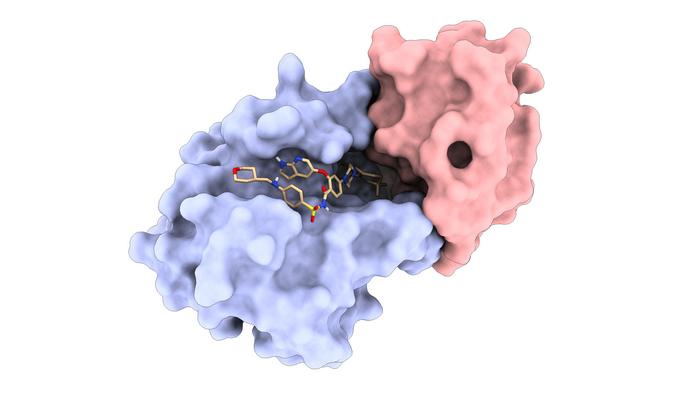
Fast forward a year and a half, and the LPDI team has taken a significant leap, reporting yet another remarkable application of this technology in their latest research published again in Nature. This time, their focus shifted towards creating novel protein binders capable of interacting with established protein complexes associated with small molecules, including well-known therapeutic agents like Venetoclax. The advantage of targeting such protein-drug complexes lies in the ability of these small molecules to induce subtle changes in the surface properties of proteins, referred to as “neosurfaces.” These neosurfaces act as sophisticated switches, facilitating the nuanced control of critical cellular functions such as DNA transcription and protein degradation.
The researchers, particularly Anthony Marchand of the LPDI, emphasized the innovative approach of designing proteins that engage with specific protein-drug complexes, presenting a new strategy that diverges from conventional screening methodologies. By leveraging the power of deep learning, the team successfully demonstrated that MaSIF could extend beyond its foundational training on standard proteins, effectively adapting to recognize and exploit the altered surface characteristics presented by drug-bound protein complexes. This advancement underscores the impressive adaptability of MaSIF when applied to the ever-evolving domain of protein interactions.
One of the standout achievements in this ambitious project was the experimental validation of the designed protein binders against a trio of significant protein-drug complexes. These complexes were formed with progesterone, the FDA-approved leukemia treatment Venetoclax, and the naturally derived antibiotic Actinonin. The optimized protein binders displayed remarkable affinity, robustly recognizing their respective targets with impressive specificity. This success story highlights the potential for MaSIF to accurately map and create pathways towards novel protein interactions that can have far-reaching implications in both therapeutic settings and fundamental biological research.
A notable distinction between MaSIF and traditional protein design frameworks is its streamlined architecture. The model operates on a remarkably small set of parameters, approximately 70,000, in contrast to larger systems such as ChatGPT, which command billions of variables. This compact yet focused design allows for an elevated level of abstraction and a more efficient learning process. The approach hinges on the hypothesis that small molecules, upon binding, can reshape the surface characteristics of proteins, altering their interfaces and enabling new interaction possibilities. This agility in perceiving and adapting to molecular changes is key to the success of the MaSIF platform.
The implications for therapeutic applications are particularly promising. One area ripe for exploration is the enhancement of chimeric antigen receptor (CAR-T) therapies, which currently face hurdles related to precision and safety. The ability to finely control these engineered cells through small molecule switches could revolutionize treatment protocols, helping to mitigate harmful side effects and maximizing the efficacy of cancer therapeutics. The LPDI team’s pioneering work with a Venetoclax-inducible system has shown that it is indeed possible to switch on cancer-targeting mechanisms in CAR-T cells, showcasing the profound potential that such innovations hold for next-generation treatments.
As the landscape of cellular therapies evolves, so too will the technological methodologies fueling these advancements. The research team’s collaborative spirit, particularly the contributions of Michael Bronstein from the Research Institute for Biomedical Artificial Intelligence, proves vital in fostering a multidisciplinary approach. Integrating computational modeling with innovative protein design showcases the strength in collaboration required to navigate the complexities of life sciences and engineering.
Beyond the immediate applications in cancer therapy, the versatility of MaSIF paves the way for broader implementations across various fields. The prospect of designing tailored biosensors or engineered cellular systems capable of responding dynamically to therapeutic agents is an exciting frontier. The adoption of such technologies can lead to the advent of personalized medicine approaches, where treatments can be customized based on the individual molecular landscapes of patients, delivering improved outcomes and novel therapeutic strategies.
Reflecting on the intricate balance between research innovation and practical application, the potential reach of resultant therapies rooted in this research is staggering. As researchers continue to peel back the layers of molecular interactions, new possibilities will undoubtedly arise, setting the stage for a future where disease management becomes increasingly precise and tailored to the underlying biology of each patient’s condition. The strides being made at LPDI not only illuminate the fluidity and integrative nature of modern scientific research but also underscore the collective effort to improve human health through innovative technological solutions.
Impressively, the LPDI team continues to stand at the forefront of protein engineering, with their work offering a beacon of hope in the fight against complex diseases. By harnessing the power of advanced computational methods and in-depth biological understanding, the future looks promising, raising the bar for what is achievable in the domain of protein design and therapeutic development. The journey of MaSIF is far from over; it heralds a new era wherein the beauty of molecular interactions can be captured, understood, and manipulated to unlock transformative advances in medicine and biotechnology.
Subject of Research: Not applicable
Article Title: Targeting protein-ligand neosurfaces with a generalizable deep learning tool
News Publication Date: 15-Jan-2025
Web References: Not applicable
References: Not applicable
Image Credits: © LPDI EPFL
Keywords: Protein design, deep learning, computational modeling, cancer therapy, protein-ligand interactions, drug discovery, biochemistry, molecular biology, CAR-T therapy, therapeutic applications, machine learning, biosensors.