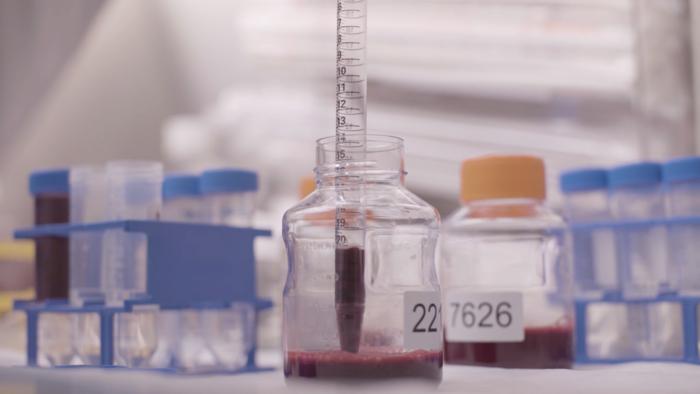

Researchers at the Allen Institute for Immunology have recently unveiled a groundbreaking mechanism designed to revolutionize the handling of blood samples in clinical research and trials. This innovation, known as CryoSCAPE, addresses one of the critical time-related challenges faced when blood samples are collected outside high-tech laboratories. Often, the constituents of blood samples can begin to change within several hours of collection, which can significantly impact experimental results and the accuracy of scientific conclusions drawn from those samples.
The urgency of this issue cannot be overstated. Blood draws are typically taken in settings far removed from centralized processing facilities, particularly in rural areas or clinics lacking the advanced infrastructure needed to analyze these samples promptly. This logistical hurdle not only compromises the integrity of the biological material but also exacerbates disparities in healthcare by limiting participation from underserved populations in pivotal research initiatives. The conventional practice of shipping blood samples from remote sites to urban laboratories adds a layer of complexity that the research community has struggled to overcome for years.
CryoSCAPE is a novel chemical stabilization approach that allows blood samples to remain viable for extended periods, fundamentally altering how researchers can process blood for scientific studies. It comprises a pre-packaged chemical mixture that works to induce a state of “suspended animation” for the blood, helping to preserve its molecular composition during freezing and mitigating degradation. This advancement is particularly valuable given how sensitive certain biomarkers in blood can be; any delay in processing can lead to potentially misleading data that could skew crucial research outcomes.
What marks CryoSCAPE as a groundbreaking leap is its scalability. Previously, single-cell technologies that characterize the molecular makeup of individual cells have been limited by stringent processing timelines and the capabilities of existing laboratory facilities. Researchers can now process hundreds of blood samples concurrently, effectively democratizing access to high-level immunology studies. The implications of this are vast, particularly in enriching the diversity of study populations, which can lead to more inclusive and representative medical findings.
In addition to enhancing research methodologies, CryoSCAPE is poised to bridge the gap between clinical trials and participants in various communities. For decades, participants have been required to travel to urban centers to donate blood for trials, often discouraging involvement from populations living in geographically isolated or under-resourced areas. By enabling blood samples to be drawn and stabilized in local clinics or community settings, the research community can improve enrollment rates and ensure that critical scientific inquiry reflects a broader segment of society.
The potential applications of CryoSCAPE extend beyond simply enhancing blood sample viability. As an innovative blood stabilization method, it can significantly improve the quality of data generated in single-cell RNA sequencing, a primary technique used to analyze gene expression in individual cells. The Allen Institute’s researchers performed tests that showed cellular RNA integrity deteriorated markedly after just six hours post-collection, indicating that timely processing is not just advantageous, but essential.
Stabilizing blood samples in their post-draw state allows for a more accurate transcription of biological responses in diverse demographics. As researchers anticipate further integration of single-cell technologies in clinical practices, CryoSCAPE could set a new standard for how biological samples are handled and analyzed. This means that experiments designed to unveil important physiological responses will yield results that are both more reliable and representative of the patient population as a whole.
The broader implications for philanthropy and healthcare equity are profound. By reducing barriers to research participation, CryoSCAPE reinforces the Allen Institute’s commitment to an open science model where knowledge is freely shared and access to research is democratized. The hope is that institutions can leverage this technique to promote ongoing contributions to science from individuals historically excluded from biomedical research.
In essence, CryoSCAPE is not just a technical achievement but a paradigm shift in blood sample management and utilization in scientific studies. It reflects a growing recognition within the research community of the importance of inclusive data collection practices and equitable access to participation in clinical trials. By enabling researchers to preserve the integrity of blood samples, this breakthrough could enhance the reliability of findings and catalyze new pathways in immunological and clinical research.
Overall, the innovations brought forth by the Allen Institute’s CryoSCAPE pose a vital step towards refining research methodologies while promoting inclusivity in medical studies. This exciting advancement offers the potential for improved health outcomes by ensuring that research reflects the full spectrum of the human experience, regardless of geographical or socio-economic constraints. As research practices evolve, the demand for versatile and effective methods like CryoSCAPE will continue to grow, transforming the future of biomedical research.
Subject of Research:
People
Article Title:
CryoSCAPE: Scalable immune profiling using cryopreserved whole blood for multi-omic single cell and functional assays
News Publication Date:
3-Jan-2025
Web References:
Allen Institute
References:
Journal of Translational Medicine
Image Credits:
Credit: Allen Institute
Keywords:
Immunology, Blood, Discovery research, Clinical research