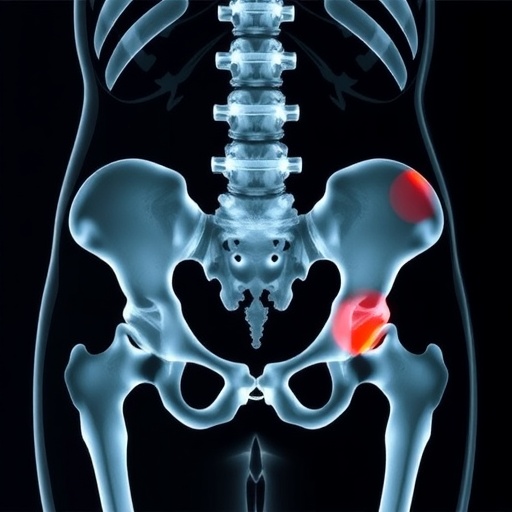
In a groundbreaking multicenter prospective cohort study published recently in BMC Geriatrics, researchers have unveiled compelling new data on the clinical feasibility of the Osteoporotic Pelvis Fracture Score (OFP-Score). As populations age globally, osteoporotic pelvic fractures increasingly represent a formidable challenge in geriatric medicine, blending complex diagnostic puzzles with pressing therapeutic imperatives. The OFP-Score promises to change this landscape by providing a rigorously validated, quantifiable tool to assess and predict clinical outcomes in patients suffering from these debilitating fractures.
Osteoporotic pelvic fractures, long overshadowed by hip fractures in medical discourse, have drawn renewed attention due to their rising incidence and challenging management. Unlike more straightforward fractures, pelvic injuries compounded by osteoporosis demand a nuanced approach, sensitive to bone quality, fracture complexity, and patients’ comorbidities. The OFP-Score was developed as a comprehensive metric synthesizing these multidimensional factors, aiming to assist clinicians in stratifying risks and tailoring interventions more precisely.
The innovation of this study lies not only in endorsing the OFP-Score’s predictive validity but also in demonstrating its practical applicability across multiple clinical settings. Conducted across several major centers, the prospective design allowed for real-time data collection and outcome tracking, painting a robust picture of the score’s utility. Researchers meticulously compiled patient demographics, fracture types, radiographic parameters, and treatment modalities to evaluate the OFP-Score’s capacity to forecast clinical trajectories, including complications and recovery timelines.
What makes the OFP-Score particularly revolutionary is its integration of biomechanical insights with clinical variables. Traditional assessments have often fallen short by focusing primarily on fracture morphology without considering the diminished bone mineral density that typifies osteoporotic fractures. By incorporating objective measures such as bone stiffness and quality into the scoring system, the OFP-Score advances patient-specific prognostication to a new level of precision, facilitating decisions on surgical versus conservative management.
The study’s multicenter nature enhances its generalizability, reinforcing the OFP-Score as a universally applicable tool. Variations in healthcare delivery, surgical expertise, and patient populations across centers traditionally pose challenges to unified scoring systems. However, consistent findings across diverse cohorts underscore the robustness of the OFP-Score, suggesting it can be confidently implemented in varied clinical environments, from high-volume trauma centers to community hospitals.
One of the key revelations of the research is the OFP-Score’s predictive power concerning postoperative complications, a critical endpoint for geriatric patients. The elderly are notoriously vulnerable to surgical risks, including infections, thromboembolic events, and prolonged immobilization repercussions. By stratifying patients into well-defined risk categories, the OFP-Score empowers clinicians to adopt preemptive measures, optimize perioperative management, and potentially reduce morbidity and mortality.
Furthermore, the OFP-Score holds the potential to refine rehabilitation strategies by correlating score outcomes with functional recovery benchmarks. Rehabilitation after osteoporotic pelvic fractures necessitates tailored approaches balancing bone healing imperatives with the prevention of muscle atrophy and joint stiffness. Clinicians can leverage OFP-Score data to calibrate rehabilitation intensity and timelines, improving functional gains while minimizing the risk of refracture or displacement.
Technological advancements underpinning the OFP-Score also feature prominently in this study. The integration of advanced imaging modalities and computer-assisted analysis allows for precise quantification of fracture patterns and bone quality. The fusion of radiographic data with clinical parameters represents a significant step towards personalized medicine in orthopedics, transcending traditional classification systems that often relied on subjective interpretation.
The implications of this research extend beyond individual patient care into healthcare policy and resource allocation. Given the escalating burden of osteoporotic fractures on healthcare systems worldwide, tools like the OFP-Score can inform triaging protocols and prioritize interventions for those at highest risk. This data-driven approach can enhance cost-effectiveness, reduce hospital stays, and ultimately improve quality of life for elderly patients.
Importantly, the study addresses the challenge of standardizing clinical protocols in osteoporotic pelvic fracture management. Historically, variability in treatment approaches reflected the absence of universally accepted risk stratification systems. By validating the OFP-Score in a prospective cohort, the investigators provide a scientific backbone to develop consensus guidelines, fostering uniformity and improving outcomes across institutions.
The research team’s rigorous methodological approach deserves particular mention. Prospective cohort studies inherently reduce recall bias and enhance the reliability of collected data. Using uniform criteria for patient inclusion, standardized procedures for score calculation, and blinded outcome assessment, the investigators ensured scientific rigor, reinforcing the credibility of their conclusions.
From a patient perspective, the introduction of the OFP-Score could translate into better-informed decision-making and personalized care strategies. Patients and their families often face uncertainty and anxiety when dealing with pelvic fractures, especially given the elderly population’s vulnerability. A validated scoring system offers tangible metrics to discuss prognosis transparently, foster shared decision-making, and align treatment goals with patient preferences.
Additionally, the study paves the way for future research exploring therapeutic innovations tailored to OFP-Score risk categories. Identifying molecular or pharmacological interventions that synergize with the score’s stratification could open new therapeutic frontiers. For instance, combining osteoporosis-targeted therapies with fracture management in high-risk patients may enhance bone regeneration and reduce adverse events, an avenue worthy of exploration.
The publication also serves as a call to action for integrating interdisciplinary teams in managing osteoporotic pelvic fractures. Orthopedic surgeons, geriatricians, radiologists, rehabilitation specialists, and primary care providers must collaborate closely, guided by tools like the OFP-Score, to optimize patient outcomes. This holistic approach acknowledges the multifactorial nature of fracture healing and the complexity of elderly patient care.
In conclusion, the robust prospective evaluation of the Osteoporotic Pelvis Fracture Score (OFP-Score) marks a significant landmark in orthopedic research and geriatrics. By marrying biomechanical sophistication with clinical practicality, the score emerges as a powerful tool for risk stratification, outcome prediction, and personalized treatment planning in osteoporotic pelvic fractures. As the global population ages, innovations like the OFP-Score will be pivotal in transcending current limitations, enhancing the quality and efficiency of geriatric fracture care, and ultimately, transforming patient lives.
Subject of Research: Clinical feasibility and predictive validity of the Osteoporotic Pelvis Fracture Score (OFP-Score) in managing osteoporotic pelvic fractures.
Article Title: Prospective clinical feasibility assessment of the Osteoporotic Pelvis Fracture Score (OFP-Score)—a multicenter prospective cohort study.
Article References:
Spiegl, U.J.A., Schanderl, P., Zimmermann, V. et al. Prospective clinical feasibility assessment of the Osteoporotic Pelvis Fracture Score (OFP-Score)—a multicenter prospective cohort study. BMC Geriatr (2026). https://doi.org/10.1186/s12877-026-07682-6
Image Credits: AI Generated
Tags: bone quality and fracture complexityclinical tool for osteoporosis fracturesgeriatric medicine fracture assessmentgeriatric pelvic fracture assessmentmulticenter prospective cohort studyOFP-Score clinical feasibilityosteoporosis-related fracture riskosteoporotic pelvic fracture outcomesosteoporotic pelvis fracture scorepelvic fracture management in elderlypredictive scoring for fracturesrisk stratification in pelvic fractures