• HOME
  • NEWS
  • EXPLORE
    • CAREER
      • Companies
      • Jobs
    • EVENTS
    • iGEM
      • News
      • Team
    • PHOTOS
    • VIDEO
    • WIKI
  • BLOG
  • COMMUNITY
    • FACEBOOK
    • INSTAGRAM
    • TWITTER
Sunday, August 9, 2026
BIOENGINEER.ORG
No Result
View All Result
  • Login
  • HOME
  • NEWS
  • EXPLORE
    • CAREER
      • Companies
      • Jobs
        • Lecturer
        • PhD Studentship
        • Postdoc
        • Research Assistant
    • EVENTS
    • iGEM
      • News
      • Team
    • PHOTOS
    • VIDEO
    • WIKI
  • BLOG
  • COMMUNITY
    • FACEBOOK
    • INSTAGRAM
    • TWITTER
  • HOME
  • NEWS
  • EXPLORE
    • CAREER
      • Companies
      • Jobs
        • Lecturer
        • PhD Studentship
        • Postdoc
        • Research Assistant
    • EVENTS
    • iGEM
      • News
      • Team
    • PHOTOS
    • VIDEO
    • WIKI
  • BLOG
  • COMMUNITY
    • FACEBOOK
    • INSTAGRAM
    • TWITTER
No Result
View All Result
Bioengineer.org
No Result
View All Result
Home NEWS Science News

Revive the map: 4D building reconstruction with machine learning

Bioengineer by Bioengineer
February 24, 2021
in Science News
Reading Time: 2 mins read
0
IMAGE
Share on FacebookShare on TwitterShare on LinkedinShare on RedditShare on Telegram

IMAGE

Credit: Farella E.M, et al./ MDPI Applied Sciences

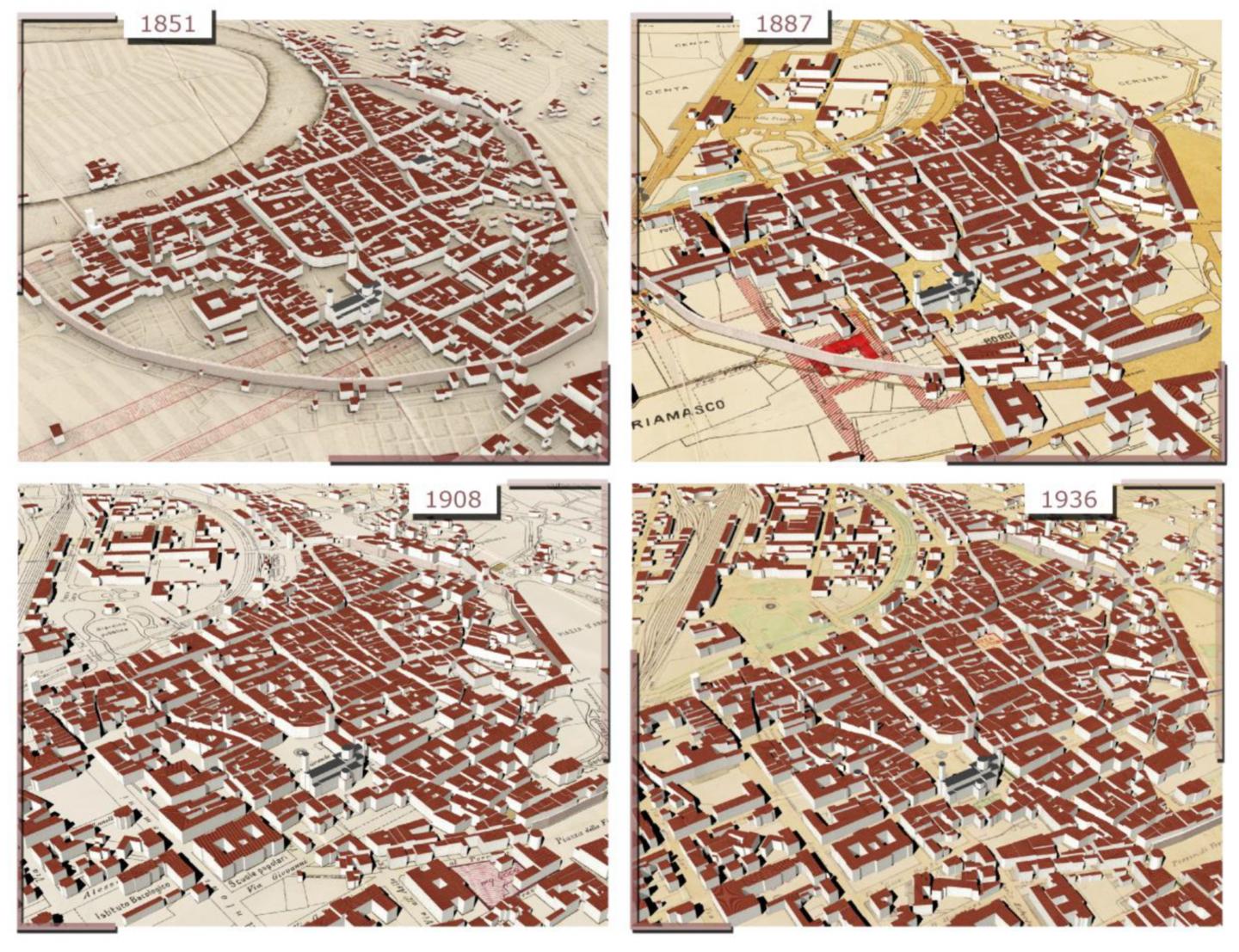
A research team from Skoltech and FBK (Italy) presented a methodology to derive 4D building models using historical maps and machine learning. The implemented method relies on the geometric, neighbourhood, and categorical attributes to predict building heights. The method is useful for understanding urban phenomena and changes contributing to defining our cities’ actual shapes. The results were published in the MDPI Applied Sciences journal.

Historical maps are the most powerful source used to analyze changes in urban development. Nevertheless, maps represent the 3D world in the 2D space, which describes the main features of the urban environment but fails to incorporate other spatial information, such as building heights. In 3D/4D city modeling applications based on historical data, the lack of building heights is a major obstacle for accurate space representation, analysis, visualization, or simulations.

Scientists from Skoltech and 3DOM research unit of FBK Trento explored machine learning solutions for inferring building heights from historical maps.

Their method tested on four historical maps of Trento (years 1851, 1887, 1908, and 1936) and Bologna (years 1884 and 1945), reflecting the biggest changes in the urban structures over the last centuries, helped reconstruct multi-temporal (4D) versions of these cities.

“The implemented learning and predictive procedures tested on historical data have proven to be effective and promising for many other applications. Based on a few attributes for the prediction, it will soon be expanded to diverse real-life contexts with missing elevation data. The resulting models will be a great help in bridging the geospatial knowledge gap in past or remote situations,” Emre Ozdemir, a Skoltech and FBK Trento PhD student, explains.

###

Media Contact
Ilyana Zolotareva
[email protected]

Original Source

https://www.skoltech.ru/en/2021/02/revive-the-map-4d-building-reconstruction-with-machine-learning/

Related Journal Article

http://dx.doi.org/10.3390/app11041445

Tags: ArchaeologyComputer ScienceGeographyMathematics/StatisticsMultimedia/Networking/Interface DesignTechnology/Engineering/Computer ScienceUrbanization
Share12Tweet8Share2ShareShareShare2

Related Posts

How Neuroblastoma Balances Replication Stress and Genome Stability Across Chromosome 17q

August 9, 2026

Cigar, Cigarillo, and Pipe Smoking: Lung Cancer Risk and Screening Eligibility

August 9, 2026

How Low Gravity and Pressure Affect Space Manufacturing of Carbon-Fiber Structures

August 9, 2026

Calreticulin-targeted L-asparaginase–flagellin conjugate boosts Salmonella’s antitumor effectiveness

August 9, 2026
Please login to join discussion

POPULAR NEWS

  • How Neuroblastoma Balances Replication Stress and Genome Stability Across Chromosome 17q

    29 shares
    Share 12 Tweet 7
  • Cigar, Cigarillo, and Pipe Smoking: Lung Cancer Risk and Screening Eligibility

    29 shares
    Share 12 Tweet 7
  • How Low Gravity and Pressure Affect Space Manufacturing of Carbon-Fiber Structures

    29 shares
    Share 12 Tweet 7
  • Calreticulin-targeted L-asparaginase–flagellin conjugate boosts Salmonella’s antitumor effectiveness

    29 shares
    Share 12 Tweet 7

About

We bring you the latest biotechnology news from best research centers and universities around the world. Check our website.

Follow us

Recent News

How Neuroblastoma Balances Replication Stress and Genome Stability Across Chromosome 17q

Cigar, Cigarillo, and Pipe Smoking: Lung Cancer Risk and Screening Eligibility

How Low Gravity and Pressure Affect Space Manufacturing of Carbon-Fiber Structures

Subscribe to Blog via Email

Success! An email was just sent to confirm your subscription. Please find the email now and click 'Confirm' to start subscribing.

Join 86 other subscribers
  • Contact Us

Bioengineer.org © Copyright 2023 All Rights Reserved.

Welcome Back!

Login to your account below

Forgotten Password?

Retrieve your password

Please enter your username or email address to reset your password.

Log In
No Result
View All Result
  • Homepages
    • Home Page 1
    • Home Page 2
  • News
  • National
  • Business
  • Health
  • Lifestyle
  • Science

Bioengineer.org © Copyright 2023 All Rights Reserved.