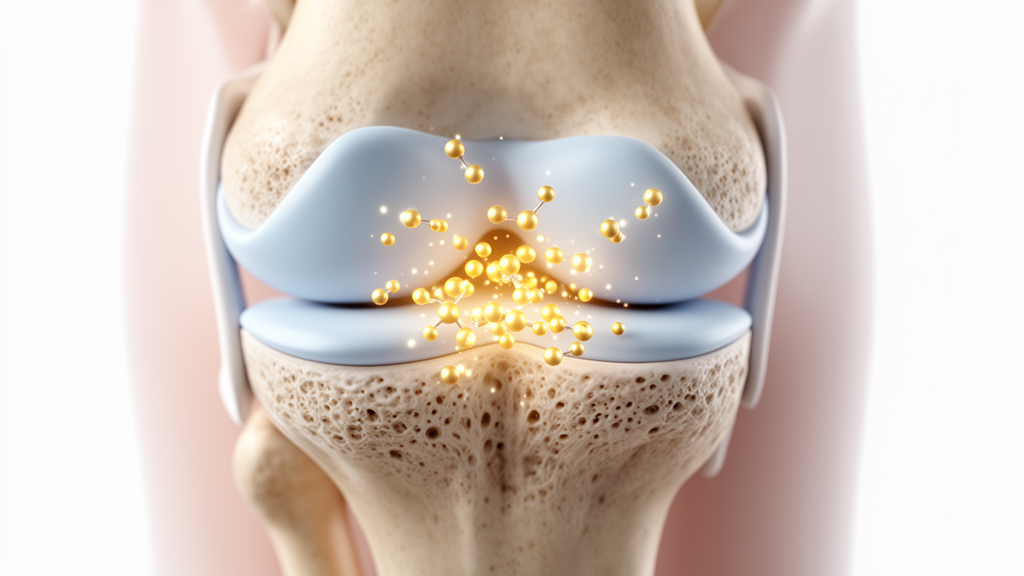
A new open-access review in the journal Amino Acids brings together laboratory, animal and clinical evidence on two widely used joint supplements, glucosamine sulfate and chondroitin sulfate, and argues that their effects on osteoarthritis may extend beyond symptom relief. The paper, published on 12 October 2026 by Gul Rehman, Jadoon Khan, Saher Nasir and colleagues, also examines how gut microbes may shape the compounds’ activity and how nanotechnology-based delivery could improve their performance.
Osteoarthritis is described in the review as the most prevalent degenerative joint disease worldwide. It involves chronic pain, subchondral bone remodeling, synovial inflammation and progressive cartilage degeneration. The authors note that conventional pharmacological treatments, while widely prescribed, are associated with adverse effects upon long-term use and merely alleviate symptoms without preventing disease progression.
According to the review, glucosamine sulfate and chondroitin sulfate occur naturally in the cartilage extracellular matrix and display a range of biological actions relevant to joint health. The authors report that the two compounds act by decreasing catabolic enzymes such as matrix metalloproteinases and ADAMTS, suppressing pro-inflammatory signaling pathways including NF-κB and MAPK, stimulating anabolic processes such as type II collagen and aggrecan synthesis, controlling oxidative stress and blocking chondrocyte apoptosis.
A distinctive element of the review is its focus on the gut-joint axis. The authors outline how gut microbiota dysbiosis can disturb metabolic processes and systemic inflammation and contribute to joint deterioration. They emphasize that the efficacy of the two supplements appears to be modulated by gut microbiota, with chondroitin sulfate reported to enrich beneficial taxa such as Akkermansia muciniphila.
The review also identifies a practical limitation of conventional oral supplementation. The authors state that standard delivery of these amino sugars is limited by low bioavailability and by variable patient response, which they attribute in part to microbial metabolism of the compounds before they reach joint tissues.
To address that limitation, the paper surveys nanotechnology-based delivery systems, including chitosan nanoparticles, liposomes and gold nanoparticles. According to the authors, such systems can enhance targeting, retention and controlled release of the supplements in joint tissues, potentially improving therapeutic efficacy and bioavailability in osteoarthritis.
The review’s key points frame osteoarthritis as a systemic disorder driven by inflammation, oxidative stress and dysregulated chondrocyte metabolism, with emerging roles for the gut-joint axis. The authors suggest that integrated strategies combining nutraceuticals, nanocarriers and microbiome modulation represent a promising disease-modifying approach, although they present this as a direction for future work rather than an established clinical outcome.
As the authors make clear, the paper is a critical evaluation of existing in-vitro, in-vivo and clinical investigations of glucosamine sulfate and chondroitin sulfate in knee osteoarthritis, not a new experimental study. Readers should therefore treat the reported mechanisms and microbiome interactions as a synthesis of prior findings, with the nanotechnology strategies described as planned avenues for enhancing delivery rather than demonstrated treatments. The article is published open access, and the publisher notes that this early version is subject to further edits before the final version of record.
Subject of Research: Mechanisms, gut microbiome interactions and nanotechnology-based delivery of glucosamine sulfate and chondroitin sulfate in osteoarthritis
Article Title: Glucosamine and chondroitin sulfate in osteoarthritis: mechanisms, microbiome interactions, and nanotechnology-based advances
Article References: Rehman, G., Khan, J., Nasir, S., AL-Dweik, G., Asif, M., Lateef, U., Babakarkhil, T., & Hussain, S. (2026). Glucosamine and chondroitin sulfate in osteoarthritis: mechanisms, microbiome interactions, and nanotechnology-based advances. Amino Acids. https://doi.org/10.1007/s00726-026-03564-8
Image Credits: AI Generated
DOI: 10.1007/s00726-026-03564-8
Keywords: osteoarthritis, glucosamine sulfate, chondroitin sulfate, cartilage, gut microbiota, gut-joint axis, NF-κB, nanoparticles, bioavailability, nutraceuticals, chondrocytes, review
News Source: Morgan Morrow. (October 28, 2026). Review maps how glucosamine and chondroitin sulfate may protect cartilage. Scienmag.