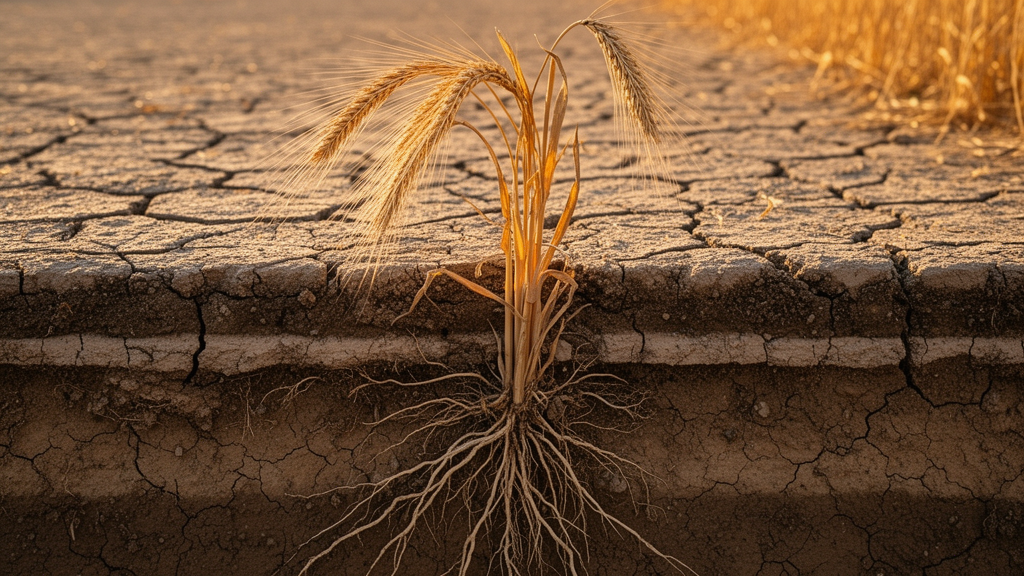
Adaptation to water limitation in wheat is a complex quantitative trait governed by numerous genes and quantitative trait loci. This adaptive response is strongly influenced by plant developmental stages, drought intensity and duration, and broader environmental conditions.
In recent years, quantitative trait locus mapping, genome-wide association studies, and functional genomics have identified many loci and candidate genes linked to drought adaptation. However, substantial differences among past studies in mapping populations, environmental conditions, and phenotyping methods produced numerous dispersed loci. Many of these loci exhibit minor effects and lack independent validation, limiting their practical utility for gene cloning and breeding programs.
To resolve these disparities, researchers systematically integrated 199 drought-related quantitative trait loci, 512 genome-wide association study loci, and 45 drought-responsive genes into a unified framework. The investigative team anchored this entire collection of genetic factors directly to the wheat reference genome, specifically the IWGSC RefSeq v1.0 assembly.
Based on positional co-localization and reproducibility across independent investigations, the authors delineated 32 drought-related quantitative trait locus-rich clusters across the genome. These clusters highlight genomic regions that consistently associate with drought performance despite varied experimental setups.
The review further organized these loci across three interconnected physiological and agronomic strategies: drought escape, drought avoidance, and drought tolerance. In addition to cataloging the genomic positions, the authors synthesized the underlying genetic and molecular regulatory networks governing these distinct adaptive pathways.
Finally, the authors evaluated future opportunities for identifying major-effect loci, candidate genes, and favorable alleles to support marker-assisted selection. This synthesis delivers an integrated genomic framework designed to prioritize robust breeding targets and candidate genes for improving drought adaptation and yield stability in wheat crops.
Subject of Research: Genetic architecture and genomic clusters underlying drought adaptation in wheat
Article Title: Genetic architecture of drought adaptation traits in wheat
Article References: Yuan, K., Xu, D., Dai, Y., Xu, J., Dreisigacker, S., Ulat, V. J., Ma, X., Shi, X., Zhang, T., Zhang, W., Govindan, V., & Lu, L. (2026). Genetic architecture of drought adaptation traits in wheat. Theoretical and Applied Genetics, 139(12), Article 336. https://doi.org/10.1007/s00122-026-05443-y
Image Credits: AI Generated
DOI: 10.1007/s00122-026-05443-y
Keywords: wheat, drought adaptation, quantitative trait loci, GWAS, genomics, IWGSC RefSeq v1.0, drought tolerance, drought avoidance, drought escape, marker-assisted selection, abiotic stress, candidate genes, crop breeding, yield stability, plant genetics
News Source: Juliet Wilcox. (November 21, 2026). Review Maps 32 Key Genetic Clusters Driving Wheat Drought Adaptation. Scienmag.