• HOME
  • NEWS
  • EXPLORE
    • CAREER
      • Companies
      • Jobs
    • EVENTS
    • iGEM
      • News
      • Team
    • PHOTOS
    • VIDEO
    • WIKI
  • BLOG
  • COMMUNITY
    • FACEBOOK
    • INSTAGRAM
    • TWITTER
Wednesday, November 18, 2026
BIOENGINEER.ORG
No Result
View All Result
  • Login
  • HOME
  • NEWS
  • EXPLORE
    • CAREER
      • Companies
      • Jobs
        • Lecturer
        • PhD Studentship
        • Postdoc
        • Research Assistant
    • EVENTS
    • iGEM
      • News
      • Team
    • PHOTOS
    • VIDEO
    • WIKI
  • BLOG
  • COMMUNITY
    • FACEBOOK
    • INSTAGRAM
    • TWITTER
No Result
View All Result
Bioengineer.org
No Result
View All Result
Home NEWS Science News Technology

Review Examines Flexible Pressure Sensor Designs for Environments Reaching 1000 °C

by
November 18, 2026
in Technology
Reading Time: 2 mins read
0
Review Examines Flexible Pressure Sensor Designs for Environments Reaching 1000 °C

Review Examines Flexible Pressure Sensor Designs for Environments Reaching 1000 °C

Share on FacebookShare on TwitterShare on LinkedinShare on RedditShare on Telegram

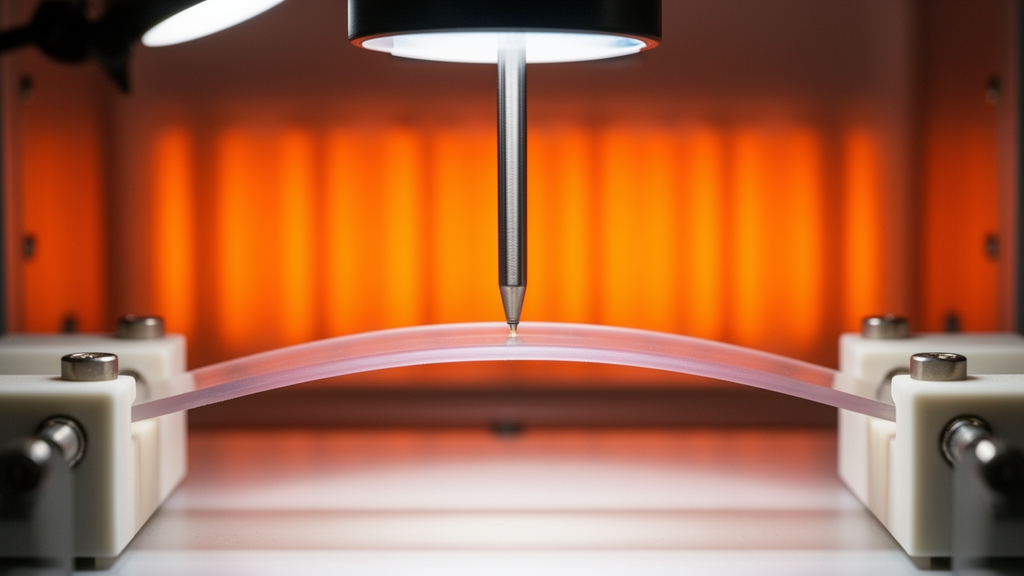
In a perspective published in the open-access journal Discover Sensors, researchers systematically review design strategies for high-temperature-resistant flexible pressure sensors intended for distributed monitoring in extreme operating environments. Distributed monitoring under harsh thermal conditions is critical across multiple demanding engineering sectors, including aerospace, automotive engineering, firefighting, chemical reactors, and nuclear industries. In these operational settings, working temperatures frequently exceed 200 °C and can reach up to 1000 °C, creating severe environmental challenges that conventional pressure sensors cannot withstand.

The review details the substantial limitations inherent in traditional pressure-sensing technologies, which severely restrict their practical deployment on curved surfaces in high-heat environments. Conventional inorganic-based sensors exhibit high brittleness, which prevents them from conforming to curved surfaces and complex structural geometries. In contrast, organic polymer-based sensors remain highly prone to material degradation and mechanical failure when exposed to elevated temperatures. As a result, conventional devices fail to combine high-temperature stability with the mechanical compliance necessary for curved installations.

To overcome these limitations, the paper systematically evaluates and compares technical design approaches organized around four principal sensing mechanisms: piezoresistive, capacitive, piezoelectric, and triboelectric sensing. The authors analyze the specific strategies linked to each mechanism, comparing the advantages and disadvantages of the different technical approaches. This comparative assessment provides an overview of how diverse operational mechanisms function under severe thermal conditions, clarifying the engineering trade-offs involved in achieving dependable flexible pressure sensing in extreme thermal environments.

Finally, the paper elaborates on key concepts for optimizing sensor material systems and structural designs to ensure reliable high-temperature operation. Material system optimization focuses on coordinating high-temperature stability, mechanical flexibility, and electrical conductivity within the sensor structure. For structural design, the review highlights innovative architectures based on nanofiber networks, porous aerogels, and spring-like biomimetic structures. The authors emphasize that these cutting-edge technologies provide essential guidance for developing next-generation flexible pressure sensors, outlining future development directions and delivering critical technical references for the intelligent upgrading of high-end equipment and sustainable industrial development.

Subject of Research: Design strategies for high-temperature flexible pressure sensors

Article Title: Design approaches for high-temperature-resistant flexible pressure sensors in extreme environments

Article References: Lyu, Y., Xu, Z., Hou, C., Han, Y., Xie, H., Zeng, C., Yuan, L., & Li, K. (2026). Design approaches for high-temperature-resistant flexible pressure sensors in extreme environments. Discover Sensors, 2(1), Article 28. https://doi.org/10.1007/s44397-026-00061-1

Image Credits: AI Generated

DOI: 10.1007/s44397-026-00061-1

Keywords: flexible pressure sensors, high-temperature sensors, extreme environments, piezoresistive sensing, capacitive sensing, piezoelectric sensing, triboelectric sensing, nanofiber networks, porous aerogels, biomimetic structures, aerospace monitoring, automotive engineering, chemical reactors, nuclear industries, firefighting equipment, high-temperature stability, mechanical flexibility, electrical conductivity

News Source: Denise Maddox. (November 18, 2026). Review Examines Flexible Pressure Sensor Designs for Environments Reaching 1000 °C. Scienmag.


Tags: aerospace monitoringAutomotive engineeringbiomimetic structurescapacitive sensingchemical reactorselectrical conductivityextreme environmentsfirefighting equipmentflexible pressure sensorshigh-temperature sensorshigh-temperature stabilitymechanical flexibilitynanofiber networksnuclear industriespiezoelectric sensingpiezoresistive sensingporous aerogelstriboelectric sensing
Share12Tweet7Share2ShareShareShare1

Related Posts

Optimizing Sustainable Calcium Carbonate Drill-in Fluids for High-Temperature Reservoir Performance

Optimizing Sustainable Calcium Carbonate Drill-in Fluids for High-Temperature Reservoir Performance

November 18, 2026
Complex-Valued Vectors Model Time-Series Gene Expression for Network Analysis

Complex-Valued Vectors Model Time-Series Gene Expression for Network Analysis

November 18, 2026

Deep Learning Model Classifies Gym Exercises With 99 Percent Accuracy

November 18, 2026

Nasal BDNF mRNA Drops Improve Cognition in Aged and Alzheimer’s Mice

November 18, 2026

POPULAR NEWS

  • Coal Gangue Aggregates Can Replace Natural Stone in Concrete Applications

    Coal Gangue Aggregates Can Replace Natural Stone in Concrete Applications

    29 shares
    Share 12 Tweet 7
  • Cluster-Based Training Selection Outperforms Active Learning for Material Property Prediction

    29 shares
    Share 12 Tweet 7
  • Cesarean Section Rates Reached Forty Percent Among Surveyed Mothers in Njombe Region

    29 shares
    Share 12 Tweet 7
  • Testosterone Injections Exacerbate Pre-Neoplastic Prostate Lesions in NKX3.1-Deficient Mice

    29 shares
    Share 12 Tweet 7

About

We bring you the latest biotechnology news from best research centers and universities around the world. Check our website.

Follow us

Recent News

Histone Lactylation and USP33 Drive Scleral Remodeling in Experimental Myopia Models

Extracellular Vesicles Link Systemic Comorbidities to Vascular Dysfunction in Atherogenesis

Endothelial and Pericyte Crosstalk Shapes Barrier Integrity and Repair in Ischemic Stroke

Subscribe to Blog via Email

Enter your email address to subscribe to this blog and receive notifications of new posts by email.

Join 88 other subscribers
  • Contact Us

Bioengineer.org © Copyright 2023 All Rights Reserved.

Welcome Back!

Login to your account below

Forgotten Password?

Retrieve your password

Please enter your username or email address to reset your password.

Log In
No Result
View All Result
  • Homepages
    • Home Page 1
    • Home Page 2
  • News
  • National
  • Business
  • Health
  • Lifestyle
  • Science

Bioengineer.org © Copyright 2023 All Rights Reserved.