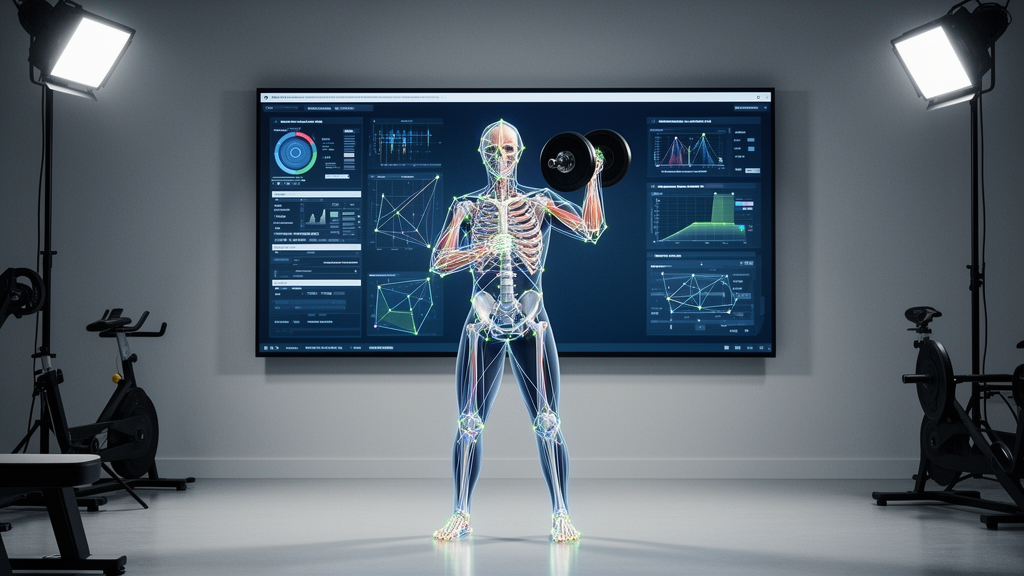
A deep learning framework combining feature compression, temporal sequence modeling, and attention achieved a classification accuracy of 0.9903 when identifying exercise routines from wearable sensor data, according to research published by Xiaofan Yang in Discover Artificial Intelligence. The study investigated how wearable sensor streams derived from gym workouts can be categorized automatically into distinct activity classes, offering a potential technical foundation for digital motor-skill monitoring in physical education. However, the author explicitly noted that while the evaluated model demonstrates strong pattern recognition on abstracted sensor features, the underlying benchmark dataset lacks validated motor-skill proficiency labels for higher vocational students. Consequently, the reported metrics establish the system’s effectiveness in recognizing specific gym exercises rather than verifying its ability to appraise student athletic competence or assign educational grades.
Developing technological methods for assessing physical performance has become an active focus within vocational physical education, where motor skills influence how safely and efficiently students execute occupational physical tasks. Motor skills encompass key capabilities including coordination, balance, and muscular power, which vocational students must develop to satisfy industry requirements and maintain fitness. Conventional evaluation practices in physical education rely primarily on manual teacher observation, an approach that remains subjective and prone to variation across instructors. To address these inconsistencies, educational researchers have sought automated, objective frameworks that employ wearable sensor technologies to track movement trajectories in real time, pairing sensor data with deep learning architectures capable of transforming complex movement dynamics into structured, repeatable performance evaluations.
Gym activity recognition based on wearable sensors represents a demanding time-series classification challenge requiring compact feature representations and the capacity to capture temporal dependencies across movement sequences. Traditional machine learning and deep learning architectures present distinct structural trade-offs when applied to sensor-driven movement records. Standard convolutional neural networks excel at extracting spatial features with modest computational costs, but struggle to model sequential time-series progressions. Conversely, recurrent architectures such as long short-term memory networks handle temporal patterns effectively but introduce considerable computational expense during training. While gated recurrent units offer lower computational overhead, their performance can degrade when managing intricate, multi-dimensional time series. To resolve these challenges, the author investigated a unified pipeline combining an autoencoder, temporal convolutions, and attention-based weighting.
The empirical evaluation was conducted using the RecGym dataset, an established open repository comprising wearable sensor records collected from gym workouts using inertial measurement units and capacitive sensors. The dataset contains 615 abstracted features derived from multi-channel sensor signals representing various exercise movements. The author explicitly highlighted that while activity labels within the RecGym dataset support classifying distinct exercise categories, they do not provide direct measurements of motor-skill proficiency, student learning progression, or individualized movement competency levels. Consequently, the investigation deliberately focused on measuring the framework’s activity-classification accuracy rather than asserting a validated assessment of vocational student competence. The paper notes that establishing pedagogical assessment validity will require dedicated data collection directly involving vocational students alongside verified reference labels calibrated against recognized movement standards.
Data preprocessing formed a crucial preliminary phase in preparing the 615 abstracted sensor features for neural network training, addressing sensor noise, data loss, and divergent feature scales. The preprocessing workflow applied three sequential procedures: noise removal, missing value handling, and data normalization. To eliminate unwanted high-frequency interference without distorting underlying movement trajectories, a moving-average low-pass filter smoothed sudden variations across temporal observations. Missing values resulting from sensor errors or collection gaps were addressed using mean imputation, replacing absent values with the observed mean of each corresponding feature. The author explained that mean imputation offered computational simplicity for abstracted features lacking guaranteed continuous temporal ordering, while acknowledging that replacing missing entries with static averages can reduce natural variance. Finally, Z-score normalization transformed all input variables to zero mean and unit variance.
To manage the high dimensionality of the 615 preprocessed features, the framework implemented a Deep Autoencoder to extract compact, discriminative latent representations before temporal sequence modeling. The autoencoder consists of an encoder network that compresses high-dimensional inputs into a lower-dimensional bottleneck representation and a decoder network that reconstructs original feature inputs during unsupervised training. This structural compression eliminates redundant and uninformative feature dimensions while preserving essential motion characteristics, thereby lowering computational complexity and accelerating optimization. In dedicated feature reduction evaluations, the model trained on the autoencoder-compressed latent features achieved an accuracy of approximately 0.503, slightly exceeding the 0.501 accuracy obtained on the unreduced 615-feature space. These results demonstrated that the autoencoder successfully pruned uninformative feature noise without causing any degradation in downstream classification accuracy.
The compressed latent representations generated by the autoencoder were subsequently organized into ordered three-dimensional sequential tensors defined by batch size, sequence time steps, and latent feature dimensions to facilitate temporal pattern learning. These structured tensors were supplied to a Temporal Convolutional Network that utilized causal and dilated convolutions to capture rapid movement transitions and extended temporal dependencies. Causal convolutions ensured that network output at any given time step depended strictly on current and preceding observations, maintaining chronological movement progression and preventing future sensor states from influencing earlier features. To expand the temporal receptive field across full exercise repetitions without increasing network depth, dilated convolutions were deployed using dilation factors of 1, 2, 4, and 8 across consecutive layers, complemented by residual connections and batch normalization to maintain gradient stability.
To enhance discriminatory power, an Attention mechanism was placed immediately following the Temporal Convolutional Network to prioritize the most informative segments within the temporal sequence. The attention module calculated trainable importance scores across time steps and sensor channels, applying a softmax function to generate normalized weights that emphasized critical movement phases—such as the eccentric lowering, bottom pause, and concentric ascent of a squat—while suppressing irrelevant signals. The resulting weighted context representation was routed through fully connected layers to a Softmax classifier that computed output probability distributions across exercise classes. Experimental training was executed on an Intel Core i5-12400F desktop system with 8 gigabytes of memory, using an 80:20 training-to-testing split, a mini-batch size of 32, and an optimization schedule spanning 50 epochs, during which validation accuracy reached approximately 0.95.
When evaluated on the 20 percent test partition, the complete hybrid architecture delivered strong classification performance, recording an accuracy of 0.9903, precision of 0.9906, recall of 0.9903, and an F1-score of 0.9903 across the gym activity classes. Diagnostic evaluations confirmed this discriminatory capability, with the model achieving an area under the receiver operating characteristic curve of 1.000 and an average precision score of 0.998 on precision-recall curve analysis. Comparative experiments demonstrated that the proposed hybrid design substantially outperformed standard baseline architectures evaluated on the same dataset. A traditional convolutional neural network achieved an accuracy of 0.8840 and an F1-score of 0.8790, a long short-term memory baseline recorded 0.9020 across both metrics, and a gated recurrent unit reached 0.9150, establishing relative accuracy improvements of 12.02 percent, 9.79 percent, and 8.23 percent for the hybrid model.
An ablation study conducted by the author isolated the individual contributions of each architectural component, confirming that combining feature reduction, temporal convolutions, and attention mechanisms generated compounding performance gains. A baseline model relying exclusively on the Temporal Convolutional Network achieved an accuracy, precision, recall, and F1-score of 0.93 across all criteria, showing acceptable sequential modeling capability. Adding the Attention mechanism to the temporal convolutional baseline raised all four classification metrics to 0.96 by allowing the network to emphasize decisive movement transitions. Alternatively, pairing the Deep Autoencoder with the Temporal Convolutional Network without attention achieved a score of 0.97 across all evaluated criteria, confirming that eliminating redundant feature dimensions simplified temporal learning. Combining all three components into the unified framework produced the maximum observed performance of 0.9903 across accuracy, recall, and F1-score, alongside 0.9906 precision.
In addition to activity recognition, the author outlined a theoretical formulation for prospective adaptive motor-skill assessment, designing a mathematical model to quantify performance quality once an activity class has been identified. The proposed motor skill score integrates three distinct indicators: movement consistency calculated from performance variance, movement accuracy measured by feature deviations from an ideal reference template, and activity intensity reflecting energy expenditure within an exercise-appropriate target window. These individual parameters, normalized onto a scale from 0 to 100, are combined through a weighted sum where the three non-negative weights sum to one. However, the study explicitly noted that because the RecGym dataset contains no independent expert ratings, physiological ground truth, or standardized vocational skill rubrics, this scoring mechanism represents a theoretical formulation rather than an empirically validated diagnostic tool for assessing student athletic proficiency.
The author concluded by detailing significant methodological constraints that must be resolved before this deep learning framework can be deployed within educational institutions. A primary limitation arises from the 80:20 data-splitting protocol, which partitioned feature windows randomly rather than separating individual participants, introducing potential subject overlap between training and testing subsets that may yield optimistic performance estimates influenced by subject-specific movement idiosyncrasies. To establish true generalizability to unseen individuals, future evaluations must implement strict subject-wise or leave-one-subject-out cross-validation protocols. Furthermore, transitioning from exercise recognition to genuine educational evaluation requires gathering sensor data directly from vocational physical education students, establishing validated movement reference protocols, and evaluating whether adaptive feedback mechanisms reliably improve physical motor competence under real-world educational conditions.
Subject of Research: Wearable sensor gym activity recognition and prospective motor skill assessment
Article Title: Deep learning-based gym activity recognition using wearable sensors with potential applications in vocational physical education
Article References: Yang, X. (2026). Deep learning-based gym activity recognition using wearable sensors with potential applications in vocational physical education. Discover Artificial Intelligence, 6(1), Article 1900. https://doi.org/10.1007/s44163-026-02762-3
Image Credits: AI Generated
DOI: 10.1007/s44163-026-02762-3
Keywords: gym activity recognition, wearable sensors, deep learning, deep autoencoder, temporal convolutional network, attention mechanism, RecGym dataset, motor skill assessment, time-series classification, causal convolution, dilated convolution, feature dimensionality reduction, Z-score normalization, mean imputation, softmax classifier, vocational physical education, ablation study
News Source: Blake Davidson. (November 18, 2026). Deep Learning Model Classifies Gym Exercises With 99 Percent Accuracy. Scienmag.