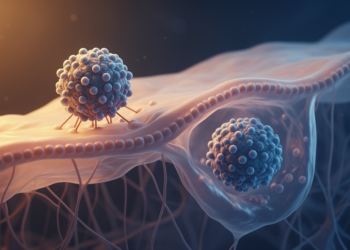
A comprehensive scientific review published in Molecular Neurodegeneration Advances evaluates the current understanding of how toxic alpha-synuclein pathology transmits between cells across cellular, invertebrate, rodent, and non-human primate experimental systems. Pathological aggregation and misfolding of alpha-synuclein represent the defining hallmark of synucleinopathies, a destructive family of progressive neurodegenerative disorders encompassing Parkinson’s disease, Dementia with Lewy Bodies, and Multiple System Atrophy. While mounting experimental evidence posits that alpha-synuclein exhibits distinct prion-like properties—whereby pathologically misfolded protein acts as an extracellular seed that corrupts native endogenous proteins inside recipient cells—the authors conclude that there remains little consensus and no cogent understanding regarding the exact molecular mechanisms driving aggregate release and uptake across intact physiological neural networks.
To rigorously evaluate how pathological propagation unfolds, the authors outline an explicit multi-step theoretical framework separating artificial initiation from authentic cell-to-cell transmission. In spontaneous human synucleinopathies, initial pathological alterations are thought to arise intracellularly within focal or multifocal cellular environments influenced by genetic susceptibility, environmental toxins, and cellular microenvironments. In contrast, experimental laboratory models predominantly rely on artificial inoculation, wherein exogenous pre-formed fibrils, recombinant oligomers, or patient-derived brain homogenates are introduced into the extracellular environment. The authors emphasize that primary uptake and primary seeding of an exogenous inoculum represent artificial events that are definitionally distinct from real disease pathogenesis, whereas downstream events—specifically primary release followed by secondary uptake, secondary seeding, and tertiary propagation of natively corrupted host proteins—reflect the authentic trans-cellular transmission processes that prospective disease-modifying therapies must disrupt.
Cell culture systems have provided substantial biophysical insights into isolated candidate mechanisms of primary uptake and release, though often yielding conflicting and disparate conclusions across diverse cell types. In cellulo investigations have documented aggregate internalization in an extensive array of cellular lines, including PC12 pheochromocytoma cells, Chinese hamster ovary cells, Neuro-2a cells, CAD catecholaminergic cells, HeLa cells, HEK293 cells, SH-SY5Y neuroblastoma cells, and primary rodent neurons and glia. Studies demonstrate that internalization frequently proceeds through classical receptor-mediated endocytosis involving dynamin, clathrin, Rab35 signaling cascades, and Rab5A pathways. Proposed candidate surface receptors include lymphocyte-activation gene 3 (Lag3), heparan sulfate proteoglycans, beta-neurexins, low-density lipoprotein receptor-related protein 1 (LRP1), and the familial Parkinson’s disease risk gene FAM171A2. Nevertheless, alternative pathways such as macropinocytosis via actin remodeling and direct membrane translocation of truncated peptide sequences have also been documented, while other cellular screens demonstrate that broad pharmacological inhibition of endocytosis fails to completely abolish fibril uptake in certain lines.
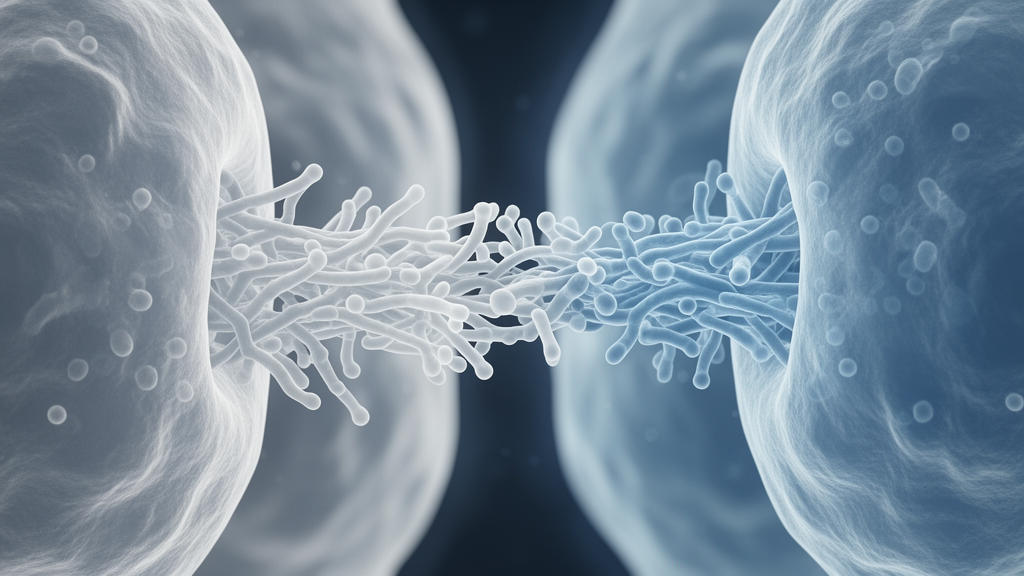
In vitro models have similarly explored diverse routes of aggregate egress and intercellular transit, documenting that cellular stress accelerates non-conventional protein secretion. Under conditions where the autophagic-lysosomal degradation machinery or mitochondrial integrity is compromised, cells actively export toxic assemblies rather than clearing them internally. Mechanisms identified in culture include calcium-regulated, SNARE-mediated lysosomal exocytosis involving synaptosome-associated protein 23 (SNAP-23) and vesicle-associated membrane protein 7 (VAMP7), along with sorting into multivesicular bodies for release inside extracellular vesicles or exosomes. Moreover, direct physical contacts such as tunneling nanotubes and connexin gap junction complexes have been shown to facilitate the physical transfer of fibrillar cargo between cultured neurons, astrocytes, pericytes, and microglia. However, immortalized and dissociated cell models inherently lack the polarized architecture, authentic synaptic boutons, and complex extracellular matrix necessary to determine whether transmission preferentially occurs at presynaptic terminals, dendritic spines, or across extra-synaptic boundaries.
Invertebrate model organisms, specifically genetically engineered Caenorhabditis elegans and Drosophila melanogaster, bridge simple cellular assays with intact organismal biology while operating under distinct biological constraints. Because invertebrates do not naturally express an endogenous ortholog of alpha-synuclein, pathological spread cannot occur through native templating without transgenic intervention. In engineered Caenorhabditis elegans expressing human alpha-synuclein, feeding worms pre-formed fibrils initiates heparan sulfate proteoglycan-dependent endocytosis and subsequent aggregation within sensory head neurons, including vulnerable subsets of dopaminergic neurons adjacent to the pharyngeal bulb. While these invertebrate models confirm that cell-to-cell transfer and aggregate-induced toxicity can occur in living organisms with intact behavioral outputs, the absolute requirement for foreign transgenic expression means they serve primarily as targeted genetic screening platforms rather than direct analogues of mammalian synucleinopathy.
Rodent systems have served as the foundational workhorse for mapping circuit-level anatomical propagation, demonstrating that misfolded assemblies disseminate across established neuroanatomical pathways in a network-dependent manner. Inoculation of synthetic pre-formed fibrils, patient-derived brain fractions, or adeno-associated viral vectors into rodent target structures—such as the dorsal striatum, olfactory bulb, motor cortex, substantia nigra, or enteric nervous system—triggers sequential inclusion formation in interconnected regions. The preponderance of rodent data supports retrograde axonal propagation, in which pathogenic seeds enter distal axonal arborizations via receptor-mediated endocytosis and travel retrogradely toward the cell soma, culminating in progressive loss of dopaminergic neurons in the substantia nigra pars compacta and motor impairment. Conversely, robust evidence also confirms anterograde trans-synaptic transport, particularly following olfactory bulb or cortical inoculations, demonstrating that propagation directionality is governed by the specific anatomical initiation site, synaptic connectivity, and neuronal subtype vulnerability.
Crucially, rodent experiments demonstrate that structural connectivity alone does not fully predict pathological vulnerability or the velocity of spread, as age, metabolic burden, and cell-intrinsic factors heavily modulate progression. For example, quantitative connectome mapping following fibril injections into the brainstem pedunculopontine nucleus revealed that while connected afferent structures develop inclusions, the raw density of synaptic connections does not correlate directly with pathological burden. High-energy dopaminergic neurons in the substantia nigra exhibit heightened vulnerability relative to adjacent ventral tegmental area neurons, a disparity linked to expansive axonal arborization, demanding calcium homeostasis, and elevated metabolic load. Furthermore, aging drastically diminishes proteostatic resilience and lysosomal clearance capacity, accelerating persistent inclusion accumulation. Genetic modifiers such as alpha-synuclein gene dosage, GBA1 deficiency, and LRRK2 mutations further amplify aggregation cascades, illustrating that pathology requires an accommodating, permissive host environment to propagate.
Non-human primate investigations provide an indispensable bridge between rodent models and human clinical pathology due to their evolutionary proximity, shared neuroanatomy, complex pallidal circuitry, and extended lifespan. Inoculation of pre-formed fibrils or human Lewy body-enriched fractions into the striatum or putamen of macaques, baboons, and marmosets induces robust aggregate propagation into directly connected afferent structures, including the neocortex, thalamus, amygdala, and substantia nigra pars compacta, accompanied by progressive dopaminergic degeneration and emergence of motor symptoms. Primates exhibit unique vulnerabilities: unlike rodents, non-human primates develop pronounced neurodegeneration in response to soluble oligomeric fractions as well as insoluble mature fibrils. However, body-first peripheral transmission experiments yield conflicting results; while enteric inoculations produced nigrostriatal pathology in baboons, gastric fibril injections in macaques failed to spread to the central nervous system after twelve months, challenging the universal applicability of the vagal highway hypothesis across higher primates.
The physical conformation and strain architecture of the alpha-synuclein assemblies themselves fundamentally govern pathological dissemination patterns across all experimental systems. The strain hypothesis posits that structurally distinct conformational polymorphs self-propagate their exact architectural features through templated recruitment of native monomers, dictating biological potency, cell-type tropism, and neuroanatomical distribution. For example, human and murine fibrils exhibit altered protofilament packing arrangements and differences in hydrophobicity, explaining why mouse fibrils seed rodent tissue with far greater efficiency than human fibrils. Moreover, oligodendrocyte-derived glial cytoplasmic inclusions isolated from Multiple System Atrophy exhibit distinct structural features and higher seeding potency than neuronal Lewy body inclusions, preferentially spreading into the entorhinal cortex and hippocampus while sparing neocortical regions. Despite these striking anatomical correlations, experimental studies have not yet disentangled whether distinct strains utilize distinct cellular receptors for internalization or whether their divergent trajectories simply reflect differing rates of intrinsic seeding activity and intracellular stability.
Translating these propagation insights into clinically viable interventions has motivated multiple therapeutic strategies, though clinical success remains elusive. Synthetic monoclonal antibodies engineered to bind and neutralize extracellular aggregates—including Cinpanemab, Prasinezumab, MEDI1341, Lu AF82422, and Exidavnemab—have largely failed to halt disease progression in clinical trials, likely because systemic administration occurs after widespread pathological dissemination and significant neuronal loss have already occurred. Alternative interventions actively undergoing preclinical investigation include active immunotherapy vaccines such as UB-312 and AFFITOPE PD01A, small molecules targeting dynamin-mediated endocytosis, inhibitors of exosomal secretion, and targeted protein degradation platforms such as proteolysis-targeting chimeras. Ultimately, the authors emphasize that developing truly curative therapies will require integrating high-resolution live imaging with unified inoculation standards across complementary cellular, rodent, and non-human primate systems to identify the precise molecular bottlenecks regulating aggregate release and transmission.
Subject of Research: Cell-to-cell propagation models and mechanisms of alpha-synuclein pathology in neurodegenerative synucleinopathies
Article Title: Propagation of α-synuclein pathology: models, mechanisms and future goals
Article References: Zolin, A., Weber, S. A., Xie, Y. X., & Burré, J. (2026). Propagation of α-synuclein pathology: models, mechanisms and future goals. Molecular Neurodegeneration Advances, 2(1), Article 26. https://doi.org/10.1186/s44477-026-00038-9
Image Credits: AI Generated
DOI: 10.1186/s44477-026-00038-9
Keywords: alpha-synuclein, Parkinson's disease, synucleinopathies, prion-like propagation, pre-formed fibrils, receptor-mediated endocytosis, exosomes, lysosomal exocytosis, non-human primates, rodent models, tunneling nanotubes, heparan sulfate proteoglycans, Lag3, dopaminergic neurons, retrograde transmission, anterograde transmission, Lewy bodies, disease-modifying therapies
News Source: Ophelia Keating. (November 21, 2026). Review Evaluates How Alpha Synuclein Pathology Spreads Across Model Systems. Scienmag.