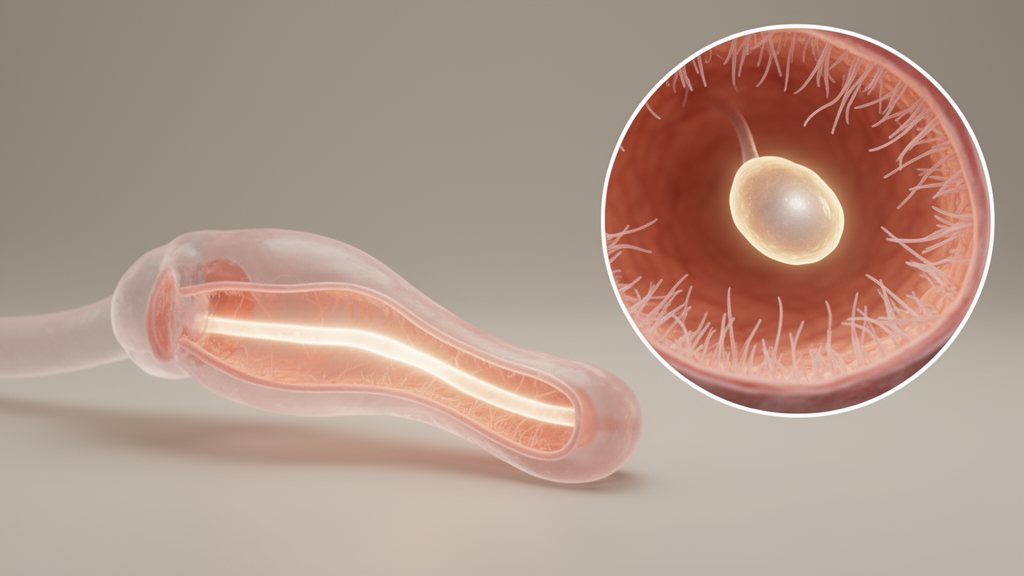
Writing in response to a review of fluoroscopy-guided fallopian tube recanalization, a team of clinicians argues that technical success and reproductive success are fundamentally different endpoints, and that the difference should reshape how patients are selected for the procedure. The letter, authored by Vinicius Adami Vayego Fornazari, Renato Abu Hana, Grit Armstrong Adler, Sara Lojo-Lendoiro, Gregory Kirk Lewis and Gloria Maria Salazar, was published on 10 October 2026 as an open-access correspondence piece.
Fallopian tube recanalization, or FTR, is a minimally invasive procedure in which a catheter and guidewire are used to reopen a proximal tubal occlusion. The procedure is performed under fluoroscopic guidance in women with proximal tubal obstruction, which the authors describe as one of the few potentially reversible causes of tubal-factor infertility. When the guidewire crosses the blocked segment and contrast dye spills freely into the peritoneal cavity, the procedure is considered a technical success. That endpoint, the authors stress, is anatomical rather than reproductive: free intraperitoneal spill confirms restored patency, but it does not by itself predict conception.
The numerical gap between the two endpoints is substantial. A systematic review and meta-analysis of 27 observational studies involving 1720 women who underwent tubal catheterization for proximal obstruction reported pooled clinical pregnancy and live-birth rates of 27 percent and 22 percent, respectively. In other words, even after a technically successful reopening of the tube, roughly three out of four women in the pooled data did not achieve a clinical pregnancy. The authors attribute this variability to heterogeneous study populations, competing causes of infertility and incomplete follow-up, limitations they say have persisted in the literature on the procedure.
Part of the problem begins before any guidewire is advanced. Apparent proximal occlusion on hysterosalpingography, the standard X-ray dye test of the tubes, is not synonymous with true obstruction, according to the letter. Cornual spasm, mucus or debris within the tube, and preferential passage of contrast dye through the opposite tube can all produce proximal non-filling on the imaging study that mimics a genuine blockage. For that reason, the authors argue that selective salpingography, in which a catheter is advanced to the tubal opening and dye is injected directly, should precede any recanalization attempt. Controlled ostial catheterization may demonstrate that the tube is already patent or may relieve a functional obstruction without further intervention.
When persistent proximal obstruction is confirmed, the authors propose a stricter procedural endpoint than guidewire passage alone. The goal should be opacification of the tube beyond the treated segment, with free spill of contrast into the peritoneal cavity. This anatomical definition matters because it distinguishes a genuinely reopened tube from a technically crossed but functionally inadequate one. The distinction is one of several refinements the authors offer to the existing review, which they credit with establishing FTR as a minimally invasive option for appropriately selected women with proximal tubal occlusion while also highlighting the persistent gap between technical and pregnancy outcomes in the literature.
The more consequential question, the authors write, is whether restored patency is likely to alter a given patient’s reproductive trajectory at all. Pregnancy after technically successful FTR depends on factors the intervention cannot correct, including age, ovarian reserve, the duration and etiology of infertility, endometriosis, the integrity of the distal portion of the tube, uterine disease and male-factor infertility. These variables, they emphasize, should not be interpreted as absolute contraindications to the procedure. Rather, they are factors that may reduce the expected reproductive benefit of restoring tubal patency, and they should be weighed openly before the procedure is chosen as the preferred strategy.
Specific groups warrant particular caution. The authors recommend that patients with hydrosalpinx, a fluid-filled and damaged tube, or substantial distal tubal disease, diminished ovarian reserve, advanced reproductive age, severe male-factor infertility, or multiple competing causes of infertility undergo individualized multidisciplinary fertility assessment before FTR is selected. At the same time, they caution against overcorrection: age and ovarian reserve should be incorporated into an individualized reproductive assessment, but in the absence of validated FTR-specific thresholds, they should not be used as rigid standalone criteria for procedural eligibility. The letter accompanies its argument with a proposed patient-selection pathway figure and two tables, one covering selection and expected benefit and the other covering patient preparation and antibiotic strategy for hysterosalpingography and recanalization.
The authors are also explicit that FTR and in vitro fertilization should not be framed as competing procedures. FTR attempts to restore native tubal patency and may permit spontaneous conception, whereas IVF bypasses tubal function altogether. Because the available evidence remains largely observational and heterogeneous, they argue that FTR should not be presented as universally equivalent or superior to IVF. They likewise stress that their proposed decision pathway is a pragmatic multidisciplinary framework, not a validated comparative algorithm for choosing between the two approaches. Its purpose, they write, is to integrate anatomical findings with established reproductive factors when considering whether reopening the tube is likely to provide meaningful clinical benefit for an individual patient.
The letter also outlines what appropriate care around the procedure should look like. Standard preprocedural assessment should include pregnancy exclusion and evaluation for active pelvic infection, with antimicrobial prophylaxis considered according to individual infection risk and institutional practice. The preparation framework the authors present covers procedural timing, pregnancy exclusion, infection screening, contrast-related risk, analgesia and sedation, and informed consent, alongside a risk-adapted antibiotic strategy based on infection-related factors and procedural characteristics, with recommendations individualized to patient risk and institutional protocols. After successful recanalization, they argue, fertility-oriented follow-up should reassess age, ovarian reserve, semen analysis, ovulation, uterine factors, distal tubal disease and possible reocclusion whenever pregnancy does not occur.
Despite the cautionary tone, the authors do not dismiss the procedure. They note that recent observational data support clinically meaningful spontaneous conception after successful FTR in selected women, and they reaffirm the diagnostic and therapeutic value of selective salpingography and recanalization emphasized in the original review. Their proposal is a complementary perspective rather than a rejection: technical success should not be considered synonymous with reproductive success. Restoration of proximal tubal patency remains a well-established procedural endpoint, they conclude, but the more clinically relevant question is whether reopening the tube meaningfully changes the patient’s reproductive trajectory.
Subject of Research: Fallopian tube recanalization for proximal tubal obstruction and the gap between technical patency and pregnancy outcomes
Article Title: Fallopian tube recanalization: is technical patency enough?
Article References: Fornazari, V. A. V., Hana, R. A., Adler, G. A., Lojo-Lendoiro, S., Lewis, G. K., & Salazar, G. M. (2026). Fallopian tube recanalization: is technical patency enough?. CVIR Endovascular, 9(1), Article 130. https://doi.org/10.1186/s42155-026-00781-w
Image Credits: AI Generated
DOI: 10.1186/s42155-026-00781-w
Keywords: fallopian tube recanalization, tubal-factor infertility, proximal tubal occlusion, selective salpingography, hysterosalpingography, technical success, live-birth rate, in vitro fertilization, ovarian reserve, patient selection, interventional radiology, observational studies
News Source: Harold Sullivan. (October 28, 2026). Restoring Fallopian Tube Patency May Not Be Enough for Pregnancy Success. Scienmag.