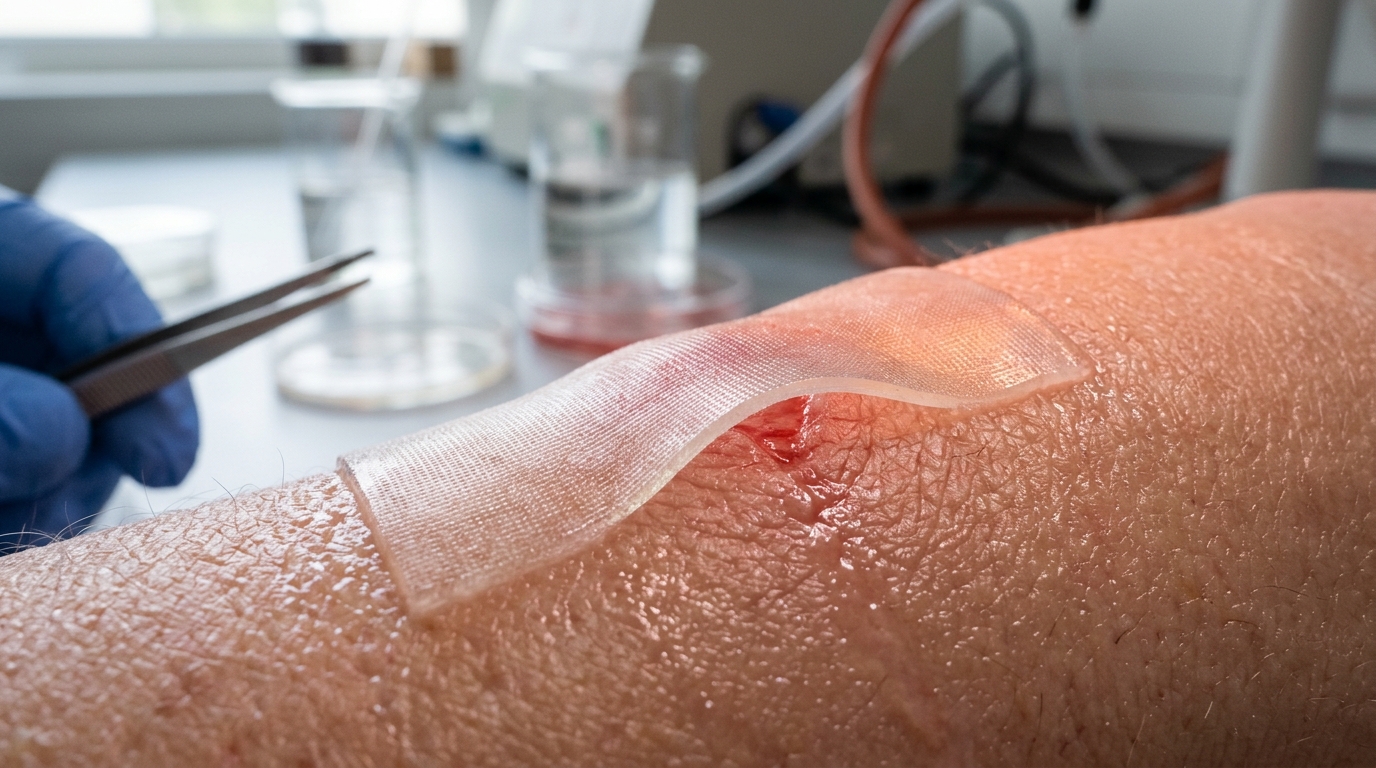
Researchers have developed a multifunctional nanoplatform based on a hollow mesoporous manganese dioxide nanozyme that combines catalytic activity and photothermal effects to promote diabetic wound healing. The engineered platform addresses key pathological features of diabetic wounds, which represent a major public health challenge typified by a hostile microenvironment of hyperglycemia-related hypoxia, oxidative stress, vascular injury, endothelial dysfunction, and microbial invasion.
To construct the system, investigators used a template fabrication method to produce hollow mesoporous manganese dioxide nanozymes, loaded them with berberine and artepillin C, and applied a protective polydopamine outer coating to form the integrated composite, designated HMBAP. The resulting nanostructure exhibited strong antibacterial properties driven by high photothermal conversion efficiency upon light exposure.
In the acidic pH environment characteristic of diabetic wounds, the nanozyme platform catalyzed the decomposition of endogenous hydrogen peroxide into molecular oxygen. This catalytic reaction simultaneously attenuated local oxidative stress and relieved tissue hypoxia while triggering the degradation of the nanoplatform’s outer shell.
Degradation of the coating accelerated the controlled release of the encapsulated berberine and artepillin C, generating synergistic anti-inflammatory activity and supporting glucose metabolism. In cellular assays using human umbilical vein endothelial cells, the treatment effectively mitigated hydrogen peroxide-induced impairments in cell migration and capillary-like tube formation.
Evaluated in a full-thickness diabetic wound model, the nanoplatform significantly suppressed the expression of tumor necrosis factor-alpha and hypoxia-inducible factor-1alpha, stimulated collagen deposition, and accelerated overall wound closure. The polydopamine surface coating conferred superior biocompatibility and confirmed favorable biological safety in the experimental model.
The research, reported in BMC Biotechnology, investigates a targeted nanotherapeutic strategy designed to address the hostile pathological environment that impedes healing in diabetic wounds. As documented in the study, diabetic wounds represent one of the most serious complications of diabetes mellitus and continue to pose a major public health challenge. Healing is hindered by an intricate and hostile local microenvironment characterized by hyperglycemia-related hypoxia, pronounced oxidative stress, endothelial dysfunction, vascular injury, and continuous microbial invasion. To overcome these multifaceted obstacles, the study focuses on developing an integrated, microenvironment-responsive nanoplatform capable of modulating biochemical conditions within the wound bed while providing photothermal antibacterial activity.
To fabricate the multifunctional delivery platform, designated HMBAP, investigators employed a template method to construct hollow mesoporous manganese dioxide nanozymes. The hollow mesoporous interior was loaded with two therapeutic agents, berberine and artepillin C, and the resulting core was encapsulated within an outer polydopamine coating. This architecture serves multiple specific functions. Furthermore, the polydopamine shell endows the nanozyme system with superior biocompatibility, ensuring excellent biological safety across experimental evaluations.
The therapeutic activity of HMBAP is triggered directly by the microenvironment of the diabetic wound. In the acidic pH conditions present at the wound site, the hollow mesoporous manganese dioxide nanozyme efficiently decomposes endogenous hydrogen peroxide into molecular oxygen. This catalytic reaction simultaneously regulates the microenvironment by attenuating local oxidative stress and relieving tissue hypoxia. Concurrently, the acidic decomposition process degrades the outer polydopamine shell of the nanoplatform. Degradation of this shell accelerates the release of the encapsulated berberine and artepillin C, enabling these two agents to achieve synergistic anti-inflammatory and glucose metabolism-promoting effects.
The cellular and physiological consequences of treatment were assessed through targeted in vitro and in vivo models. In laboratory experiments utilizing human umbilical vein endothelial cells, exposure to hydrogen peroxide impaired cellular motility and vessel formation; treatment with HMBAP alleviated these hydrogen peroxide-induced impairments, supporting endothelial cell migration and tube formation. In vivo testing in a full-thickness diabetic wound model demonstrated that HMBAP significantly reduced the expression of tumor necrosis factor-alpha and hypoxia-inducible factor-1alpha, while promoting collagen deposition to produce rapid wound closure. While the platform demonstrates therapeutic potential for diabetic wound healing, these documented outcomes remain preclinical observations derived from cell cultures and animal models rather than human clinical trials.
Subject of Research: Microenvironment-responsive nanozymes for diabetic wound healing
Article Title: Microenvironment responsive nanozyme with photothermal effect for accelerating diabetic wound healing
Article References: Zhou, Z., Huo, H., Zhou, L., Zeng, H., Chen, Y., Zhang, J., Li, M., Zhao, D., Zhou, Q., & Li, B. (2026). Microenvironment responsive nanozyme with photothermal effect for accelerating diabetic wound healing. BMC Biotechnology. https://doi.org/10.1186/s12896-026-01217-y
Image Credits: AI Generated
DOI: 10.1186/s12896-026-01217-y
Keywords: diabetic wounds, nanozyme, photothermal therapy, wound healing, manganese dioxide, berberine, artepillin C, biocompatibility, Microenvironment, responsive, photothermal, effect
News Source: Gregory Coleman. (November 7, 2026). Responsive Photothermal Nanozyme Accelerates Diabetic Wound Healing in Laboratory Study. Scienmag.