In an investigation evaluating aquaculture overwintering methods, researchers found that juvenile common carp maintained in a foil-tunnel recirculating aquaculture system with continuous feeding sustained positive growth and distinct physiological states compared to unfed fish kept in traditional ponds. Traditional winter management of common carp typically exposes fish to cold-water quiescence coupled with the complete withdrawal of supplementary feeding, leading to an extended energy deficit that can constrain welfare, post-wintering performance, and overall survival.
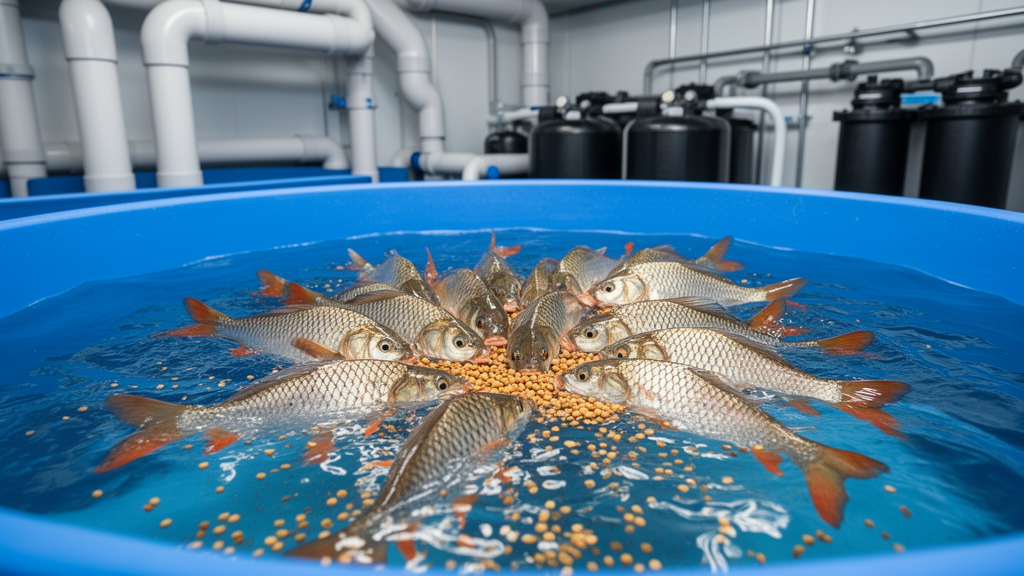
To assess alternatives to conventional overwintering standstills, the research team examined juvenile carp subjected to three management conditions over an experimental duration of 203 days. One group of carp was placed in a traditional outdoor pond without supplementary feed to serve as an unfed control group. Simultaneously, two other cohorts were housed within an enclosed foil-tunnel recirculating aquaculture system, where active feeding continued throughout the winter trial period using commercial feed formulations differing in nutritional composition.
The two indoor recirculating aquaculture regimens evaluated distinct dietary formulations to observe nutritional influences under continuous feeding conditions. One cohort received a commercial diet characterized as low in protein and low in fat, while the second indoor cohort received a commercial diet formulated with high protein and high fat levels. Across the experimental groups, the investigators monitored zootechnical growth indices alongside molecular and biological markers to evaluate biological performance over the full 203-day winter period.
Substantial contrasts emerged among the feeding strategies regarding final body mass and overall weight gain during the trial. Fish held in the traditional unfed pond exhibited the lowest performance, concluding the 203 days with an average final body weight of 56.44 grams and a total weight gain of 19.64 percent. In comparison, fish supplied the high-protein and high-fat diet in the recirculating system attained the highest metrics, reaching a final body weight of 113.30 grams and gaining 138.07 percent in body mass.
Carp maintained on the low-protein and low-fat diet in the recirculating system achieved intermediate growth metrics between the outdoor pond group and the high-protein indoor group. These fish reached a final body weight of 91.01 grams, which corresponded to a 94.76 percent weight gain over the experimental duration. These measurements indicated that continuous winter feeding in the controlled foil-tunnel environment effectively converted the typical period of winter growth arrest into an active phase of biomass accumulation.
Molecular profiling revealed distinct regulatory patterns in the brain and digestive tract that aligned with nutritional status across the winter environments. Fish from the unfed pond displayed elevated relative mRNA expression of neuropeptide Y in the brain, reflecting an orexigenic neuroendocrine response consistent with chronic food scarcity. Conversely, carp overwintered in the fed recirculating system demonstrated higher expression levels of energy-metabolism genes in the brain, pointing to sustained energy sensing and a well-nourished physiological state.
Microbial analysis utilizing 16S rRNA sequencing revealed compositional shifts in the foregut microbiota across the experimental treatments. Meanwhile, the minor phylum Fusobacteriota was markedly enriched in fish from the recirculating systems, and predictive functional profiling distinguished pathways associated with food-limited microbiota from those of fed, carbohydrate-utilizing intestinal communities.
Subject of Research: Overwintering physiology and gut microbiota of juvenile common carp in pond versus recirculating aquaculture systems
Article Title: Brain-gut-microbiome axis signatures reflect unfed-pond versus fed-RAS wintering in juvenile common carp (Cyprinus carpio)
Article References: Eljasik, P., Klopp, C., Sadowski, J., Sobczak, M., Lisiecki, S., Śmietana, P., & Panicz, R. (2026). Brain-gut-microbiome axis signatures reflect unfed-pond versus fed-RAS wintering in juvenile common carp (Cyprinus carpio). Frontiers in Physiology, 17, Article 1992432. https://doi.org/10.3389/fphys.2026.1992432
Image Credits: AI Generated
DOI: 10.3389/fphys.2026.1992432
Keywords: Common Carp, Cyprinus carpio, Recirculating Aquaculture System, Wintering, Aquaculture, Gut Microbiome, Proteobacteria, Fusobacteriota, Neuropeptide Y, Fish Physiology, Zootechnical Indices, Overwintering Performance, Fish Nutrition, Gene Expression, 16S rRNA, Energy Homeostasis
News Source: Juliet Wilcox. (November 20, 2026). Continuous Winter Feeding in Recirculating Systems Promotes Juvenile Carp Growth. Scienmag.