When two devastating earthquakes struck southern Türkiye in February 2023, they displaced millions of people, collapsed health infrastructure, and created conditions that many infectious disease experts feared would fuel outbreaks of respiratory illness. Crowded temporary shelters, disrupted vaccination programs, and mass migration of survivors seemed like a perfect storm for airborne pathogens. A new retrospective study from Mersin University, published in BMC Infectious Diseases, has now examined whether that fear was borne out in the laboratory data, and its findings are more nuanced than a simple disaster-driven surge. By analyzing nearly four years of multiplex PCR test results from patients with suspected acute respiratory infections, the researchers traced how the landscape of respiratory pathogens shifted between 2021 and 2024, a period spanning the late COVID-19 pandemic, the post-pandemic rebound, and the catastrophic earthquakes. Their conclusion is a cautionary tale about how easily observational data can suggest a causal link that closer analysis cannot confirm.
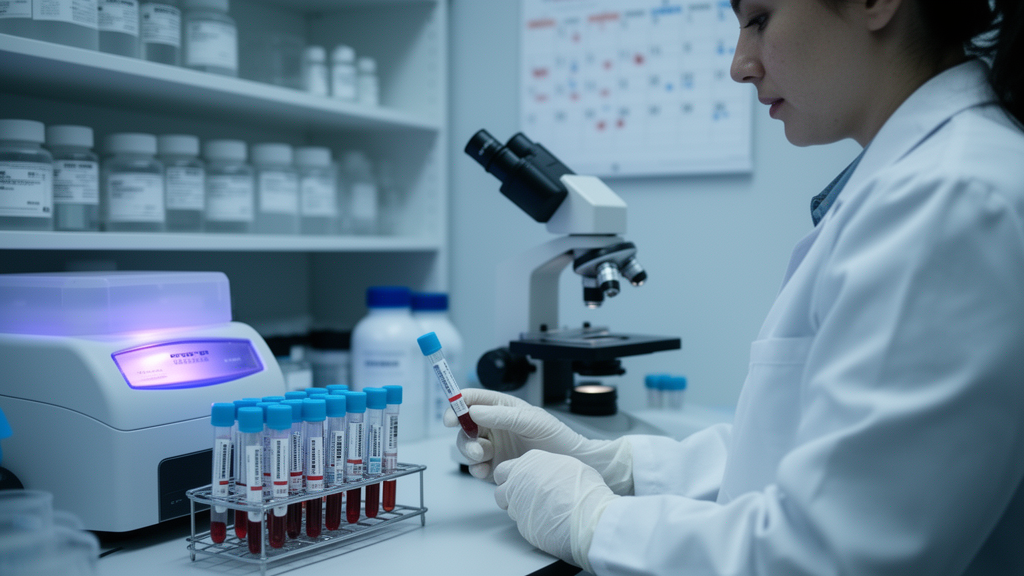
The study included 3,586 patients who had been tested with a multiplex real-time PCR respiratory panel after initially testing negative for SARS-CoV-2. This design choice is important: because the COVID-19 pandemic dominated respiratory diagnostics from 2020 onward, patients negative for the coronavirus were typically then screened with broader panels capable of detecting a wide range of viruses and bacteria simultaneously. Multiplex PCR works by amplifying genetic material from multiple target organisms in a single reaction, allowing laboratories to identify pathogens such as influenza viruses, respiratory syncytial virus, rhinoviruses, adenoviruses, and bacterial species like Streptococcus pneumoniae and Haemophilus influenzae from one sample. The technique has become a cornerstone of modern respiratory surveillance, particularly in settings where clinical symptoms alone cannot distinguish between viral and bacterial causes of infection. In this cohort, 62.4 percent of the patients were children, reflecting the fact that young people bear a disproportionate burden of acute respiratory tract infections and are tested more frequently with these panels.
Overall, at least one pathogen was detected in 52.6 percent of the samples, but the identity of those pathogens was striking. The most frequently detected organism was Streptococcus pneumoniae, found in 36.7 percent of samples, followed by Haemophilus influenzae at 8.2 percent, rhinovirus at 6.1 percent, and human bocavirus and influenza A, each at 2.8 percent. The dominance of bacterial detections, particularly pneumococcus, is notable because multiplex PCR detects genetic material rather than viable organisms, and colonizing bacteria can be present in the airways without causing disease. Nevertheless, the pattern provides a snapshot of what was circulating in the population’s respiratory tracts during the study window. Positivity rates were dramatically higher in children than in adults, at 64.5 percent versus 33.0 percent, a difference that was highly statistically significant. Detection also peaked in autumn and winter, consistent with the well-documented seasonality of respiratory infections in temperate climates, where indoor crowding and lower humidity favor transmission.
The temporal trends across the four years were equally revealing. Overall positivity declined from 57.5 percent in 2021 to 34.8 percent in 2023, and then rebounded sharply to 60.7 percent in 2024. This trajectory mirrors patterns observed globally after the COVID-19 pandemic, when widespread masking, distancing, and lockdowns suppressed transmission of many common respiratory pathogens, only for them to return with unusual intensity once restrictions lifted. The dip in 2023 is particularly interesting because it coincides with the year of the earthquakes, which struck in February and upended daily life across the region. Yet the researchers found that the overall rate of pathogen detection was almost identical before and after the earthquakes, at 52.5 percent versus 52.7 percent. On the surface, the disaster appeared to have left the total burden of detectable respiratory pathogens essentially unchanged.
Beneath that stable overall figure, however, the composition of detected pathogens shifted in ways that initially seemed alarming. In unadjusted comparisons, bacterial positivity rose from 34.2 percent before the earthquakes to 44.9 percent afterward, while viral positivity fell from 31.2 percent to 19.8 percent. This pattern would be consistent with what disaster epidemiologists might predict: displacement into crowded shelters, interruption of routine healthcare, and stress-induced immune suppression could plausibly increase bacterial carriage and transmission, while reduced social mixing in some settings or altered testing patterns might suppress viral detection. When the researchers built multivariable logistic regression models adjusting for age group, sex, season, clinical setting, year of sampling, and PCR platform, the signal persisted in some analyses. Compared with 2021, the adjusted odds of bacterial detection in 2024 were 5.50 times higher, with a 95 percent confidence interval of 3.51 to 8.63, a substantial and statistically robust increase.
But the story took a decisive turn when the team applied sensitivity analyses designed to test the robustness of the earthquake association. When they restricted the post-earthquake period to just the first 12 months after the disaster, the increases in bacterial and pneumococcal detection disappeared. When they restricted the analysis to samples tested only with the Bio-Speedy platform, one of the PCR systems used in the laboratory during the study period, the increases were not reproduced either. These findings matter because they suggest that the apparent post-earthquake bacterial surge may have been an artifact of how the comparison windows were defined or of changes in testing platforms and laboratory workflows over time, rather than a genuine biological effect of the earthquakes. The authors explicitly state that the differences between pre- and post-earthquake periods varied according to the time window and analytic subset examined, and that the data do not support attributing these differences specifically to the earthquakes.
This methodological caution is one of the study’s most valuable contributions. Natural experiments like earthquakes generate enormous public health interest, and observational data from affected regions are often the only evidence available in the chaotic aftermath of disaster. Yet such data are vulnerable to confounding by indication, changes in who gets tested, shifts in laboratory capacity, and the simple passage of time. A patient tested in late 2024 differs from one tested in 2021 not only in earthquake exposure but also in pandemic-era immune history, vaccination status, healthcare access, and the diagnostic technology applied to their sample. By showing that a seemingly compelling association dissolved under alternative analytic choices, the study offers a template for how respiratory surveillance data should be interrogated before dramatic conclusions are drawn about disaster-driven outbreaks.
The findings also carry practical implications for laboratories and public health agencies. Multiplex PCR panels are powerful tools, but their results depend on the specific platform, the panel composition, and the clinical context in which testing is ordered. The fact that restricting the analysis to a single PCR platform changed the results underscores how technical factors can shape epidemiological signals. The authors argue that multiplex PCR-based surveillance may be valuable for monitoring respiratory pathogen dynamics during periods of epidemiological disruption, precisely because such periods are when conventional assumptions about seasonality and pathogen distribution break down. Continuous, standardized surveillance, they suggest, is the best defense against both missed outbreaks and false alarms.
The research was supported by the Scientific Research Projects Coordination Unit of Mersin University and approved by the university’s Health Sciences Research Ethics Committee, which waived the requirement for informed consent given the retrospective design and use of anonymized routine clinical data. As the region continues to recover from one of the deadliest earthquakes in modern history, the study provides reassurance that the disaster did not produce a measurable, sustained shift in the overall burden of detectable respiratory pathogens, while simultaneously demonstrating how much careful statistical work is required to separate genuine epidemiological change from the noise of a health system in upheaval. For infectious disease watchers, the message is twofold: respiratory pathogens in southern Türkiye followed their own temporal rhythms through pandemic and earthquake alike, and the tools we use to watch them must be scrutinized as rigorously as the pathogens themselves.
Subject of Research: Temporal patterns of respiratory pathogen detection by multiplex PCR in southern Türkiye before and after the 2023 earthquakes
Article Title: Temporal patterns of respiratory pathogen detection in southern Türkiye: a retrospective multiplex PCR study with pre- and post-earthquake comparisons
Article References: Gülbudak, H., Bozok, T., Bekci, A., Ülger, S. T., & Aslan, G. (2026). Temporal patterns of respiratory pathogen detection in southern Türkiye: a retrospective multiplex PCR study with pre- and post-earthquake comparisons. BMC Infectious Diseases. https://doi.org/10.1186/s12879-026-14638-z
Image Credits: AI Generated
DOI: 10.1186/s12879-026-14638-z
Keywords: respiratory pathogens, multiplex PCR, Streptococcus pneumoniae, earthquakes, Türkiye, epidemiology, respiratory tract infections, post-pandemic, surveillance, BMC Infectious Diseases, bacterial detection, rhinovirus
News Source: Kristina Jarvis. (October 17, 2026). Respiratory Pathogens Shifted After Türkiye’s Earthquakes, but the Evidence Points to Time, Not Disaster. Scienmag.