• HOME
  • NEWS
  • EXPLORE
    • CAREER
      • Companies
      • Jobs
    • EVENTS
    • iGEM
      • News
      • Team
    • PHOTOS
    • VIDEO
    • WIKI
  • BLOG
  • COMMUNITY
    • FACEBOOK
    • INSTAGRAM
    • TWITTER
Tuesday, May 12, 2026
BIOENGINEER.ORG
No Result
View All Result
  • Login
  • HOME
  • NEWS
  • EXPLORE
    • CAREER
      • Companies
      • Jobs
        • Lecturer
        • PhD Studentship
        • Postdoc
        • Research Assistant
    • EVENTS
    • iGEM
      • News
      • Team
    • PHOTOS
    • VIDEO
    • WIKI
  • BLOG
  • COMMUNITY
    • FACEBOOK
    • INSTAGRAM
    • TWITTER
  • HOME
  • NEWS
  • EXPLORE
    • CAREER
      • Companies
      • Jobs
        • Lecturer
        • PhD Studentship
        • Postdoc
        • Research Assistant
    • EVENTS
    • iGEM
      • News
      • Team
    • PHOTOS
    • VIDEO
    • WIKI
  • BLOG
  • COMMUNITY
    • FACEBOOK
    • INSTAGRAM
    • TWITTER
No Result
View All Result
Bioengineer.org
No Result
View All Result
Home NEWS Science News Chemistry

Researchers verify 70-year-old theory of turbulence in fluids

Bioengineer by Bioengineer
June 27, 2019
in Chemistry
Reading Time: 2 mins read
0
IMAGE
Share on FacebookShare on TwitterShare on LinkedinShare on RedditShare on Telegram

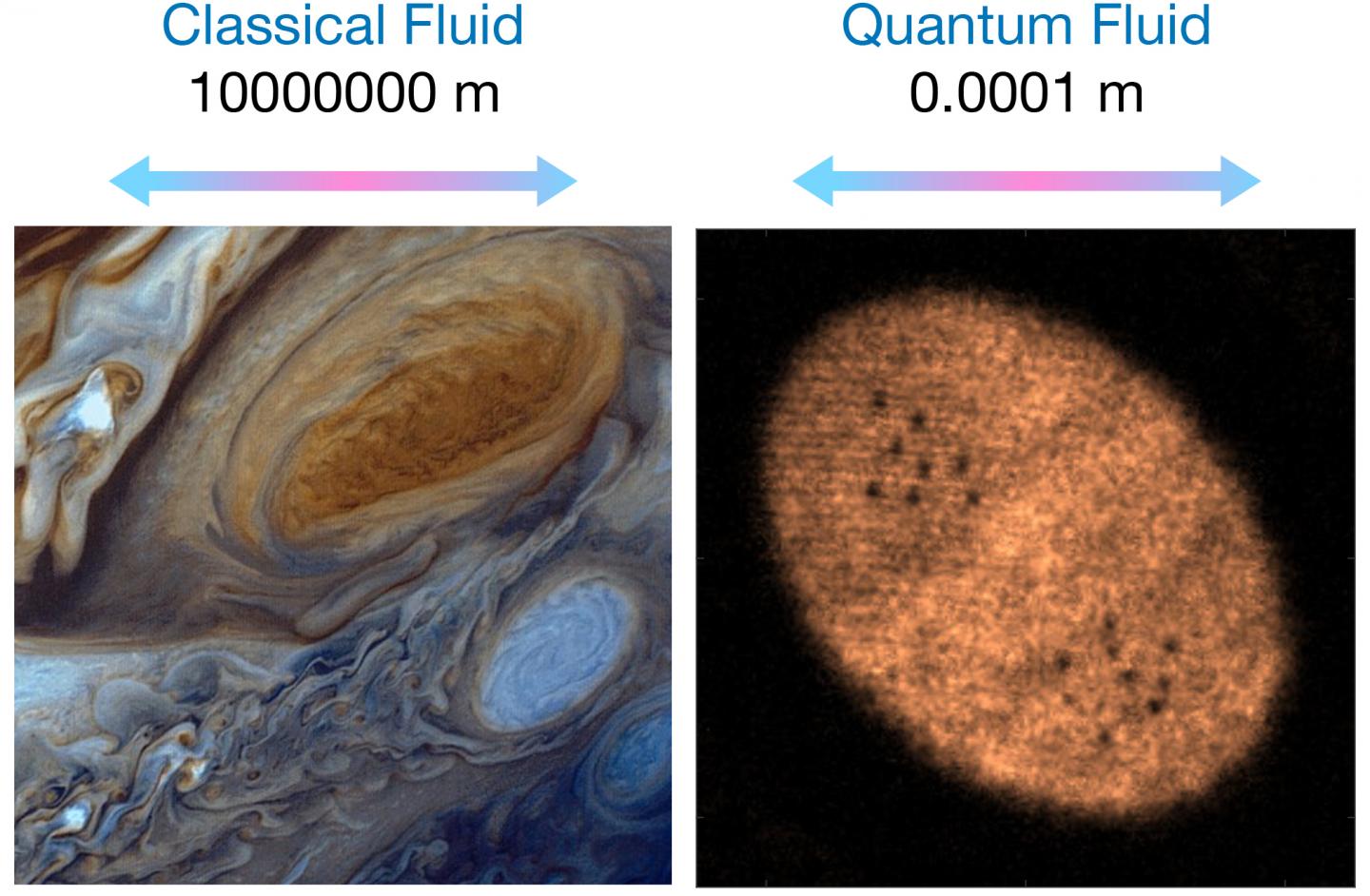
IMAGE

Credit: The University of Queensland

Pilots and air travellers know turbulence can be powerful, but science has struggled to fully explain the phenomenon.

Now, a University of Queensland study has confirmed a 70-year-old theory and is expected to help address “huge problems” in global engineering and transport.

Dr Tyler Neely from the ARC Centre of Excellence for Engineered Quantum Systems (EQUS) said enormous amounts of energy were used daily to transport all sorts of fluids through pipes all over the world.

“Turbulence physics also causes enormous inefficiency for moving vehicles such as ships,” Dr Neely said.

“Fluid has characteristic ways of flowing, but it goes into chaotic eddies when it gets out of equilibrium.

“Better understanding fluid turbulence has great potential to make many industry and transport functions cheaper and greener around the globe.”

Turbulence has absorbed scientific minds for five centuries, since Leonardo da Vinci coined the term la turbulenza.

To verify Nobel Laureate Lars Onsager’s 70-year-old fluid turbulence theory, UQ and Monash University physicists developed techniques to control and measure ultra-cold atom systems.

Dr Neely said Onsager’s theory only directly applies to quantum fluids called superfluids.

“The theory says if you add enough energy to a two-dimensional system, turbulence will cause giant vortices to appear,” Dr Neely said.

“Vortices are regions in fluid where flow revolves around an axis line – similar phenomenon can be seen in the atmosphere of the planet Jupiter.

“Our study created a superfluid by cooling a gas of rubidium atoms almost to absolute zero.

“We then precisely focussed laser beams to create vortices in the fluid, a technique similar to stirring a cup of tea with a spoon.

“It amazes me that we can do this with light and at such a small scale – the cores of the tiny vortices we created were about one tenth of the size a human blood cell.”

The study, appearing in Science (DOI: 10.1126/science.aat5718), was part of a collaboration with the Centre for Quantum Science at the University of Otago.

The Monash research furthermore confirmed Onsager’s theory of the formation of large-scale vortex structures.

“These studies explore the range of states that Onsager predicted,” Dr Neely said.

The discovery will help support the researchers’ next scientific foray, which involves understanding few-particle thermodynamics.

“Better experimental and theoretical understanding will help to better engineer new quantum machines, a key aspect of EQUS research,” Dr Neely said.

###

Media Contact
Dr Tyler Neely
[email protected]

Related Journal Article

http://dx.doi.org/10.1126/science.aat5718

Tags: Atomic/Molecular/Particle PhysicsBiomechanics/BiophysicsChemistry/Physics/Materials SciencesComputer ScienceMaterialsMolecular PhysicsParticle PhysicsResearch/DevelopmentTechnology/Engineering/Computer Science
Share12Tweet8Share2ShareShareShare2

Related Posts

Humans and Zebra Finches Share Similar Speech Learning Techniques #ASA190 — Chemistry

Humans and Zebra Finches Share Similar Speech Learning Techniques #ASA190

May 11, 2026
Unveiling Dark Matter Through Molecular Insights — Chemistry

Unveiling Dark Matter Through Molecular Insights

May 11, 2026

From Touch to Sight: A Bioinspired Multisensory Framework Endows Robots with Human-Like Perception

May 11, 2026

Announcing the 2026 Carbon Future Young Investigator Award Winners

May 11, 2026
Please login to join discussion

POPULAR NEWS

  • Research Indicates Potential Connection Between Prenatal Medication Exposure and Elevated Autism Risk

    841 shares
    Share 336 Tweet 210
  • New Study Reveals Plants Can Detect the Sound of Rain

    728 shares
    Share 290 Tweet 182
  • Salmonella Haem Blocks Macrophages, Boosts Infection

    62 shares
    Share 25 Tweet 16
  • Breastmilk Balances E. coli and Beneficial Bacteria in Infant Gut Microbiomes

    57 shares
    Share 23 Tweet 14

About

We bring you the latest biotechnology news from best research centers and universities around the world. Check our website.

Follow us

Recent News

Humans and Zebra Finches Share Similar Speech Learning Techniques #ASA190

New Study Uncovers How Fungal Parasites Attack Strawberries and Raspberries

City of Hope Researchers to Present Groundbreaking Immunotherapy and Precision Medicine Advances Across Multiple Cancer Types at ASCO 2026

Subscribe to Blog via Email

Enter your email address to subscribe to this blog and receive notifications of new posts by email.

Join 82 other subscribers
  • Contact Us

Bioengineer.org © Copyright 2023 All Rights Reserved.

Welcome Back!

Login to your account below

Forgotten Password?

Retrieve your password

Please enter your username or email address to reset your password.

Log In
No Result
View All Result
  • Homepages
    • Home Page 1
    • Home Page 2
  • News
  • National
  • Business
  • Health
  • Lifestyle
  • Science

Bioengineer.org © Copyright 2023 All Rights Reserved.