Credit: UT Southwestern Medical Center
DALLAS – Feb. 24, 2021 – Using machine learning tools to analyze hundreds of proteins, UT Southwestern researchers have identified a group of biomarkers in blood that could lead to an earlier diagnosis of children with autism spectrum disorder (ASD) and, in turn, more effective therapies sooner.
The identification of nine serum proteins that strongly predict ASD were reported in a study published today by PLOS ONE.
Earlier diagnosis, followed by prompt therapeutic support and intervention, could have a significant impact on the 1 in 59 children diagnosed with autism in the United States. Being able to identify children on the autism spectrum when they are toddlers could make a big difference, says Dwight German, Ph.D., professor of psychiatry at UT Southwestern and senior author of the study.
Currently, the average age of a child diagnosed with ASD in the U.S. is 4 years old. Diagnosis before the age of 4 means that a child is more likely to get effective, evidence-based treatment, such as therapies directed at core ASD symptoms, including inflexible behaviors and the lack of communication or social skills.
Many blood-based biomarker candidates have been investigated, including neurotransmitters, cytokines, and markers of mitochondrial dysfunction, oxidative stress, and impaired methylation. However, given the prevalence of ASD, the use of machine learning to incorporate demographic and clinical data into the analysis could more powerfully examine disease status and symptom severity.
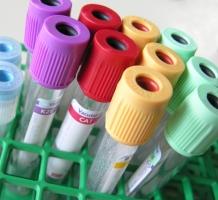
For the study, serum samples from 76 boys with ASD and 78 from typically developing boys, all ages 18 months to 8 years, were examined.
All nine proteins in the biomarker panel were significantly different in boys with ASD compared with typically developing boys. Researchers found that each of the nine serum proteins correlated with symptom severity.
More than 1,100 proteins were examined using the SomaLogic protein analysis platform. A panel of nine proteins was identified as optimal for predicting ASD using three computational methods. The researchers then evaluated the biomarker panel for quality using machine learning methods. Future studies are needed to fully validate the present findings.
“The more significantly affected the child is, the higher or lower than normal the blood biomarker is,” German says. “Ideally, there will be a day when a child is identified using blood biomarkers as being at risk for developing ASD and therapies can be started immediately. That would help the child develop skills to optimize their communication and learning.”
The children in the study were recruited by Laura Hewitson, Ph.D., and Morgan Devlin at The Johnson Center for Child Health & Development, a multidisciplinary treatment center in Austin, Texas, that uses a unique combination of clinical care, research, and education to further the understanding of ASD and related developmental disorders. Hewitson noted that, “The earlier we can identify children with autism, the more understanding we can gain on ways to provide support and therapies that will improve their quality of life.”
###
Other researchers who contributed to this project were Jeon Lee, Ph.D., and Jeremy Mathews in the Lyda Hill Department of Bioinformatics at UT Southwestern, and Claire Schutte with The Johnson Center.
The study was funded by a grant to Hewitson from the Ted Lindsay Foundation, whose mission is to support research and educational programs focusing on the cause and management of ASD.
Media Contact
UT Southwestern Medical Center
[email protected]