Findings published in NEJM suggests that high levels of suPAR be a risk factor for acute kidney injury
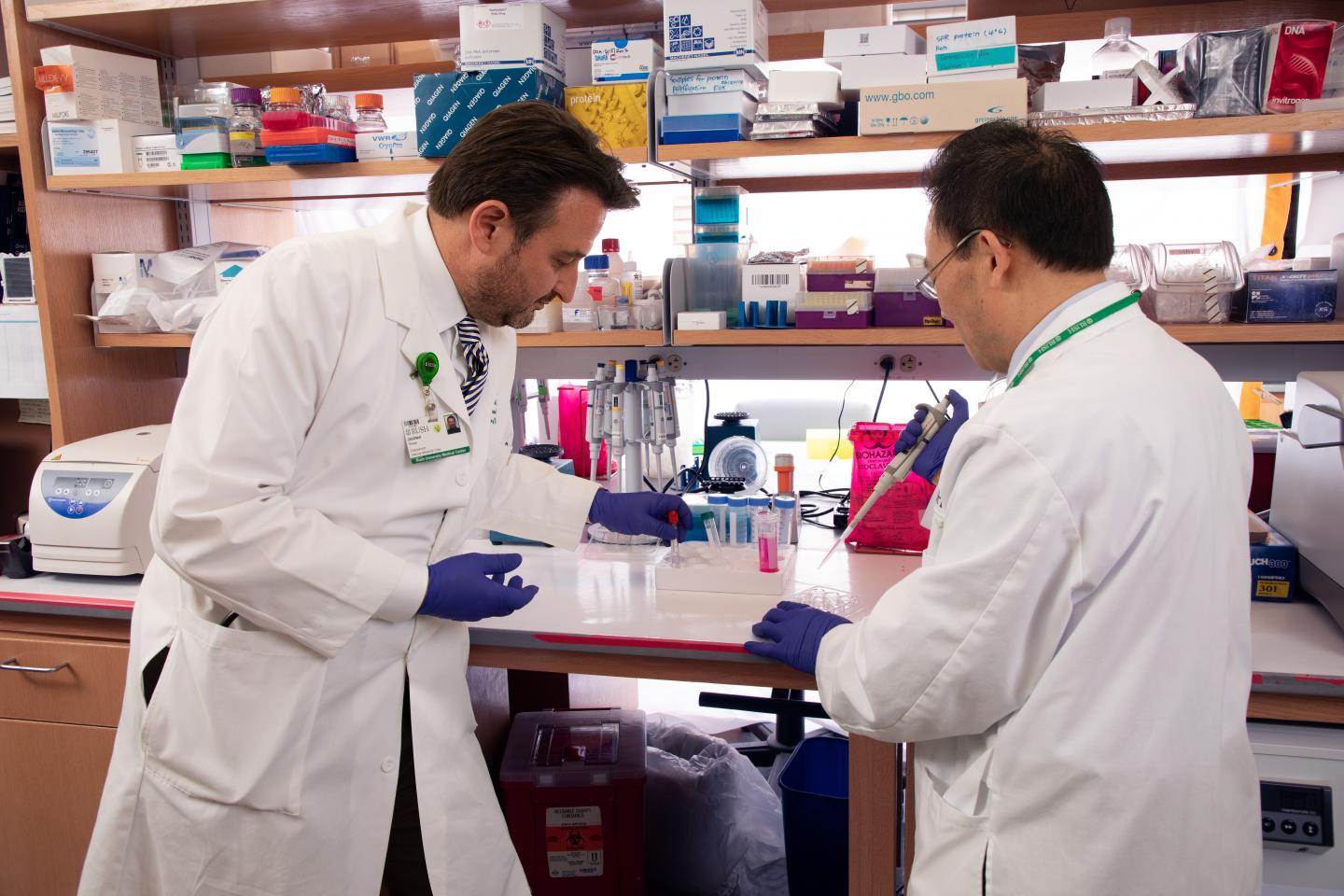
Credit: Rush Production Group
Up to 10% of patients who are hospitalized or undergo surgery will experience acute kidney injury (AKI), and as many as 50% of patients in intensive care units will meet the criteria for AKI, the National Kidney Foundation has determined. Some of these patients will progress to kidney failure within months.
Physician-Scientists and other researchers at Rush University Medical Center, in collaboration with colleagues at other institutions, have revealed a new treatment target that may help change the outcome for patients at risk of AKI. The results were published Jan. 29 in The New England Journal of Medicine.
“In this study, we found evidence that a specific protein produced by immune cells in the bone marrow, called soluble urokinase plasminogen activator receptor (suPAR,) is a strong risk factor for acute forms of kidney failure, that occur as consequence of general medical procedures,” said Jochen Reiser, MD, PhD, a professor at Rush University Medical Center and chairperson of Rush’s Department of Internal Medicine. Reiser is senior author of the study.
suPAR has been repeatedly shown to harm kidneys. Chronically elevated blood levels are linked to development of Chronic Kidney Disease (CKD), a paper published by Reiser and colleagues in The New England Journal of Medicine in 2015. Now, the new paper is showing that having elevated suPAR levels is also a risk factor for acute kidney inury – a sudden decline in kidney function that can be a severe side effect of general medical procedures.
“Nephrology has found its global risk molecule: suPAR,” said Reiser.
“Any kidney disease, chronic or acute, genetic or acquired, is better off with a lower suPAR level. By looking at suPAR levels in patients, we can possibly prevent damage to healthy kidneys that is often irreversible.”
Reiser believes that high suPAR levels will inform physician-patient conversations about preventing kidney disease, just as high cholesterol levels signal the need for lifestyle changes and protective drugs, such as statins, to avert heart attacks and strokes.
Study looked at SuPAR levels in coronary angiography, cardiac surgery and ICU patients
“We have known for some time now of suPAR’s important role in kidney disease. Here we show that suPAR is relevant in important clinical situations such as coronary angiography and cardiac surgery, and could be targeted to minimize the risk of AKI,” said Salim Hayek, MD, a cardiologist at the Michigan Medicine Frankel Cardiovascular Center and first author of the study.
Reiser, Hayek and colleagues performed a two-pronged investigation of suPAR.
First, they looked at suPAR levels and the risk of acute kidney injury in three clinical settings.
“We collected blood samples from patients about to undergo coronary angiography for suspected heart disease, patients undergoing cardiac surgery, and critically ill patients who had been admitted to the intensive care unit,” said David E. Leaf, MD, a co-first author on the study and the director acute kidney injury research at Brigham and Women’s Hospital of Harvard Medical School.
The team found that suPAR levels independently predicted risk of AKI in each of these clinical settings. If a person had higher suPAR levels before undergoing coronary angiography or cardiac surgery, or upon admission to the intensive care unit, they were at much greater risk of developing AKI afterwards.
These associations were entirely independent of other clinical characteristics, such as age, gender, race, severity of illness, and baseline kidney function. The team divided patients into quartiles based on how high their suPAR levels were and compared outcomes for patients across quartiles.
They found that risk of AKI increased steadily with increasing suPAR levels, with an increase of 3.5 to four times the risk of AKI for those in the highest quartile compared to the lowest. High SuPAR levels consistently predicted AKI in these patients, with levels above 3,000 picograms per milliliter doubling the risk of AKI. In total, the study included 4,769 patients.
Second phase of study found higher suPAR led to worsening kidneys in mouse models
These findings led the researchers to the second phase of the study. They employed mouse models of acute kidney injury to investigate whether high suPAR is actually a contributing cause of the complication. When the mice were exposed to contrast used in patients undergoing coronary angiography, the researchers found that higher levels of suPAR led to worsening of kidneys compared to mice with normal levels.
“We are studying interventions to alter suPAR levels,” said Reiser. “We found that when mice were pretreated with a monoclonal antibody to block suPAR, the researchers managed to reduce the development and the severity of kidney injury.”
While the researchers are looking at utilizing treatments and medications already used for other purposes, like statins or immune modulators, they have also sparked the creation of novel humanized suPAR antibodies that once fully developed will be explored in clinical trials.
###
Funding for this work was provided by the National Institutes of Health, American Heart Association, American Society of Nephrology Foundation for Kidney Research Carl W. Gottschalk Research Scholar Grant, the Hutter Family Professorship, the Department of Defense, the Department of Veterans Affairs, and by the American Society of Nephrology Foundation for Kidney Research George B. Rathmann Research Fellowship Award. Co-authors Jochen Reiser and Sanja Sever, PhD, are co-founders and shareholders of Trisaq, a Cambridge-based biotech company that develops therapy against suPAR and kidney disease.
Media Contact
Nancy DiFiore
[email protected]
312-942-5159
Original Source
https:/
Related Journal Article
http://dx.