Aspergillus fumigatus is the major airborne fungus present indoors and outdoors that causes various diseases, the severity of which are dependent on an individual’s immune status.
Credit: University of Tennessee Health Science Center
Aspergillus fumigatus is the major airborne fungus present indoors and outdoors that causes various diseases, the severity of which are dependent on an individual’s immune status.
Researchers in the College of Pharmacy at the University of Tennessee Health Science Center have received a $423,500 grant from the National Institute of Allergy and Infectious Diseases (NIAID) of the National Institutes of Health for research aimed at reducing disease and mortality rates associated with Aspergillus infections by focusing on the molecular pathways in the fungus that mediate inflammatory host responses.
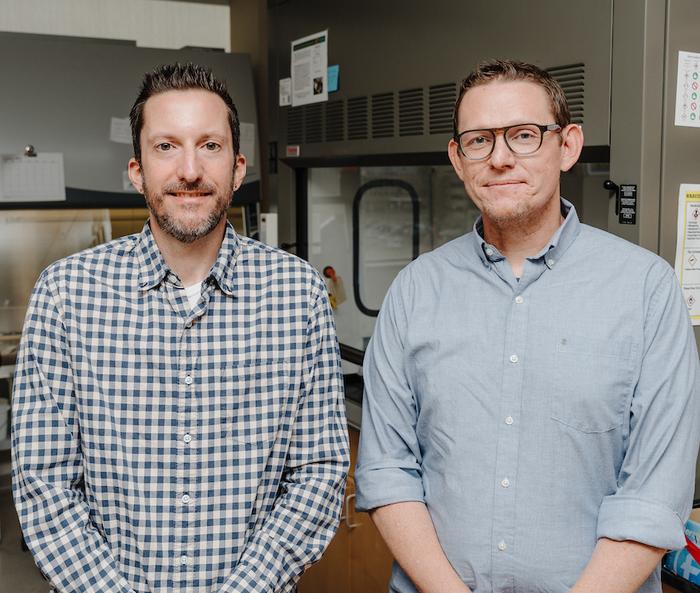
Jarrod Fortwendel, PhD, professor and director of the Center for Pediatric Experimental Therapeutics in the Department of Clinical Pharmacy and Translational Science, and Brian Peters, PhD, associate professor and First Tennessee Endowed Chair of Excellence in Clinical Pharmacy in the Department of Clinical Pharmacy and Translational Science, are the principal investigators of this study.
“Aspergillus fumigatus is a filamentous fungal pathogen that causes disease in a wide range of individuals. Most of the at-risk population have a dysfunctional immune system. In the severely immune suppressed, Aspergillus causes invasive disease that’s considered highly deadly,” Dr. Fortwendel said. “It also causes chronic diseases in individuals who may have a hyperactive immune system. In many of these cases, disease symptomology is driven by an overactive immune system that isn’t effective at clearing the fungus.”
In this collaboration between the labs of Dr. Fortwendel and Dr. Peters, the team will use a new genetic tool to identify molecular targets, or kinases, in the fungus that modify host-pathogen interactions to discover a method to assist the immune system to recognize and clear the fungus.
“It’s an airborne fungus that we inhale and, in at-risk individuals, invades the lung tissue and then disseminates throughout the body. Part of that process happens because the immune system is not functional enough to detect the pathogen,” Dr. Fortwendel said. “The study is designed to identify pathways that may be important for both immune-suppressed individuals and for those who are in hyper-inflammatory states when they encounter this organism.”
Although the current award is focused on helping to improve outcomes for patients suffering from Aspergillus infections, the team aims to apply their studies to other fungal infections as well. With their findings, they hope to contribute to future development of novel therapeutic approaches for initiating protection from invasive fungal infections and decrease the severity of harmful host-response during chronic infections.
“It is exciting to share the grant with a close colleague and collaborator. Our work will help delineate mechanisms, both on the host and the fungal side, that really contribute to immune system function and detection of Aspergillus,” Dr. Peters said.
“Sometimes too little inflammation is bad, and sometimes too much is bad, so the work will begin to define fungal kinases that are important for controlling both of those processes and give us an opportunity to target both sides,” Dr. Peters said. “And these immunomodulatory therapies are something that’s currently being talked about in the field as the next generation of therapeutic approaches to better manage fungal disease.”