• HOME
  • NEWS
  • EXPLORE
    • CAREER
      • Companies
      • Jobs
    • EVENTS
    • iGEM
      • News
      • Team
    • PHOTOS
    • VIDEO
    • WIKI
  • BLOG
  • COMMUNITY
    • FACEBOOK
    • INSTAGRAM
    • TWITTER
Friday, May 15, 2026
BIOENGINEER.ORG
No Result
View All Result
  • Login
  • HOME
  • NEWS
  • EXPLORE
    • CAREER
      • Companies
      • Jobs
        • Lecturer
        • PhD Studentship
        • Postdoc
        • Research Assistant
    • EVENTS
    • iGEM
      • News
      • Team
    • PHOTOS
    • VIDEO
    • WIKI
  • BLOG
  • COMMUNITY
    • FACEBOOK
    • INSTAGRAM
    • TWITTER
  • HOME
  • NEWS
  • EXPLORE
    • CAREER
      • Companies
      • Jobs
        • Lecturer
        • PhD Studentship
        • Postdoc
        • Research Assistant
    • EVENTS
    • iGEM
      • News
      • Team
    • PHOTOS
    • VIDEO
    • WIKI
  • BLOG
  • COMMUNITY
    • FACEBOOK
    • INSTAGRAM
    • TWITTER
No Result
View All Result
Bioengineer.org
No Result
View All Result
Home NEWS Science News Chemistry

Researchers perform thousands of mutations to understand amyotrophic lateral sclerosis

Bioengineer by Bioengineer
September 23, 2019
in Chemistry
Reading Time: 2 mins read
0
IMAGE
Share on FacebookShare on TwitterShare on LinkedinShare on RedditShare on Telegram

Researchers from CRG and IBEC in Barcelona use a technique called high-throughput mutagenesis to study Amyotrophic Lateral Sclerosis (ALS), with unexpected results
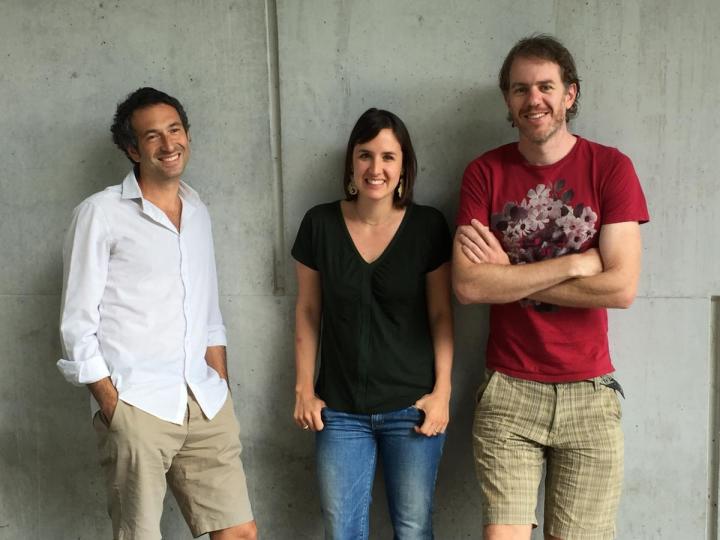
IMAGE

Credit: © CRG 2016. All rights reserved.

  • Researchers from CRG and IBEC in Barcelona use a technique called high-throughput mutagenesis to study Amyotrophic Lateral Sclerosis (ALS), with unexpected results.
  • Results showed that aggregation of TDP-43 is not harmful but actually protects cells, changing our understanding of ALS and opening the door to radically new therapeutic approaches.

Amyotrophic lateral sclerosis (ALS) is a devastating and incurable nervous system disease that affects nerve cells in the brain and spinal cord, causing loss of muscle control and normally death within a few years of diagnosis. In ALS, like in other neurodegenerative diseases, specific protein aggregates have long been recogniSed as the pathological hallmarks, but it is not clear whether they represent the actual cause of the disease. Indeed, alleviating aggregation has repeatedly failed as a therapeutic strategy when trying to treat neurodegenerative diseases such as Alzheimer’s disease.

In order to cast more light on this issue, researchers at the Center of Genomic Regulation (CRG) and the Institute of Bioengineering of Catalonia (IBEC) have applied a novel approach called deep mutagenesis, with unexpected results. “By studying all possible mutations in a protein, we have a much more reliable way to understand toxicity and we are excited to move on to many more proteins implicated in neurodegenerative diseases”, says Benedetta Bolognesi, IBEC researcher, CRG Alumni, and first author of the paper.

In a collaboration between the labs of ICREA research professors Ben Lehner and Gian Tartaglia, Benedetta Bolognesi and Andre J. Faure focused on TDP-43, a protein that aggregates in the motor neurons of nearly all ALS patients. They made over 50,000 mutants of TDP-43 and tracked their toxicity to yeast cells. Researchers found that mutant forms that aggregated were actually less toxic than other versions of the protein which instead were forming unusual liquid species in the cells. “This is the exact opposite of what we expected,” Lehner says, and challenges a lot of the assumptions in this field.

It still remains to be established whether aggregation of TDP-43 is also protective in mammalian cells and neurons, something Bolognesi is working on, but if this proves to be the case, it means we will have to entirely change the way we therapeutically address ALS if we want to have significant effects.

###

Media Contact
Gloria Lligadas Peñarrubia
[email protected]

Original Source

https://www.crg.eu/en/news/researchers-perform-thousands-mutations-understand-amyotrophic-lateral-sclerosis

Tags: BiochemistryBiologyGeneticsMedicine/HealthMolecular Biologyneurobiology
Share14Tweet9Share2ShareShareShare2

Related Posts

Reversible Glue Technology Powers Up with Electric Activation — Chemistry

Reversible Glue Technology Powers Up with Electric Activation

May 15, 2026
Sweet as Honey: Unveiling a New Heat Transport Regime in Ultrathin Semiconductors — Chemistry

Sweet as Honey: Unveiling a New Heat Transport Regime in Ultrathin Semiconductors

May 15, 2026

High-Precision Boltzmann Luminescent Nanothermometry Achieved Through Predictive Rules

May 15, 2026

Atomic Clocks Unveil the Quantum Nature of Time

May 15, 2026
Please login to join discussion

POPULAR NEWS

  • Research Indicates Potential Connection Between Prenatal Medication Exposure and Elevated Autism Risk

    843 shares
    Share 337 Tweet 211
  • New Study Reveals Plants Can Detect the Sound of Rain

    729 shares
    Share 291 Tweet 182
  • Salmonella Haem Blocks Macrophages, Boosts Infection

    62 shares
    Share 25 Tweet 16
  • Breastmilk Balances E. coli and Beneficial Bacteria in Infant Gut Microbiomes

    58 shares
    Share 23 Tweet 15

About

BIOENGINEER.ORG

We bring you the latest biotechnology news from best research centers and universities around the world. Check our website.

Follow us

Recent News

High-Dimensional Study Reveals Immune Drivers of Severe Pediatric ARDS

New Study Reveals Key Differences Between Healthy and Unhealthy Ultra-Processed Foods

Bacteria Could Unlock New Clues for Cancer Treatment

Subscribe to Blog via Email

Enter your email address to subscribe to this blog and receive notifications of new posts by email.

Join 82 other subscribers
  • Contact Us

Bioengineer.org © Copyright 2023 All Rights Reserved.

Welcome Back!

Login to your account below

Forgotten Password?

Retrieve your password

Please enter your username or email address to reset your password.

Log In
No Result
View All Result
  • Homepages
    • Home Page 1
    • Home Page 2
  • News
  • National
  • Business
  • Health
  • Lifestyle
  • Science

Bioengineer.org © Copyright 2023 All Rights Reserved.