• HOME
  • NEWS
  • EXPLORE
    • CAREER
      • Companies
      • Jobs
    • EVENTS
    • iGEM
      • News
      • Team
    • PHOTOS
    • VIDEO
    • WIKI
  • BLOG
  • COMMUNITY
    • FACEBOOK
    • INSTAGRAM
    • TWITTER
Thursday, May 14, 2026
BIOENGINEER.ORG
No Result
View All Result
  • Login
  • HOME
  • NEWS
  • EXPLORE
    • CAREER
      • Companies
      • Jobs
        • Lecturer
        • PhD Studentship
        • Postdoc
        • Research Assistant
    • EVENTS
    • iGEM
      • News
      • Team
    • PHOTOS
    • VIDEO
    • WIKI
  • BLOG
  • COMMUNITY
    • FACEBOOK
    • INSTAGRAM
    • TWITTER
  • HOME
  • NEWS
  • EXPLORE
    • CAREER
      • Companies
      • Jobs
        • Lecturer
        • PhD Studentship
        • Postdoc
        • Research Assistant
    • EVENTS
    • iGEM
      • News
      • Team
    • PHOTOS
    • VIDEO
    • WIKI
  • BLOG
  • COMMUNITY
    • FACEBOOK
    • INSTAGRAM
    • TWITTER
No Result
View All Result
Bioengineer.org
No Result
View All Result
Home NEWS Science News Chemistry

Researchers make new charge storage mechanism discovery

Bioengineer by Bioengineer
September 6, 2025
in Chemistry
Reading Time: 2 mins read
0
IMAGE
Share on FacebookShare on TwitterShare on LinkedinShare on RedditShare on Telegram

Research between the University of Liverpool, UK and National Tsing Hua University (NTHU), Taiwan has revealed a new charge storage mechanism that has the potential to allow rechargeability within calcium-air batteries.

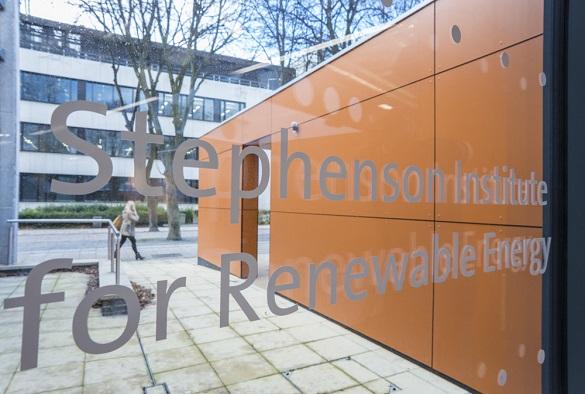
In a paper published in the journal Chemical Science, Professor Laurence Hardwick from the University of Liverpool’s Stephenson Institute for Renewable Energy (SIRE) and colleagues discover a distinctive form of charge storage at the electrode interface described as trapped interfacial redox. This new finding introduces a new mechanism of charge storage that could be harnessed in practical devices.

Lead author of the paper, Yi Ting (Leo) Lu, is a joint PhD student in the dual PhD programme between the University of Liverpool and National Tsing Hua University. He said: “We started investigating these electrolyte systems as part of understanding how to develop a metal-air battery based upon calcium metal, which is a highly earth abundant element, creating a highly sustainable battery technology.”

“The research explores the formation of an electrochemically generated interlayer coating on electrode surfaces that confines the reduced form of oxygen gas known as superoxide, allowing it to then be readily oxidised.”

The research was carried out in an electrolyte designed for a calcium-air battery, which had so far been shown to be practically irreversible. The research team noticed that, when the electrode was cycled many tens of times, the electrochemical process became steadily more reversible, and a series of experiments were conducted to fully understand the mechanism.

Dr Alex Neale, who is also part of the research team, said: “Through systematic electrochemical and spectroscopy investigations, we began to understand the origins of this reasonably strange and exciting new process appearing in our measurements. The new mechanism of trapped interfacial redox we defined facilitates a previously unseen degree of reversibility for systems based on the calcium-air battery.”

Further work will explore how readily this phenomenon is observed in different electrolyte systems and to understand whether the charge stored can be further exploited, scaled up and used in a practical system for energy storage.

Due to the UK lockdown in March 2020, Yi Ting (Leo) Lu returned to Taiwan 6 months earlier than planned, so to complete the study the team set up parallel experiments within both Liverpool and NTHU labs to cross compare results and ensure reproducibility of observations.

###

The collaborative research between the two University research groups in Liverpool and NTHU was made possible by support through the Dual PhD Programme and funding from the EPSRC for the project Earth-Abundant Metal-Air Batteries (EP/R020744/1) and The Calcium-Air Battery (EP/R000441/1).

The research has benefited from battery research and characterisation facilities at the Stephenson institute for Renewable Energy, University of Liverpool

The paper ‘ Trapped interfacial redox introduces reversibility in the oxygen reduction reaction in a non-aqueous Ca2+ electrolyte’ (doi.org/10.1039/D0SC06991D) is published in Chemical Science.

Media Contact
Sarah Stamper
[email protected]

Related Journal Article

http://dx.doi.org/10.1039/D0SC06991D

Tags: Chemistry/Physics/Materials SciencesEnergy/Fuel (non-petroleum)
Share12Tweet8Share2ShareShareShare2

Related Posts

Unveiling the Unseen: Exploring the Boundaries of Two-Photon Vision — Chemistry

Unveiling the Unseen: Exploring the Boundaries of Two-Photon Vision

May 14, 2026
On-Chip Ferroelectric Spherulites Enable Broadband Colored Skyrmion Generation — Chemistry

On-Chip Ferroelectric Spherulites Enable Broadband Colored Skyrmion Generation

May 14, 2026

Innovating an Affordable and Sustainable Marimba #ASA190

May 14, 2026

The Unseen Power Driving Growth

May 14, 2026
Please login to join discussion

POPULAR NEWS

  • Research Indicates Potential Connection Between Prenatal Medication Exposure and Elevated Autism Risk

    842 shares
    Share 337 Tweet 211
  • New Study Reveals Plants Can Detect the Sound of Rain

    729 shares
    Share 291 Tweet 182
  • Salmonella Haem Blocks Macrophages, Boosts Infection

    62 shares
    Share 25 Tweet 16
  • Breastmilk Balances E. coli and Beneficial Bacteria in Infant Gut Microbiomes

    57 shares
    Share 23 Tweet 14

About

We bring you the latest biotechnology news from best research centers and universities around the world. Check our website.

Follow us

Recent News

UofL Pediatrics Researcher Discovers Novel Signaling Mechanism Linked to Anxiety and Overgrooming

New Study Finds No Evidence Linking First Trimester Pain Reliever Use to Birth Defects

Absolute Quantification of IgG Glycans Unlocks New Avenue for Predicting Biological Age

Subscribe to Blog via Email

Enter your email address to subscribe to this blog and receive notifications of new posts by email.

Join 82 other subscribers
  • Contact Us

Bioengineer.org © Copyright 2023 All Rights Reserved.

Welcome Back!

Login to your account below

Forgotten Password?

Retrieve your password

Please enter your username or email address to reset your password.

Log In
No Result
View All Result
  • Homepages
    • Home Page 1
    • Home Page 2
  • News
  • National
  • Business
  • Health
  • Lifestyle
  • Science

Bioengineer.org © Copyright 2023 All Rights Reserved.