• HOME
  • NEWS
  • EXPLORE
    • CAREER
      • Companies
      • Jobs
    • EVENTS
    • iGEM
      • News
      • Team
    • PHOTOS
    • VIDEO
    • WIKI
  • BLOG
  • COMMUNITY
    • FACEBOOK
    • INSTAGRAM
    • TWITTER
Tuesday, May 26, 2026
BIOENGINEER.ORG
No Result
View All Result
  • Login
  • HOME
  • NEWS
  • EXPLORE
    • CAREER
      • Companies
      • Jobs
        • Lecturer
        • PhD Studentship
        • Postdoc
        • Research Assistant
    • EVENTS
    • iGEM
      • News
      • Team
    • PHOTOS
    • VIDEO
    • WIKI
  • BLOG
  • COMMUNITY
    • FACEBOOK
    • INSTAGRAM
    • TWITTER
  • HOME
  • NEWS
  • EXPLORE
    • CAREER
      • Companies
      • Jobs
        • Lecturer
        • PhD Studentship
        • Postdoc
        • Research Assistant
    • EVENTS
    • iGEM
      • News
      • Team
    • PHOTOS
    • VIDEO
    • WIKI
  • BLOG
  • COMMUNITY
    • FACEBOOK
    • INSTAGRAM
    • TWITTER
No Result
View All Result
Bioengineer.org
No Result
View All Result
Home NEWS Science News Chemistry

Researchers introduce new method to fine-tune properties of layered transition metal dichalcogenides crystals

by
July 9, 2024
in Chemistry
Reading Time: 2 mins read
0
Researchers Introduce New Method to Fine-Tune Properties of Layered Transition Metal Dichalcogenides Crystals
Share on FacebookShare on TwitterShare on LinkedinShare on RedditShare on Telegram

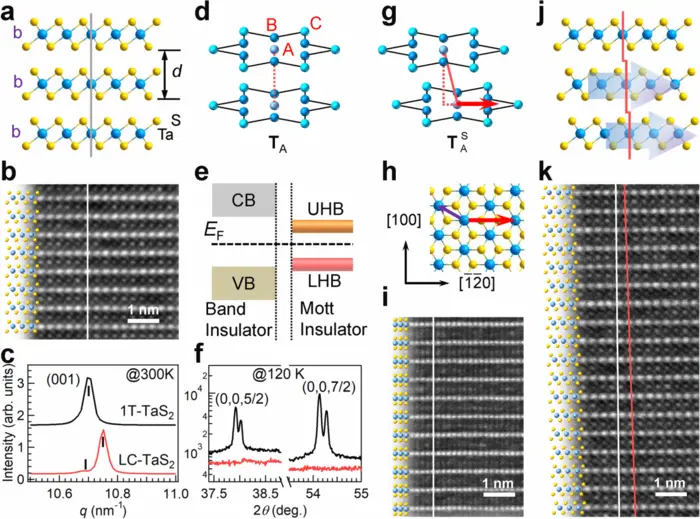
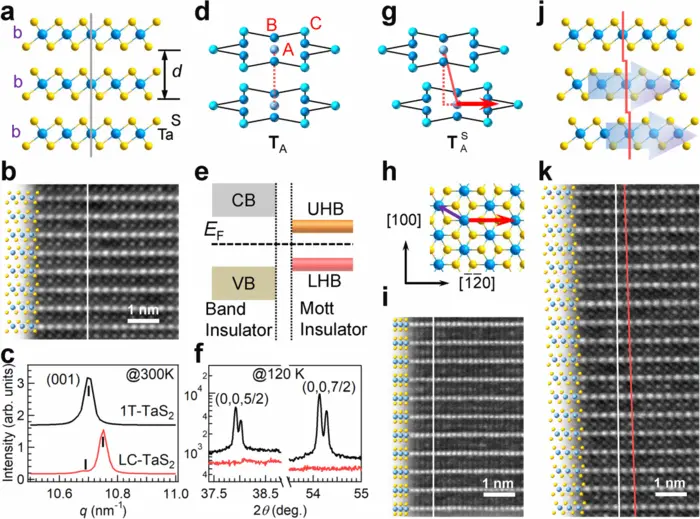
Recently, a research group led by Assoc. Prof. CAO Liang from Hefei Institutes of Physical Science of Chinese Academy of Sciences, in collaboration with Prof. XIONG Yimin from Anhui University and Prof. XU Hai from Changchun Institute of Optics, Fine Mechanics and Physics, has introduced an additional translational degree of freedom in layered Transition metal dichalcogenides (TMDs) crystals, enabling fine-tuning of their physical properties.
Researchers Introduce New Method to Fine-Tune Properties of Layered Transition Metal Dichalcogenides Crystals

Credit: WANG Yihao

Recently, a research group led by Assoc. Prof. CAO Liang from Hefei Institutes of Physical Science of Chinese Academy of Sciences, in collaboration with Prof. XIONG Yimin from Anhui University and Prof. XU Hai from Changchun Institute of Optics, Fine Mechanics and Physics, has introduced an additional translational degree of freedom in layered Transition metal dichalcogenides (TMDs) crystals, enabling fine-tuning of their physical properties.

The research results were published in Nature Communications.

Layered Mott insulators help us understand how different states like Mott insulators, charge density waves, and superconductors are connected. By changing how these layers stack and behave under pressure and temperature, scientists can explore these relationships. One material, 1T-TaS2, is especially interesting because it changes in complex ways when it cools down, showing unusual insulating behavior at low temperatures and high electron densities. However, even after much research, it’s still unclear whether this insulating state is a Mott insulator or a band insulator.

In this study, researchers introduce a novel approach to manipulate inter-layer coupling strength in layered crystals by deliberately introducing fractional misalignment of adjacent layers. This controlled inter-layer stacking and coupling revealed the dualistic insulating nature of 1T-TaS2 crystals, showing a shift between 3D band-insulating states and 2D Mott-insulating states. This discover has important implications for understanding the origin of hidden states under non-equilibrium conditions and the anomalies in 1T-TaS2, such as the absence of long-range magnetic order and unexpected emergence of superconducting states.

For the first time, they demonstrated how the fractional lattice translation between adjacent layers in layered crystals can profoundly modify electronic structures. This discovery introduces an additional translational degree of freedom, enabling fine-tuning of the properties of bulk crystals. Unlike traditional methods, such as chemical doping, intercalation and pressure, this approach is remarkably simple and clean, avoiding the introduction of impurities while preserving the mechanical strength and stability of the crystals.

“The extension of the laddering configuration we defined to other layered crystals with similar structural characteristics of intra-layer stiffness and inter-layer slipperiness presents exciting opportunities to investigate correlated states confined to 2D systems, akin to reducing dimensionality in layered 3D materials.” said Prof. CAO Liang.


Journal

Nature Communications

Article Title

Dualistic insulator states in 1T-TaS2 crystals

Article Publication Date

23-Apr-2024

Share12Tweet8Share2ShareShareShare2

Related Posts

Climate Change Undermines Lakes’ Natural Purification Abilities — Chemistry

Climate Change Undermines Lakes’ Natural Purification Abilities

May 26, 2026
Lanthanide Nanocrystals Unlock Room-Temperature Organic Phosphorescence — Chemistry

Lanthanide Nanocrystals Unlock Room-Temperature Organic Phosphorescence

May 25, 2026

Study Reveals How Valproate Affects Early Brain Development: Insights into the Antiepileptic Drug’s Impact

May 22, 2026

Sustainable Chemistry: Iron Replaces Noble Metals in Catalytic Reactions

May 22, 2026

POPULAR NEWS

  • ESMO 2025: mRNA COVID Vaccines Enhance Efficacy of Cancer Immunotherapy

    316 shares
    Share 126 Tweet 79
  • New Study Reveals Plants Can Detect the Sound of Rain

    734 shares
    Share 293 Tweet 183
  • Common Food Preservatives Associated with Elevated Blood Pressure and Increased Heart Disease Risk

    56 shares
    Share 22 Tweet 14
  • Research Indicates Potential Connection Between Prenatal Medication Exposure and Elevated Autism Risk

    847 shares
    Share 339 Tweet 212

About

We bring you the latest biotechnology news from best research centers and universities around the world. Check our website.

Follow us

Recent News

Additionality Limits Investment in Carbon Sequestration

Innovative Wearable Ultrasound Patch Promises Enhanced Monitoring for High-Risk Pregnancies

How Ceramide Lipid Metabolism Influences Prostate Cancer Drug Response

Subscribe to Blog via Email

Enter your email address to subscribe to this blog and receive notifications of new posts by email.

Join 82 other subscribers
  • Contact Us

Bioengineer.org © Copyright 2023 All Rights Reserved.

Welcome Back!

Login to your account below

Forgotten Password?

Retrieve your password

Please enter your username or email address to reset your password.

Log In
No Result
View All Result
  • Homepages
    • Home Page 1
    • Home Page 2
  • News
  • National
  • Business
  • Health
  • Lifestyle
  • Science

Bioengineer.org © Copyright 2023 All Rights Reserved.