• HOME
  • NEWS
  • EXPLORE
    • CAREER
      • Companies
      • Jobs
    • EVENTS
    • iGEM
      • News
      • Team
    • PHOTOS
    • VIDEO
    • WIKI
  • BLOG
  • COMMUNITY
    • FACEBOOK
    • INSTAGRAM
    • TWITTER
Saturday, June 27, 2026
BIOENGINEER.ORG
No Result
View All Result
  • Login
  • HOME
  • NEWS
  • EXPLORE
    • CAREER
      • Companies
      • Jobs
        • Lecturer
        • PhD Studentship
        • Postdoc
        • Research Assistant
    • EVENTS
    • iGEM
      • News
      • Team
    • PHOTOS
    • VIDEO
    • WIKI
  • BLOG
  • COMMUNITY
    • FACEBOOK
    • INSTAGRAM
    • TWITTER
  • HOME
  • NEWS
  • EXPLORE
    • CAREER
      • Companies
      • Jobs
        • Lecturer
        • PhD Studentship
        • Postdoc
        • Research Assistant
    • EVENTS
    • iGEM
      • News
      • Team
    • PHOTOS
    • VIDEO
    • WIKI
  • BLOG
  • COMMUNITY
    • FACEBOOK
    • INSTAGRAM
    • TWITTER
No Result
View All Result
Bioengineer.org
No Result
View All Result
Home NEWS Science News Health

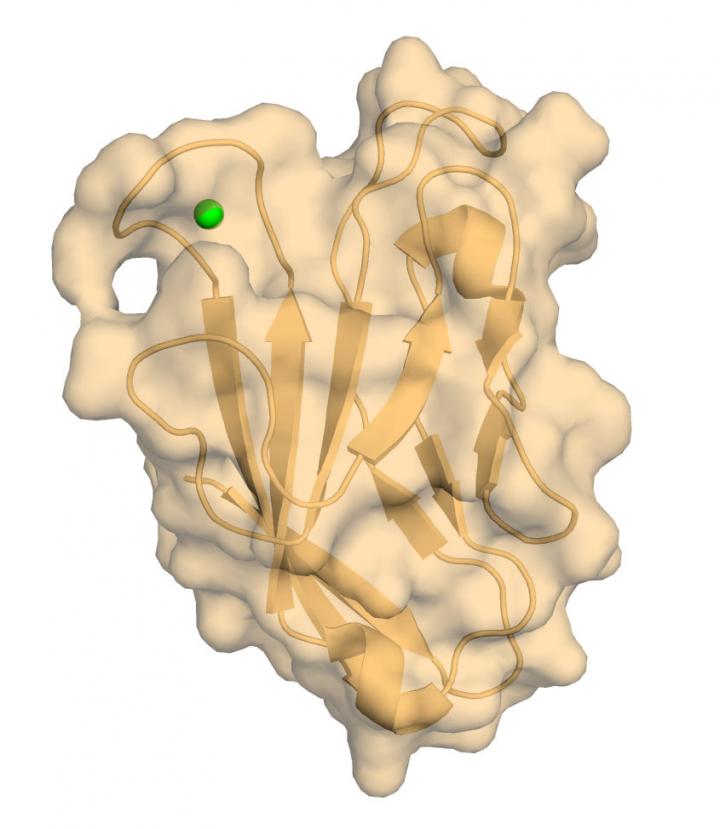
Researchers image atomic structure of important immune regulator

Bioengineer by Bioengineer
December 10, 2018
in Health
Reading Time: 2 mins read
0
IMAGE
Share on FacebookShare on TwitterShare on LinkedinShare on RedditShare on Telegram

Understanding structure of human TIM-3 provides new insights for cancer and autoimmune drug development
IMAGE

Credit: Richard Blumberg, Brigham and Women’s Hospital


A new study by investigators from Brigham and Women’s Hospital provides a biophysical and structural assessment of a critical immune regulating protein called human T-cell immunoglobulin and mucin domain containing protein-3 (hTIM-3). Understanding the atomic structure of hTIM-3 provides new insights for targeting this protein for numerous cancer and autoimmune therapeutics currently under clinical development. The findings of this study were published online in Scientific Reports on Nov. 30.

“The hTIM-3 protein is an important immune regulator, yet it has been difficult to target for drug development as high-resolution structure conformational details have been elusive,” said senior author Richard Blumberg, MD, chief of the Division of Gastroenterology, Hepatology and Endoscopy in the Department of Medicine at the Brigham. “We resolved the structure of hTIM-3 and established a novel biochemical assay to define its functionality, which will be useful for understanding the role of hTIM-3 in the immune system.”

The team captured a high-resolution X-ray crystal structure and nuclear magnetic resonance (NMR) image of the hTIM-3 IgV domain that is involved in functional interactions with CEACAM1, which is a crucial immune escape mechanism for many cancers. Importantly, the team determined the precise location of a calcium atom, an essential co-factor, bound to the hTIM-3 IgV domain.

“This is the first NMR analysis of any immune-related TIM molecule and the first high resolution structural report of the hTIM-3 IgV domain with association of critical co-factors such as calcium,” said author Amit Gandhi, PhD, a researcher in Blumberg’s laboratory in the Department of Medicine. “No one has been able to do this before. Hopefully this will help with the targeting of human hTIM-3 and the development of useful therapeutics.”

“This structure shown here represents a high resolution, physiologically relevant hTIM-3 molecule,” said author Walter Kim, MD, PhD, a researcher in Blumberg’s laboratory and associate physician in the Department of Medicine. “Now we can understand what specific regions of the protein are accessible for therapeutic drugs to bind.”

###

The NMR structural studies were led by Zhen-Yu Jim Sun, PhD, a researcher at Harvard Medical School. Funding for this work was supported by the NIH Grants 5R01DK051362-21 and the High Pointe Foundation to R.S.B. and 5P01AI073748-09 to V.K.K., and GM047467 and AI037581 to G.W.

Paper cited: Gandhi, A et al. “High resolution X-ray and NMR structural study of human T-cell immunoglobulin and mucin domain containing protein-3” Scientific Reports DOI: 10.1038/s41598-018-35754-0

Media Contact
Haley Bridger
[email protected]
617-525-6383

Related Journal Article

http://dx.doi.org/10.1038/s41598-018-35754-0

News source: https://scienmag.com/

Tags: Medicine/Health
Share12Tweet8Share2ShareShareShare2

Related Posts

Tracking Lanthanide-Labeled Microplastics in Plants

June 25, 2026

Neural Design Enables Zero-Shot Drug-Binding Proteins

June 25, 2026

Genomic Insights into Human Skin Fungi Diversity

June 25, 2026

Chiral Laser Gyroscopes Surpass Lock-In Limit

June 25, 2026
Please login to join discussion

POPULAR NEWS

  • Saying Goodbye to PGY-6: Pediatric Fellowship Realities

    103 shares
    Share 41 Tweet 26
  • Multi-Hospital Study Reveals Long Covid Burden Is Twice as High as Current Estimates

    92 shares
    Share 36 Tweet 23
  • Detection of EDCs in Breast Milk and Infant Urine Up to Six Months Highlights Early Exposure Risks

    77 shares
    Share 31 Tweet 19
  • New Drug Candidate Developed at McMaster Shows Potential for Treating Brain Cancer

    58 shares
    Share 23 Tweet 15

About

We bring you the latest biotechnology news from best research centers and universities around the world. Check our website.

Follow us

Recent News

Tracking Lanthanide-Labeled Microplastics in Plants

POSTECH Researchers Slash Cost of Reconstituted Cell-Free Systems by 95%

AI and Physics Collaborate to Design Advanced Hydrogen Storage Materials

Subscribe to Blog via Email

Success! An email was just sent to confirm your subscription. Please find the email now and click 'Confirm' to start subscribing.

Join 82 other subscribers
  • Contact Us

Bioengineer.org © Copyright 2023 All Rights Reserved.

Welcome Back!

Login to your account below

Forgotten Password?

Retrieve your password

Please enter your username or email address to reset your password.

Log In
No Result
View All Result
  • Homepages
    • Home Page 1
    • Home Page 2
  • News
  • National
  • Business
  • Health
  • Lifestyle
  • Science

Bioengineer.org © Copyright 2023 All Rights Reserved.