



• HOME
  • NEWS
  • EXPLORE
    • CAREER
      • Companies
      • Jobs
    • EVENTS
    • iGEM
      • News
      • Team
    • PHOTOS
    • VIDEO
    • WIKI
  • BLOG
  • COMMUNITY
    • FACEBOOK
    • INSTAGRAM
    • TWITTER
Wednesday, May 27, 2026
BIOENGINEER.ORG
No Result
View All Result
  • Login
  • HOME
  • NEWS
  • EXPLORE
    • CAREER
      • Companies
      • Jobs
        • Lecturer
        • PhD Studentship
        • Postdoc
        • Research Assistant
    • EVENTS
    • iGEM
      • News
      • Team
    • PHOTOS
    • VIDEO
    • WIKI
  • BLOG
  • COMMUNITY
    • FACEBOOK
    • INSTAGRAM
    • TWITTER
  • HOME
  • NEWS
  • EXPLORE
    • CAREER
      • Companies
      • Jobs
        • Lecturer
        • PhD Studentship
        • Postdoc
        • Research Assistant
    • EVENTS
    • iGEM
      • News
      • Team
    • PHOTOS
    • VIDEO
    • WIKI
  • BLOG
  • COMMUNITY
    • FACEBOOK
    • INSTAGRAM
    • TWITTER
No Result
View All Result
Bioengineer.org
No Result
View All Result
Home NEWS Science News Health

Researchers identify link between gut bacteria and eating for pleasure, as opposed to hunger

Bioengineer by Bioengineer
August 24, 2018
in Health
Reading Time: 2 mins read
0
Share on FacebookShare on TwitterShare on LinkedinShare on RedditShare on Telegram
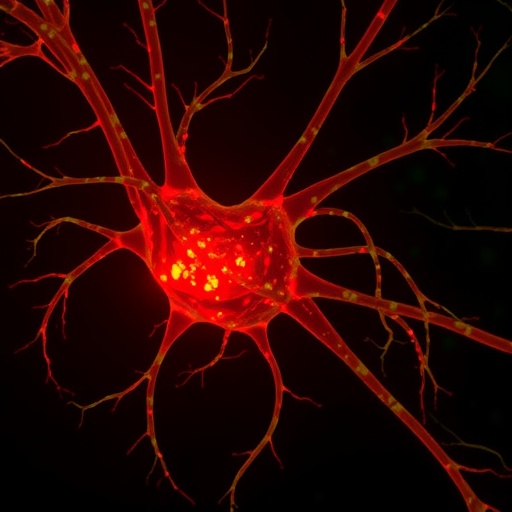
IMAGE

Credit: Gilles Mingasson

FINDINGS

A study of 63 healthy people showed that those with elevated microbiome levels of the metabolite indole — produced when gut bacteria break down the amino acid tryptophan — had stronger function and connectivity in specific areas of the brain's reward network. Such activity in the brain indicates that a person is more prone to "hedonic eating," or eating for pleasure rather than for hunger. Those with higher levels of indole also were more likely to have food addiction, as determined by questionnaires they completed.

BACKGROUND

Certain areas of the brain's reward network have long been known to drive eating behaviors. In particular, the nucleus accumbens — which processes reward stimuli such as food — and the amygdala — which helps regulate emotions — are activated when people are hungry or eating. In this study, people with higher indole levels showed stronger function and connectivity in these two areas.

Higher function and connectivity in the brain's reward system could indicate an overactive reward system that promotes and reinforces overeating. Such overactivity of the reward system in obese individuals with food addiction has been reported in previous research.

METHOD

The researchers obtained functional MRI brain imaging from the healthy participants. They collected and analyzed fecal samples in order to determine the presence of particular gut metabolites. The subjects completed questionnaires that measured their propensity for food addiction.

IMPACT

The study — the first in humans to show the association between specific metabolites produced by gut bacteria and overeating behaviors — suggests that indole, or gut bacteria's ability to produce it, could contribute to such behaviors. It opens the door to future study about whether specific interventions, such as changes to diet, could affect brain function and thus affect the desire to overeat or to eat when not hungry.

###

AUTHORS

The senior author is Dr. Emeran Mayer, director of the G. Oppenheimer Center for Neurobiology of Stress and Resilience and co-director of the CURE: Digestive Diseases Research Center at UCLA. Vadim Osadchiy, a student at the David Geffen School of Medicine at UCLA, is the first author. The other authors are Jennifer Labus, Arpana Gupta, Dr. Jonathan Jacobs, Cody Ashe-McNalley and Elaine Hsiao, all of the UCLA Vatche and Tamar Manoukian Division of Digestive Diseases.

JOURNAL

The study was published August 6 in the journal PLOS One.

FUNDING

The study was supported by grants from the National Institutes of Health.

DISCLOSURES

Mayer is a scientific advisory board member of Danone; Danone North America; Axial Biotherapeutics; Viome; Amare; Pharmavite; and Prolacta.

Media Contact

Ryan Hatoum
[email protected]
310-267-8304
@uclahealth

http://www.uclahealth.org/

Original Source

http://newsroom.ucla.edu/releases/researchers-identify-link-between-gut-bacteria-and-eating-for-pleasure-as-opposed-to-hunger http://dx.doi.org/10.1371/journal.pone.0201772

Share12Tweet7Share2ShareShareShare1

Related Posts

Brazilian Medical Students Boost Public Confidence in Vaccination

May 27, 2026

Advanced Access Scheduling Cuts Primary Care Wait Times, Boosts Patient-Physician Continuity

May 27, 2026

Adults with Intellectual and Developmental Disabilities or Cerebral Palsy Face Increased Fall-Injury Risk Earlier in Life

May 26, 2026

Disparities and Uncertainties Surround Medicare Free Annual Wellness Visits for Black and Hispanic Patients

May 26, 2026
Please login to join discussion

POPULAR NEWS

  • ESMO 2025: mRNA COVID Vaccines Enhance Efficacy of Cancer Immunotherapy

    317 shares
    Share 127 Tweet 79
  • New Study Reveals Plants Can Detect the Sound of Rain

    735 shares
    Share 293 Tweet 183
  • Common Food Preservatives Associated with Elevated Blood Pressure and Increased Heart Disease Risk

    56 shares
    Share 22 Tweet 14
  • AI-Powered Atlas Uncovers Extensive Whole-Body Damage Linked to Obesity

    53 shares
    Share 21 Tweet 13

About

We bring you the latest biotechnology news from best research centers and universities around the world. Check our website.

Follow us

Recent News

Brazilian Medical Students Boost Public Confidence in Vaccination

Synthetic Microbial Communities Boost Hydroponic Tomato Growth

Advanced Access Scheduling Cuts Primary Care Wait Times, Boosts Patient-Physician Continuity

Subscribe to Blog via Email

Enter your email address to subscribe to this blog and receive notifications of new posts by email.

Join 82 other subscribers
  • Contact Us

Bioengineer.org © Copyright 2023 All Rights Reserved.

Welcome Back!

Login to your account below

Forgotten Password?

Retrieve your password

Please enter your username or email address to reset your password.

Log In
No Result
View All Result
  • Homepages
    • Home Page 1
    • Home Page 2
  • News
  • National
  • Business
  • Health
  • Lifestyle
  • Science

Bioengineer.org © Copyright 2023 All Rights Reserved.